Printing Glossary
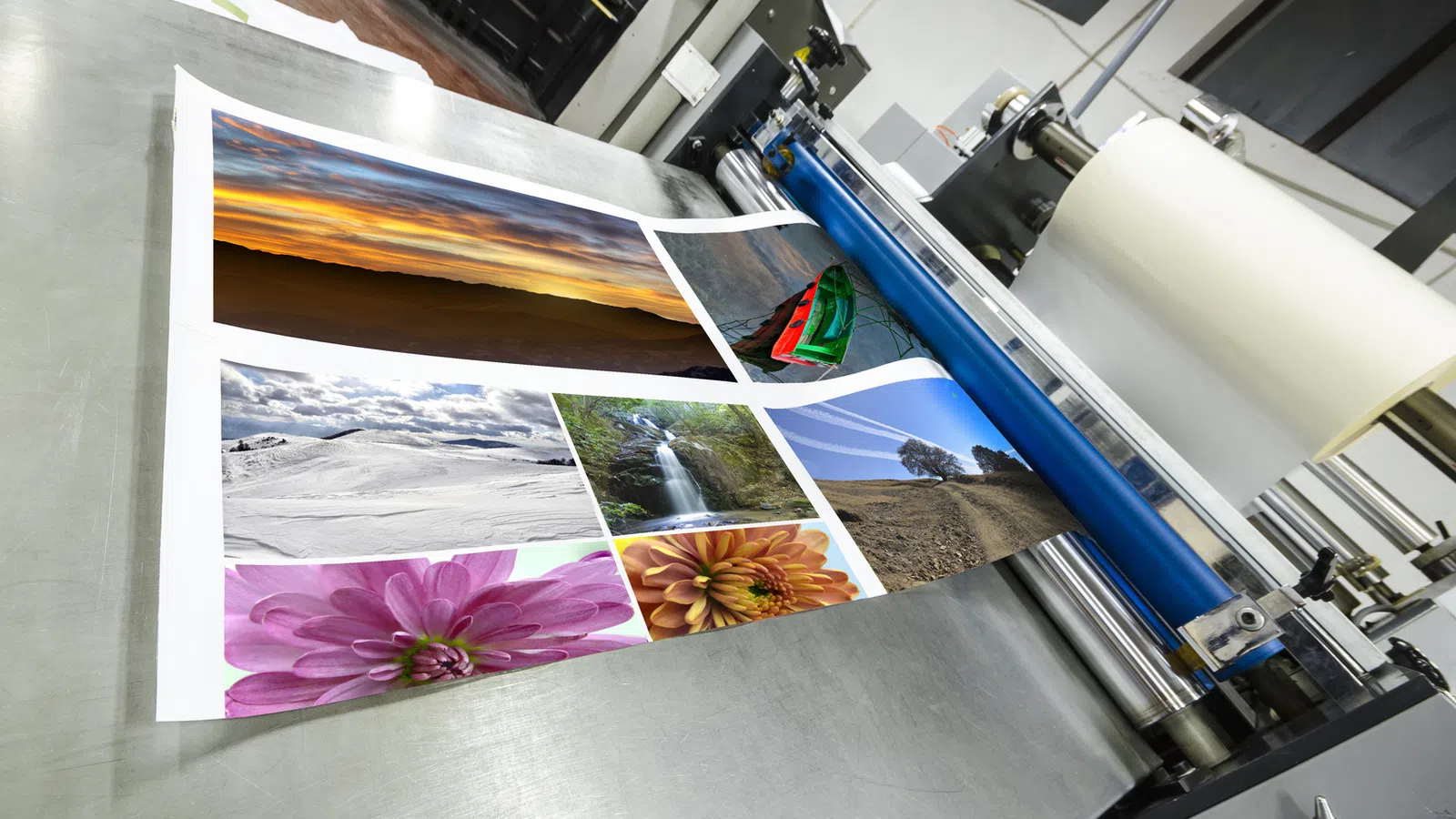
Whether you're new to print or have been ordering printed materials for years, understanding printing terminology can make every project smoother and more successful. This Printing Glossary was created to simplify the language of the printing industry by explaining common terms in a clear, easy-to-understand format.
From bleeds, crop marks, and trim size to CMYK, PMS colors, saddle stitching, and vector artwork, this guide helps simplify the technical side of printing. Each term includes a straightforward definition, practical examples, and real-world applications to help you communicate more effectively with designers, printers, and marketing professionals.
Use this glossary as a quick reference when planning your next brochure, catalog, direct mail piece, book, promotional product, or signage project. The more you understand the language of print, the better equipped you'll be to make informed decisions, avoid costly mistakes, and achieve professional results every time.
Printing doesn't have to be complicated. This glossary is your guide to speaking the language of print with confidence.
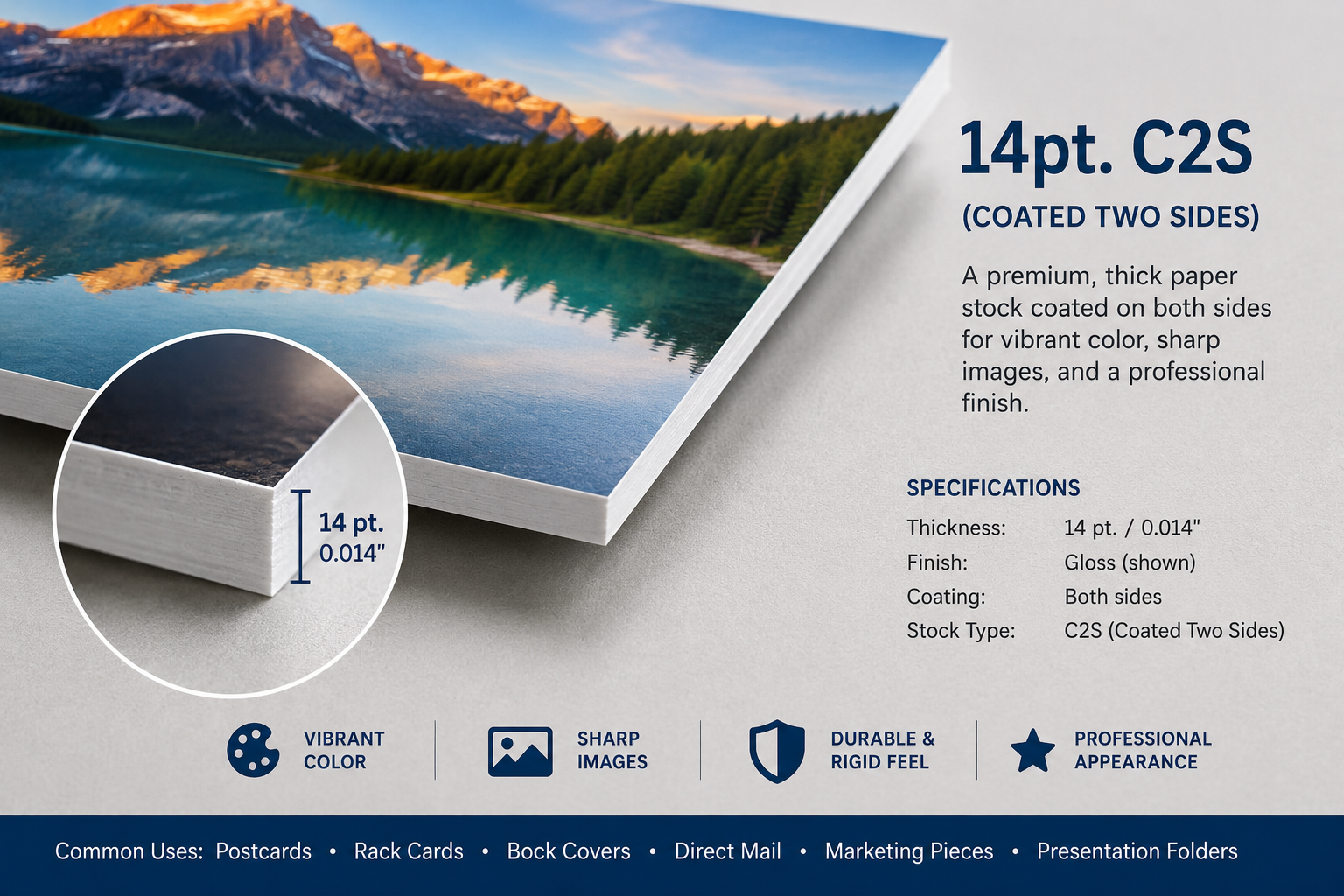
14 pt. C2S
14 pt. C2S - A premium paper stock approximately 0.014 inches thick that features a coated finish on both sides. Known for its durability, vibrant color reproduction, and professional appearance, 14 pt. C2S is commonly used for postcards, rack cards, covers, marketing pieces, and other high-impact printed materials.
"14 pt. C2S is the workhorse stock for premium postcards and marketing pieces—thick enough to feel substantial, yet flexible enough to score, fold, and mail efficiently."
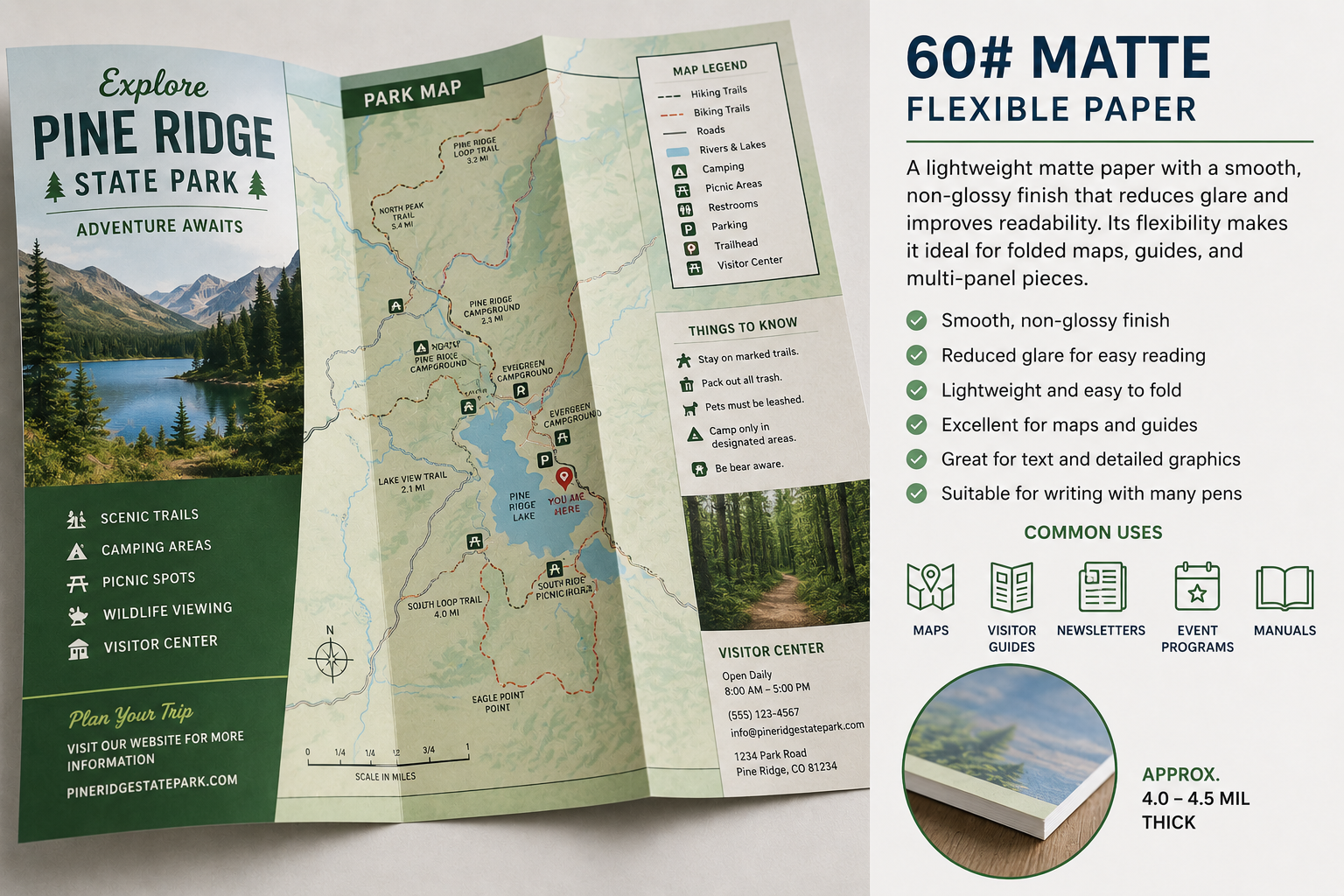
60# Matte Paper
60# Matte Paper - A lightweight coated text stock with a smooth, non-glossy finish that reduces glare and improves readability. Its flexibility makes it ideal for folded folded maps, visitor guides, manuals, newsletters, and other multi-panel printed materials that require easy handling and frequent use.
"60# Matte is a lightweight, easy-to-fold paper with a smooth finish that makes maps and guides easy to read without the glare of glossy paper."
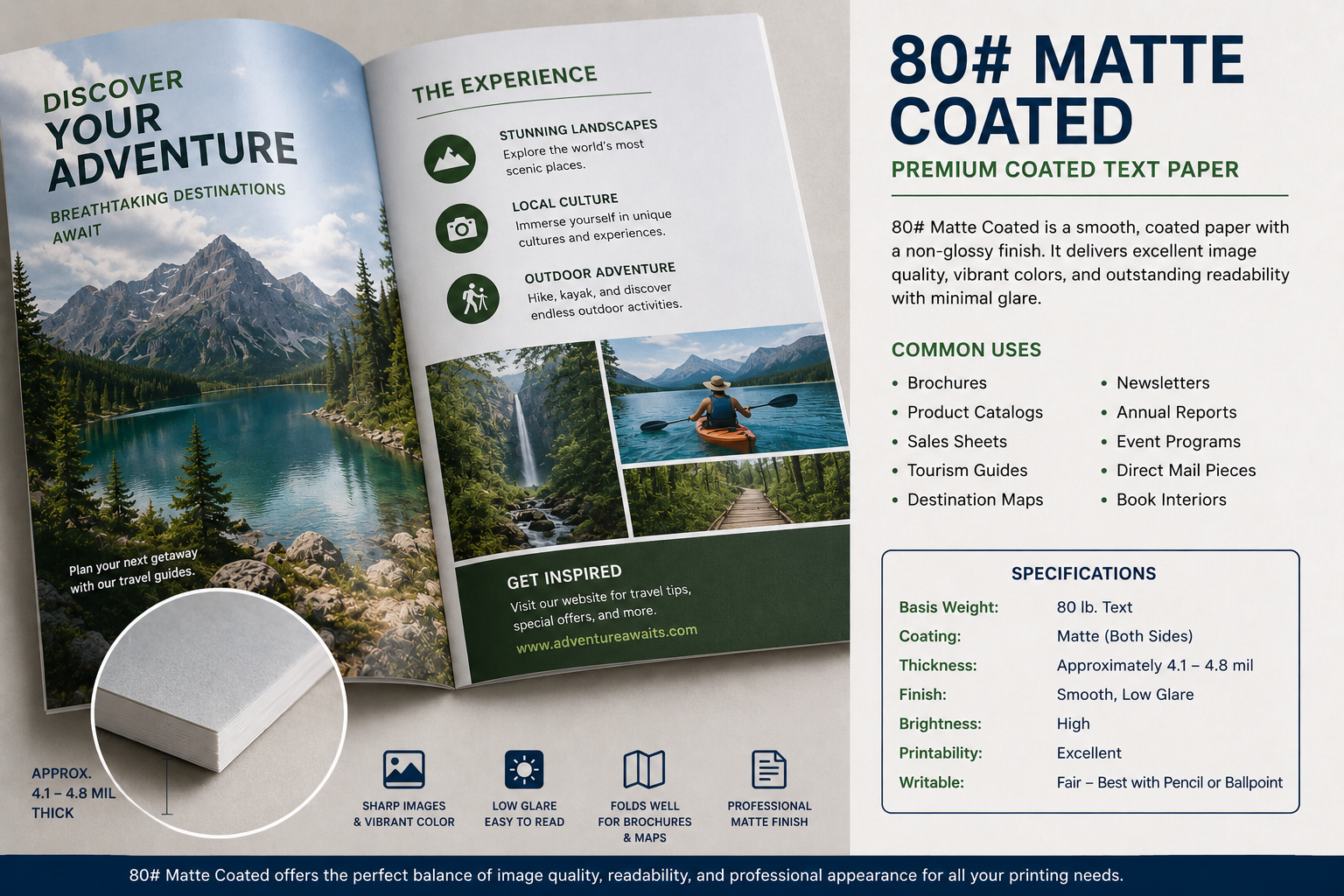
80# Matte Coated Paper
80# Matte Coated Paper - A premium coated text stock with a smooth, low-glare finish that delivers sharp images, rich color, and excellent readability. Frequently used for brochures, destination maps, catalogs, newsletters, and other marketing materials that require a professional appearance without the shine of gloss paper.
"80# Matte Coated is a premium brochure paper that provides vibrant color and sharp images while reducing glare, making it ideal for brochures, maps, catalogs, and visitor guides."
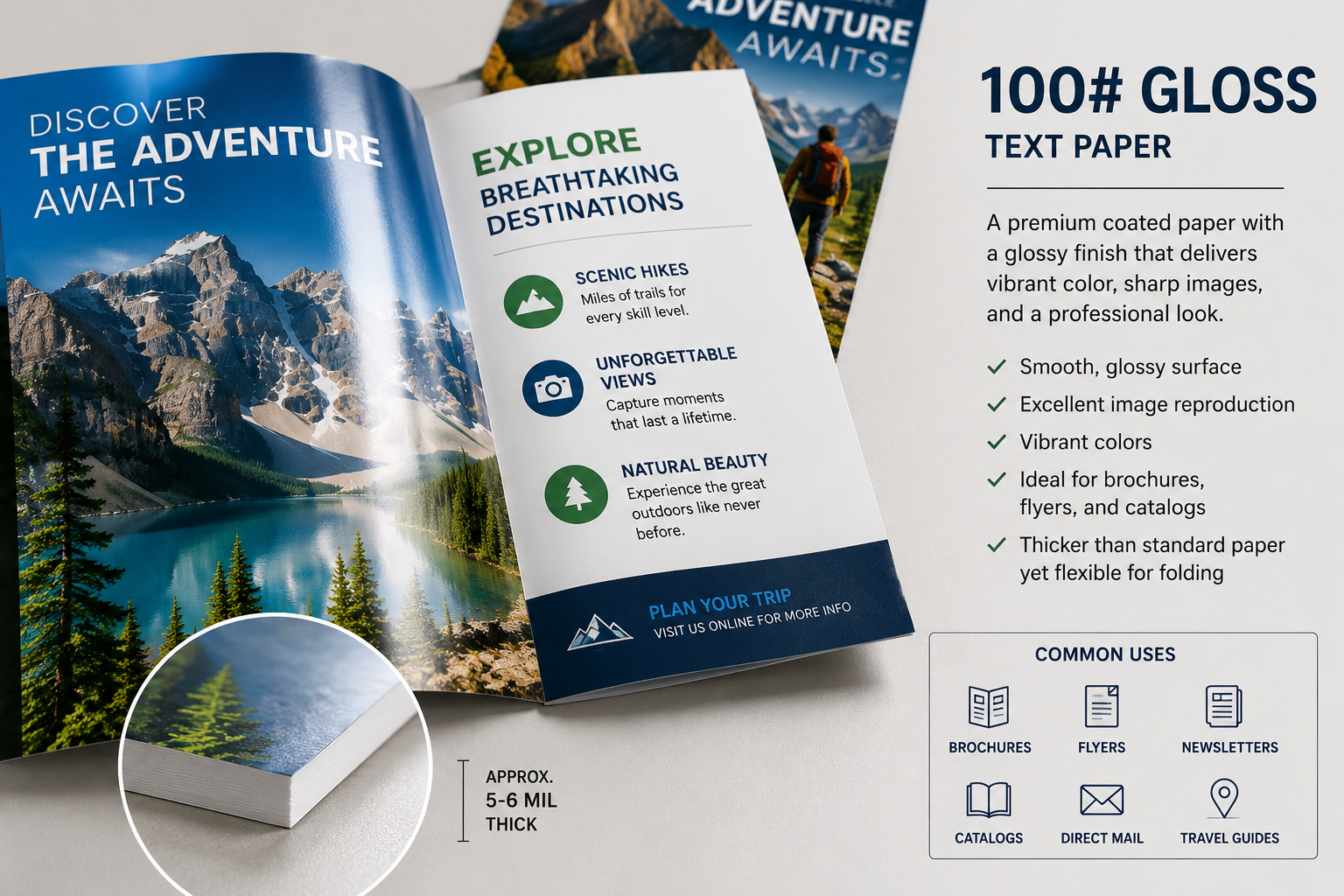
100# Gloss Paper
100# Gloss Paper - A premium coated paper stock with a glossy finish that enhances color, photographs, and graphic detail. Commonly used for brochures, flyers, catalogs, tourism guides, newsletters, and other high-quality marketing materials where vibrant color and a professional appearance are important.
"100# Gloss is one of the most popular brochure papers because it delivers bright colors, sharp images, and a professional finish without the thickness of cardstock."
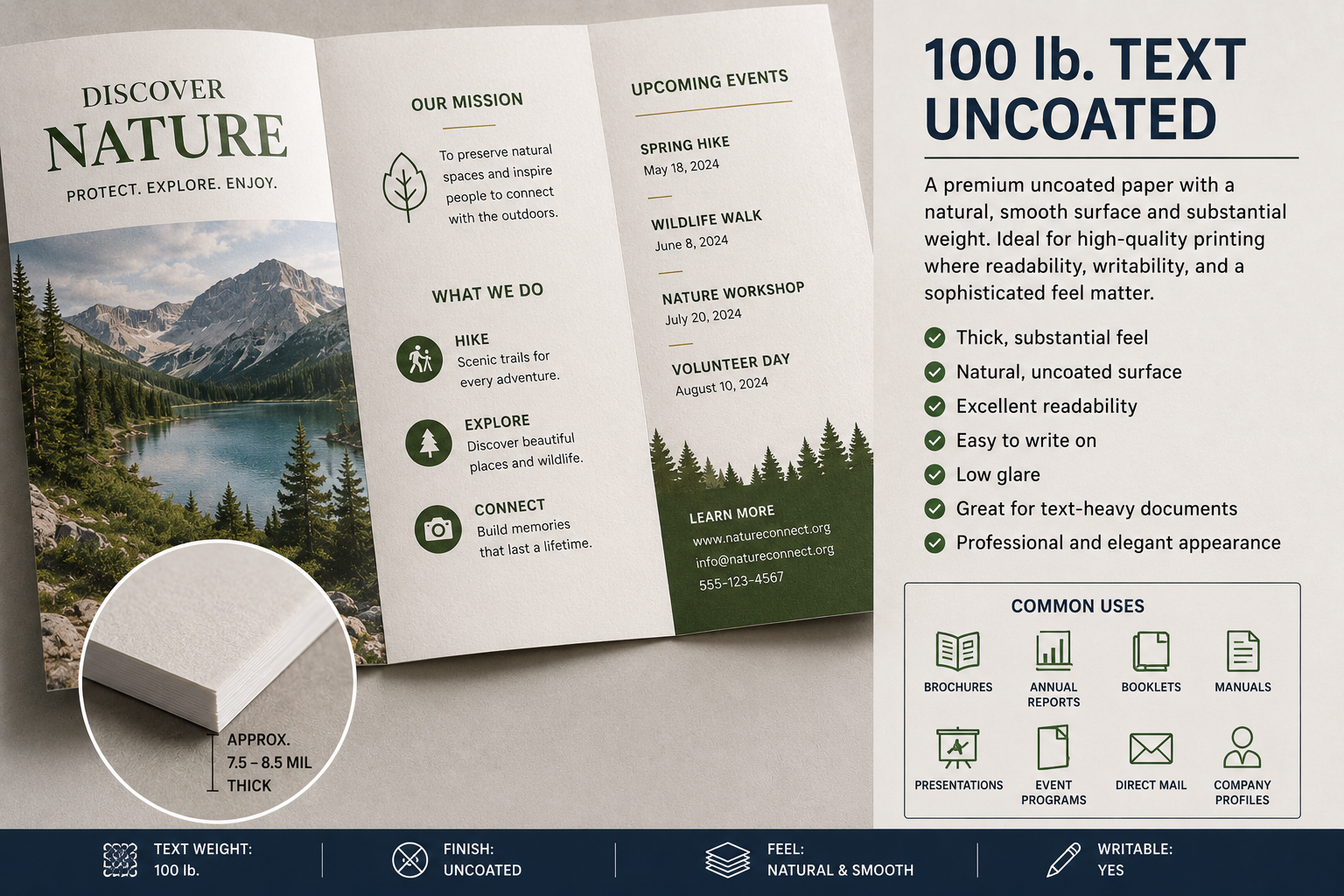
100# Text Uncoated Paper
100 lb. Text Uncoated - A premium-weight paper stock with a natural, non-coated surface that provides excellent readability, writability, and a sophisticated tactile feel. Commonly used for brochures, reports, manuals, booklets, and other high-quality printed materials where a professional appearance and easy-to-write-on surface are desired.
100# Satin Paper
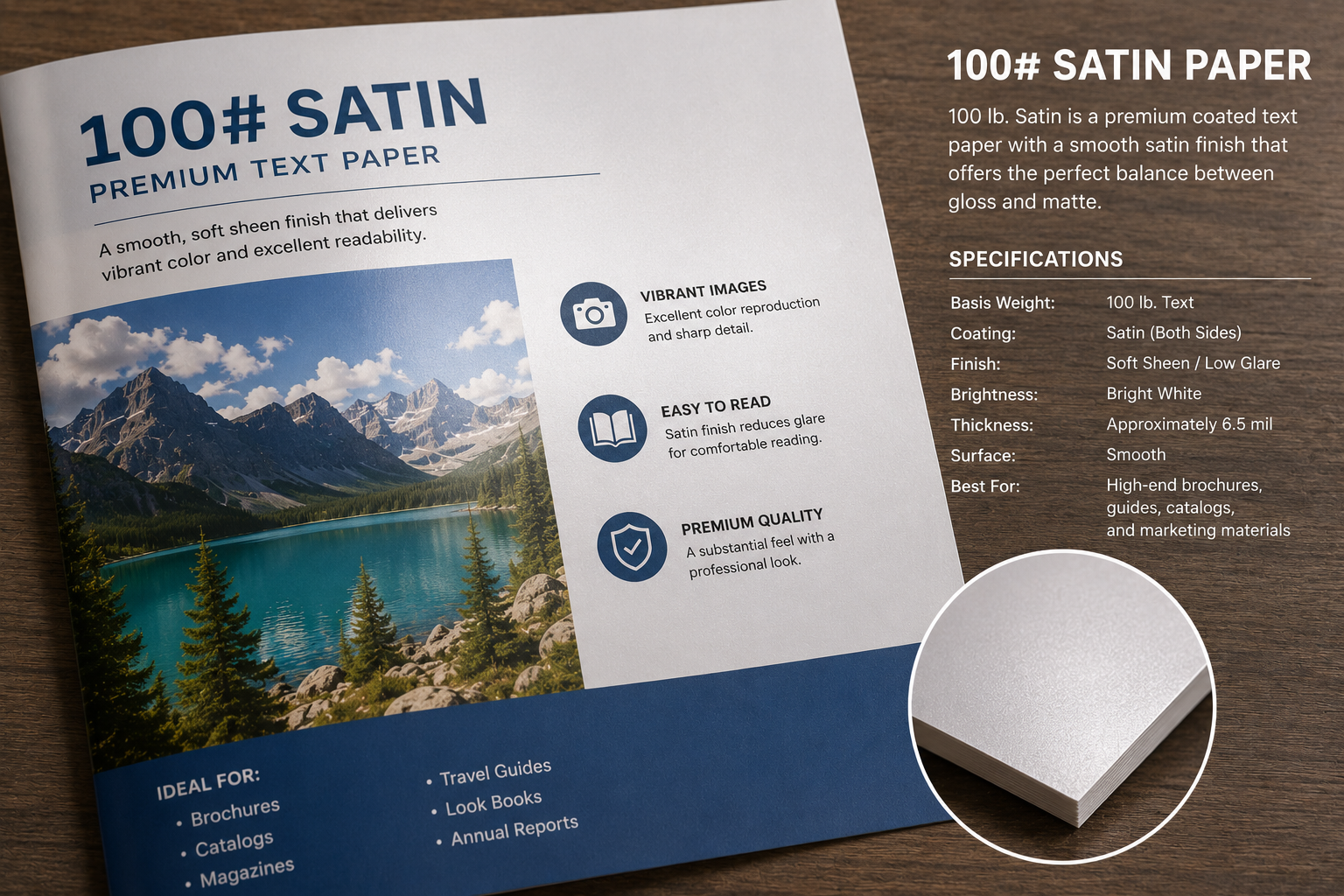
100# Satin Paper - A premium coated paper stock with a smooth, low-sheen finish that combines the vibrant color reproduction of gloss paper with the readability of matte paper. Commonly used for brochures, tourism guides, catalogs, magazines, and other high-quality marketing materials where both image quality and readability are important.
"100 lb. Satin is a premium paper with a soft sheen that makes photos look vibrant while keeping text easy to read. It's a popular choice for high-end brochures, visitor guides, and travel publications."
A3 Paper
A3 Paper is an international paper size measuring 297 mm × 420 mm (11.7" × 16.5"), commonly used for posters, presentations, large-format documents, and folded brochures. It is exactly twice the size of A4 paper and can be folded in half to create an A4-sized piece. A3 is very close to an 11 × 17 sheet, but slightly narrower and shorter. It's the standard large-format office paper size used throughout Europe and many international markets.
A4 Paper
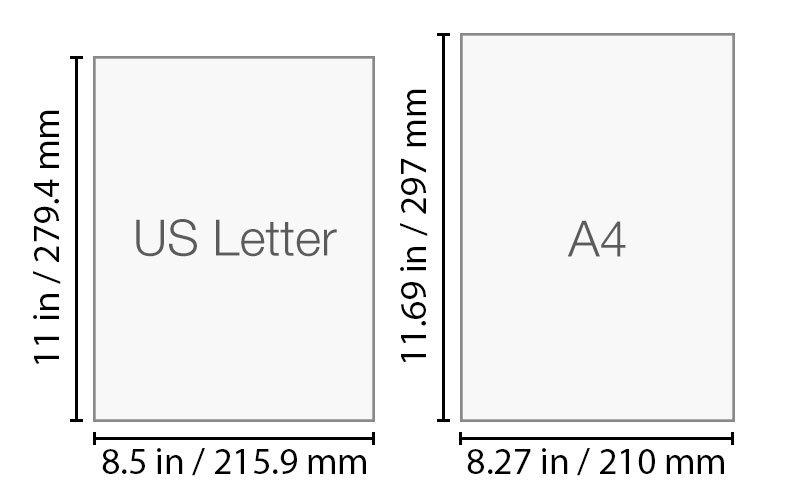
A4 Paper is the international equivalent of Letter size. It's slightly narrower and a little taller than an 8.5 × 11 sheet, making it the standard paper size used in most countries around the world. An international paper size measuring 210 mm × 297 mm (8.27" × 11.69"), commonly used for office documents, reports, forms, manuals, and marketing materials. It is half the size of A3 paper and is the standard business document size in most countries outside North America.
A5 Paper
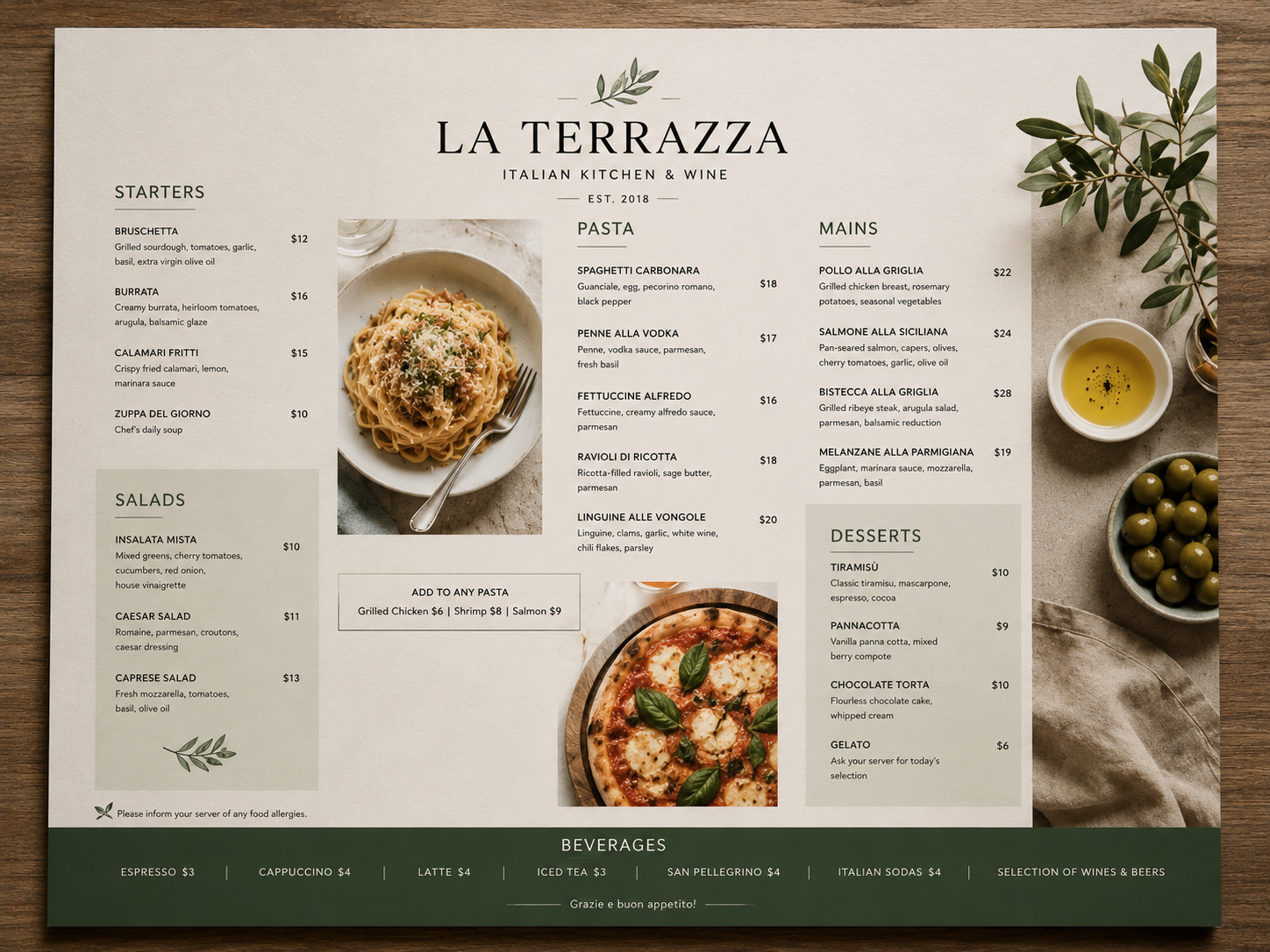
A5 Paper is an international paper size measuring 148 mm × 210 mm (5.83" × 8.27"), commonly used for booklets, brochures, event programs, menus, and promotional materials. It is exactly half the size of an A4 sheet and one-quarter the size of an A3 sheet. A5 is very similar to a U.S. Half-Letter sheet but is slightly wider and slightly shorter.
"An A5 piece is about the size of a small booklet or event program. It's large enough to hold detailed information but compact enough to fit easily into a purse, bag, or direct mail envelope."
Aqueous
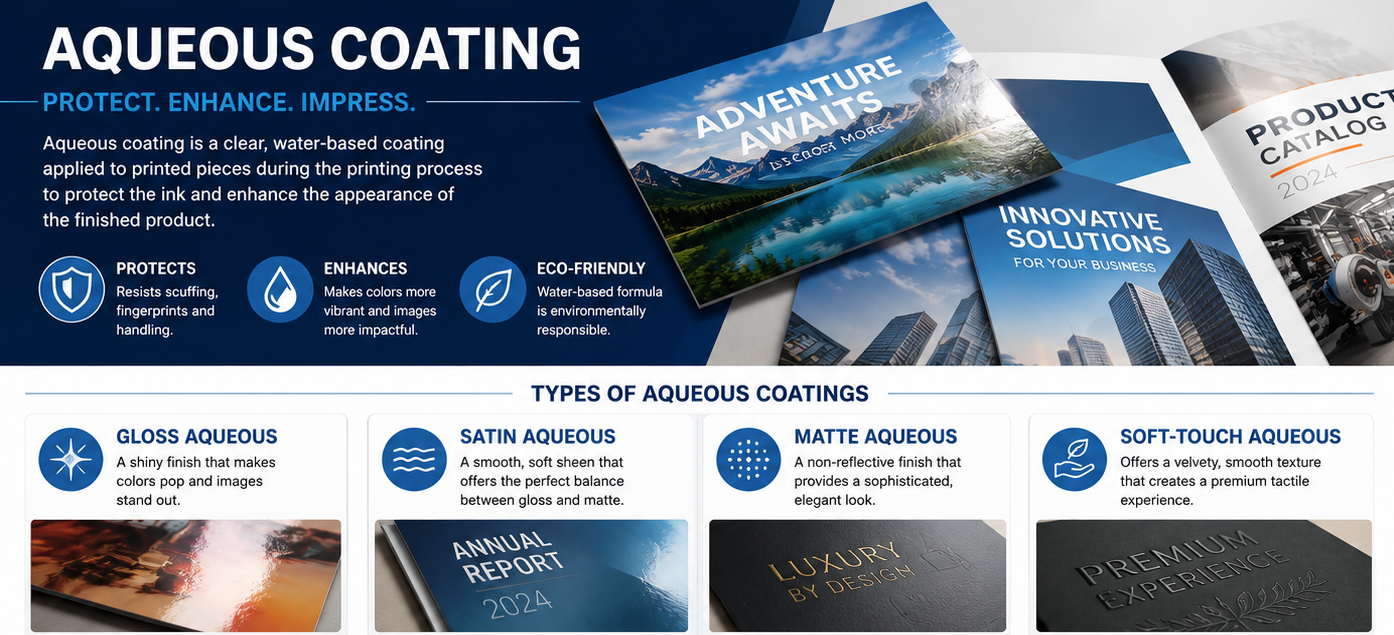
Aqueous Coating (AQ): A water-based clear coating applied during the printing process to protect printed materials and enhance their appearance. Available in gloss, satin, matte, and specialty finishes, aqueous coatings improve durability, reduce scuffing, and increase color vibrancy.
"Aqueous coating is a clear, water-based protective coating applied to printed materials to enhance color, reduce scuffing, and improve durability. It gives printed pieces a professional appearance while helping them withstand handling and mailing."
Artwork
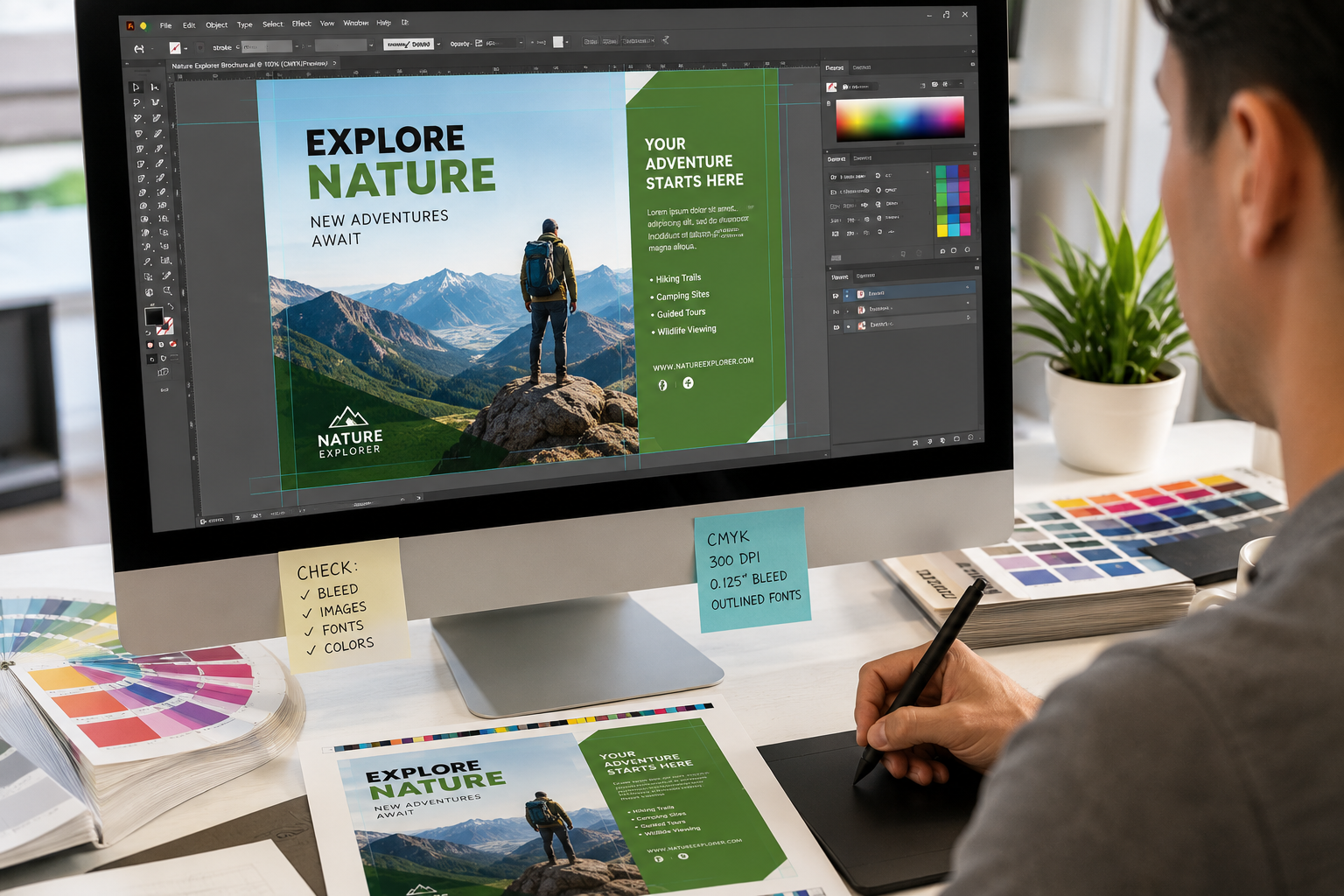
Artwork: The digital design files and visual elements used to produce a printed product. Artwork may include logos, images, text, illustrations, layouts, and other graphic elements and must be properly prepared to meet printing specifications. That's why printers spend so much time reviewing artwork during prepress—it's the foundation of the finished product.
Bindery
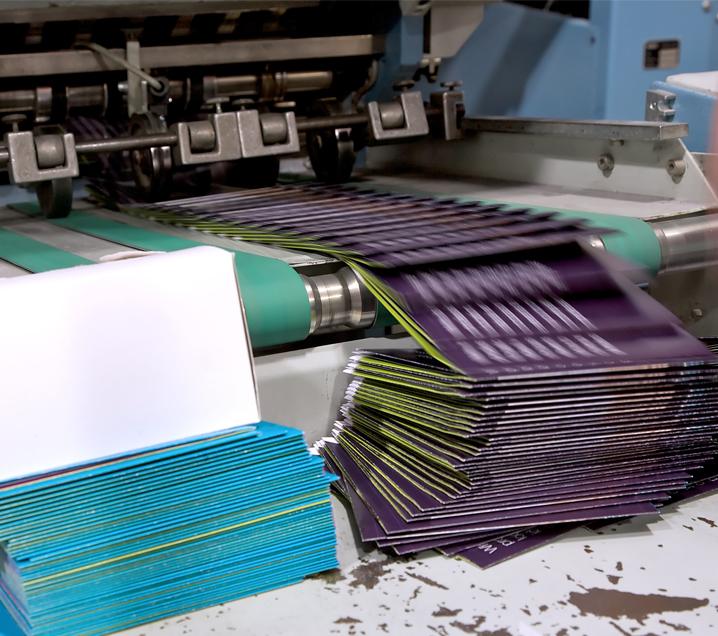
Bindery refers to the post-printing processes that transform printed sheets into finished products. These finishing operations include cutting, folding, collating, stitching, gluing, punching, laminating, and binding printed materials so they are ready for use, distribution, or mailing.
The bindery department is often the final step in the printing production process.
Bleed
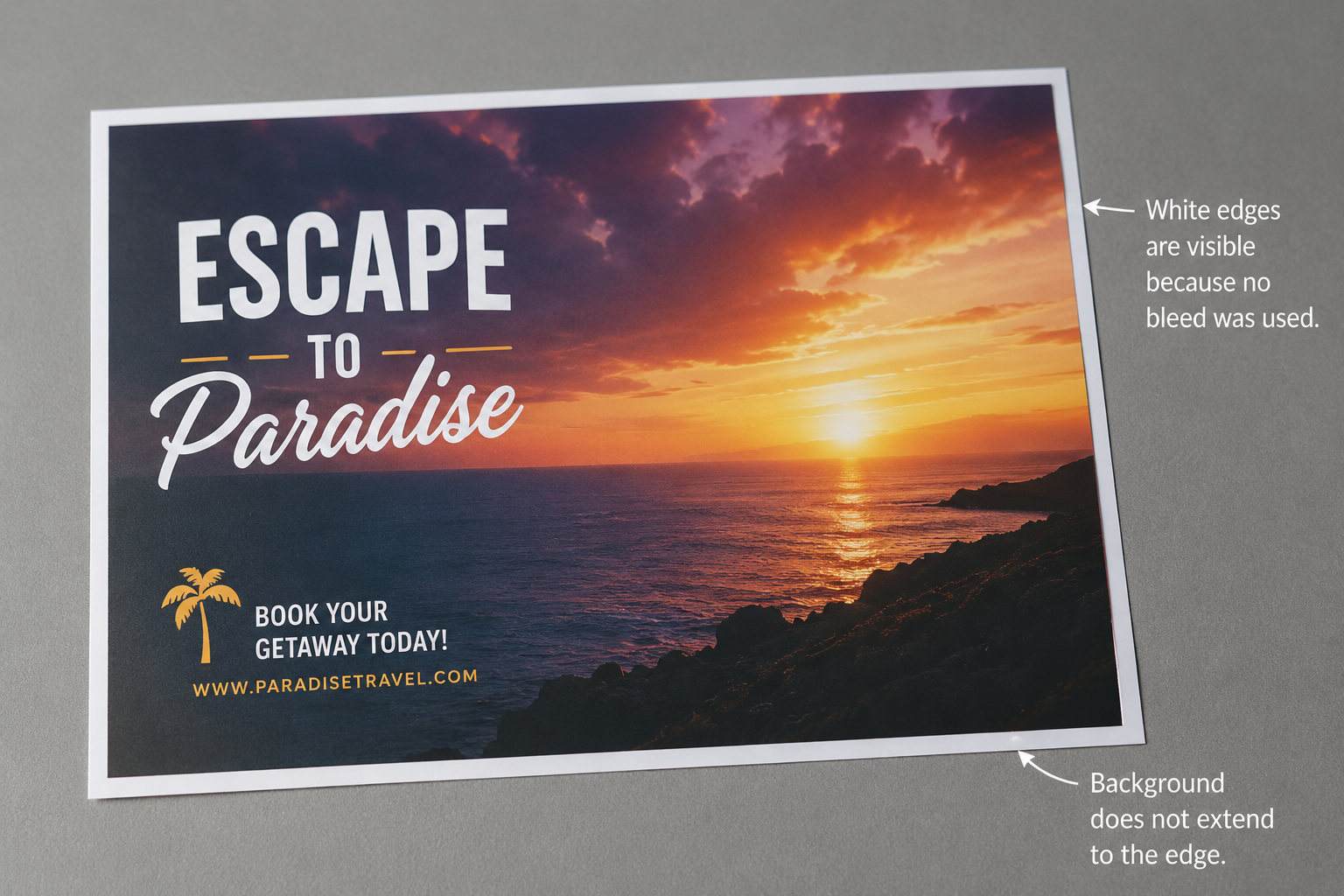
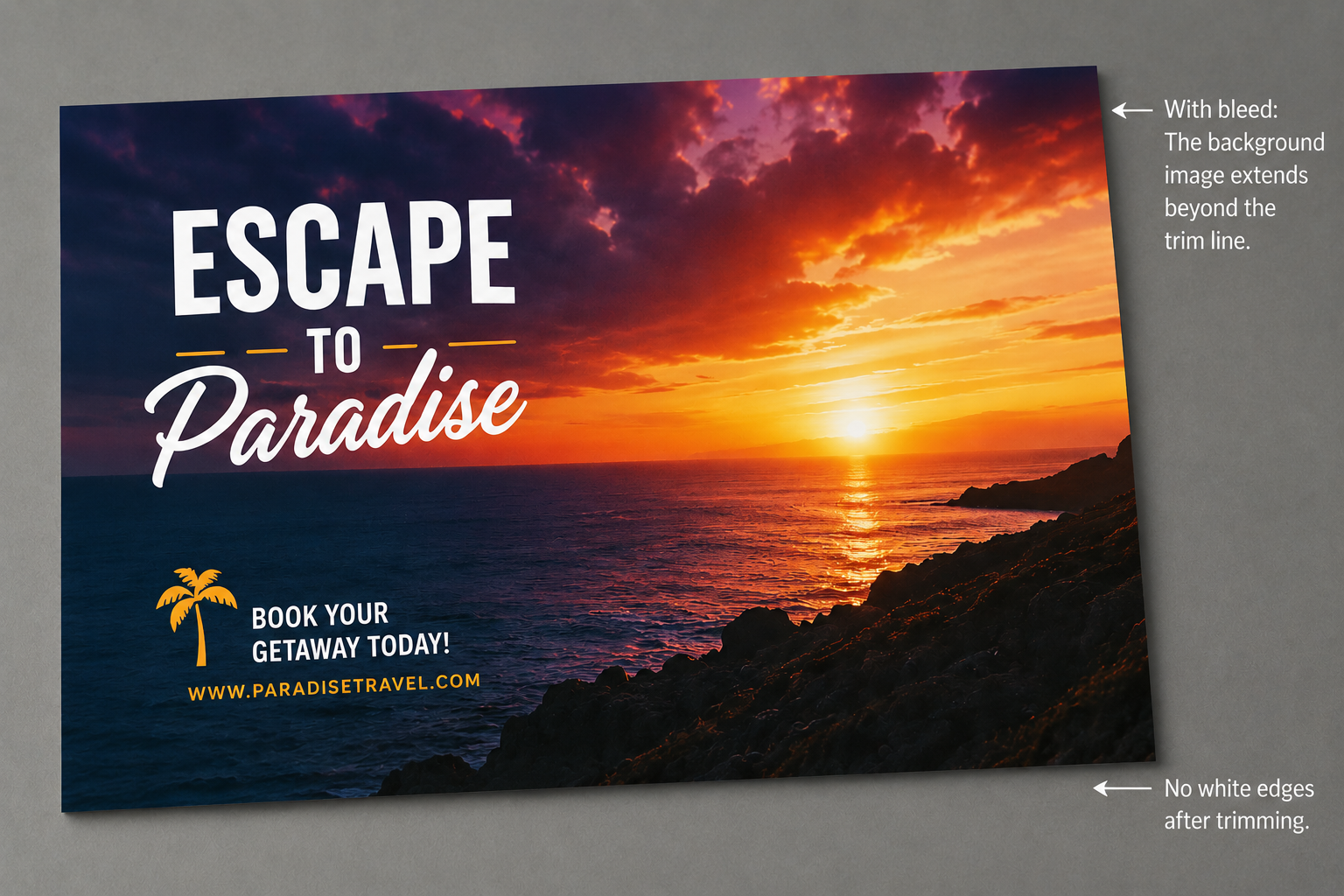
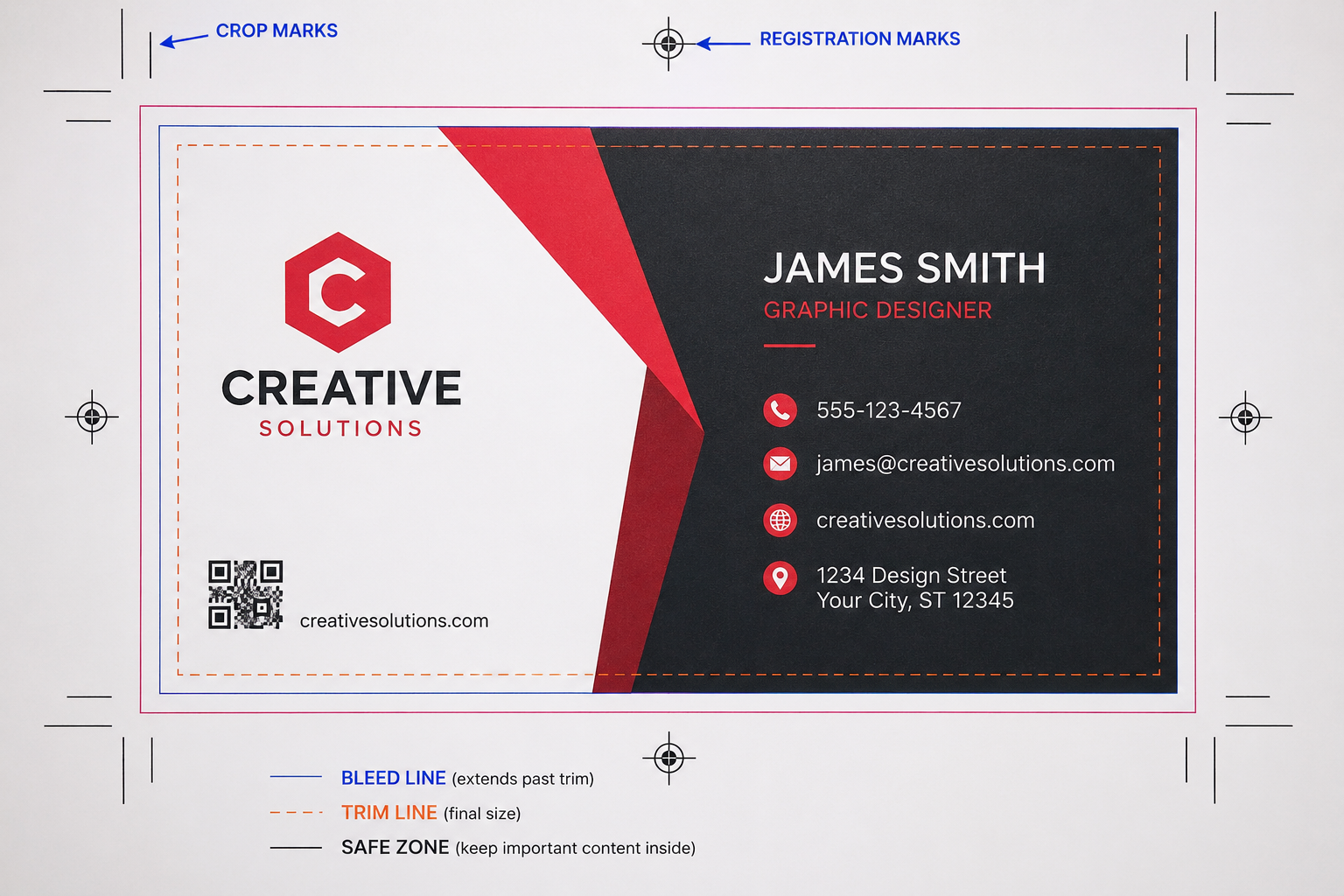
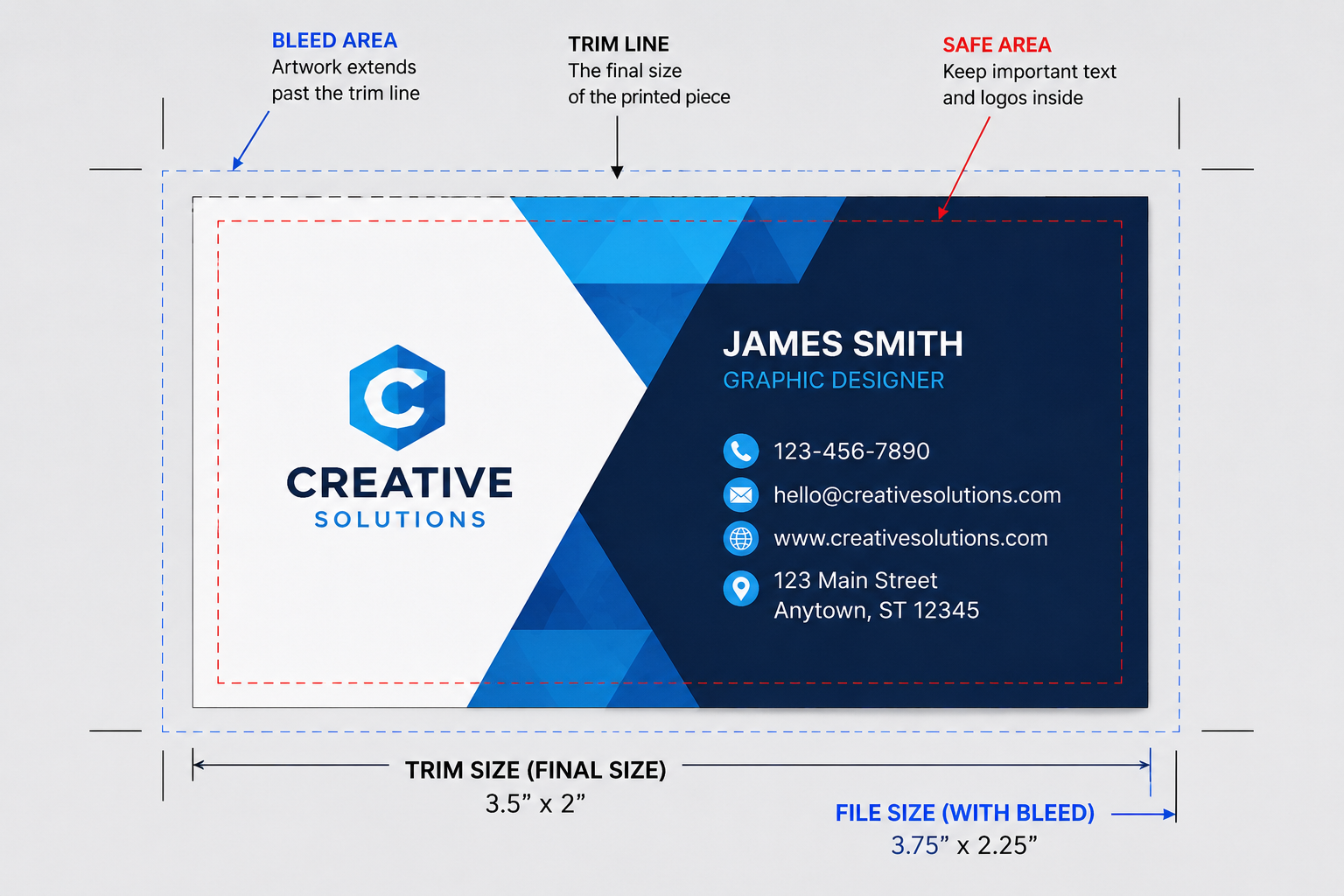
A bleed is the portion of artwork that extends beyond the final trim edge of a printed piece.
The purpose of a bleed is to ensure that when the paper is cut to its final size, there are no unwanted white edges caused by slight variations in the trimming process. This is one of the most important print-ready file requirements for business cards, postcards, brochures, flyers, book covers, and most full-color printed pieces.
"A bleed is extra artwork printed past the edge of the page so that when the piece is trimmed, the color or image goes completely to the edge without leaving any white border."
Bulk
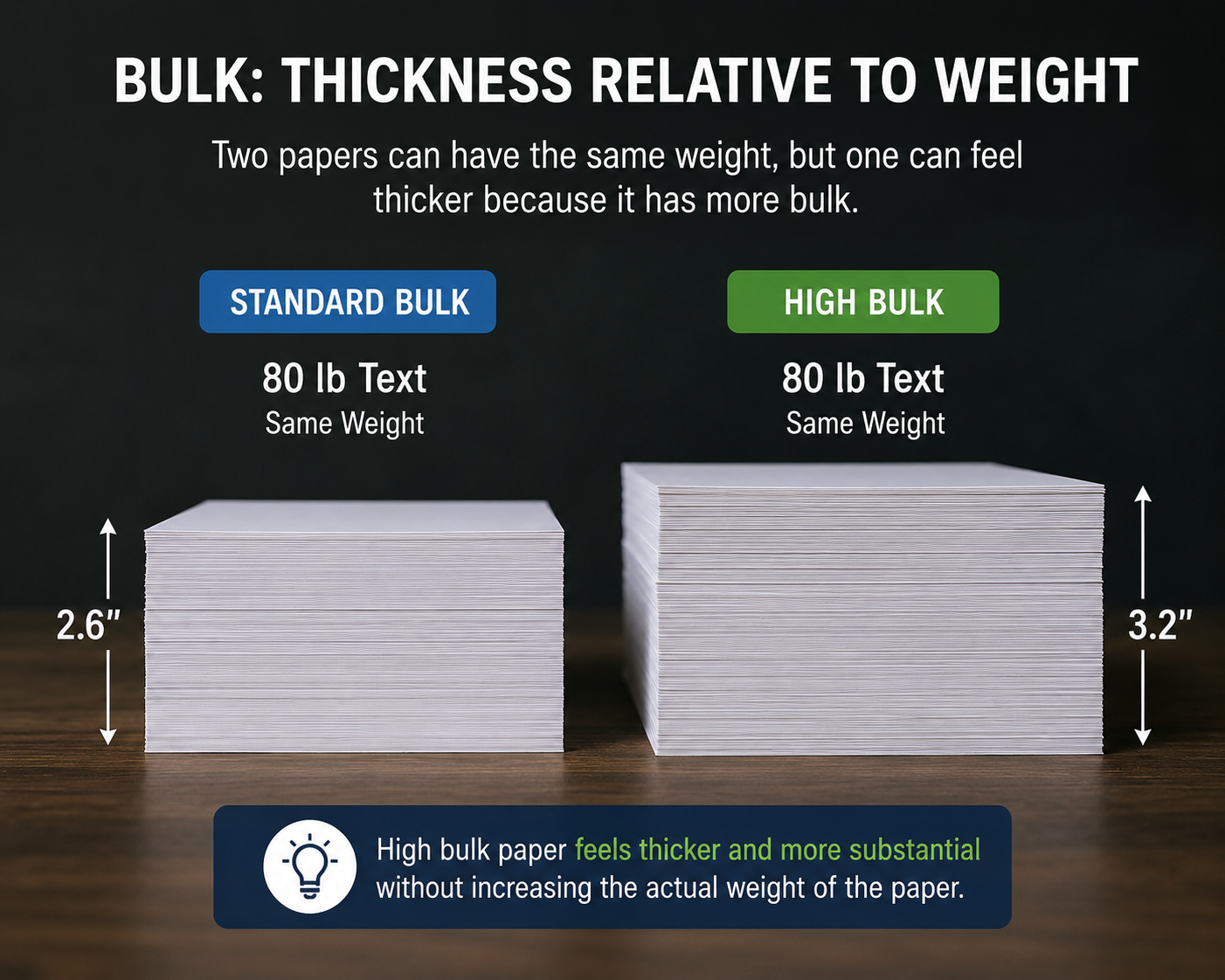
Bulk: A measure of a paper's thickness relative to its weight. High-bulk papers feel thicker and more substantial than standard papers of the same weight, making them popular for books, catalogs, and premium printed materials.
"Bulk refers to how thick a paper feels compared to its weight. Higher-bulk papers create a more substantial feel and thicker finished products without necessarily increasing paper weight."
C Fold
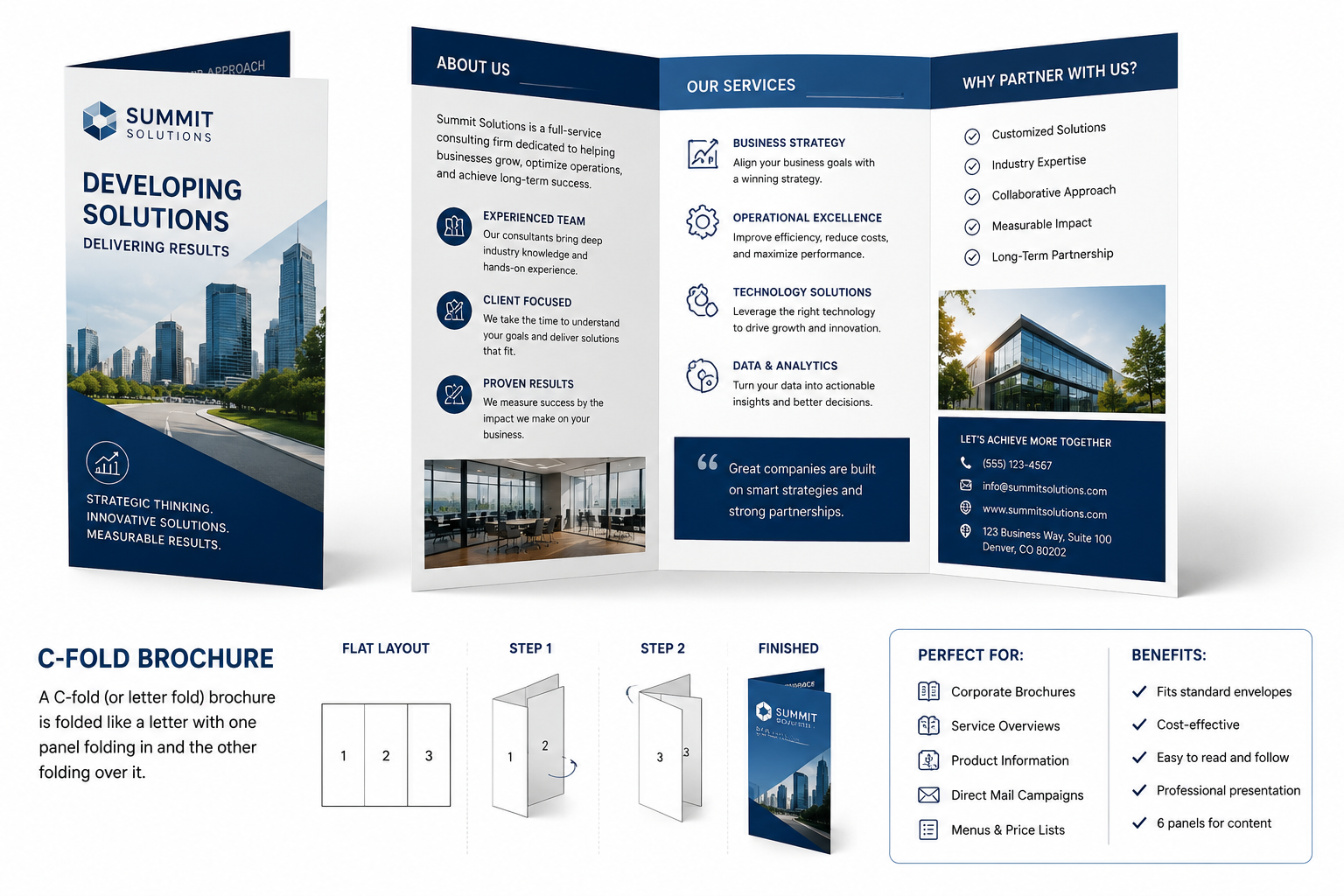
C-Fold (Letter Fold): A folding style in which one panel folds inward and the second panel folds over it, creating a finished piece that resembles the letter "C" when viewed from the side. C-folds are commonly used for brochures, direct mail pieces, menus, and marketing materials.
"A C-Fold brochure folds like a letter, with one panel folding inside and the outer panel wrapping around it. It's one of the most popular brochure styles because it's economical, easy to mail, and provides six panels for organizing information."
Caliper
Caliper is the measurement of a paper's thickness, usually expressed in thousandths of an inch (mils or points). Unlike paper weight, which measures the weight of a paper stock, caliper measures the actual thickness of the sheet.
For example, a paper with a caliper of 10 points (10 pt) is 0.010 inches thick.
Case Bound
Case Bound: A hardcover bookbinding method in which a bound book block is attached to a rigid cover made from heavy board wrapped with cloth, printed paper, leather, or other covering materials. Case-bound books offer superior durability, protection, and a premium appearance.
"Case bound means hardcover."

Cast Coated Paper
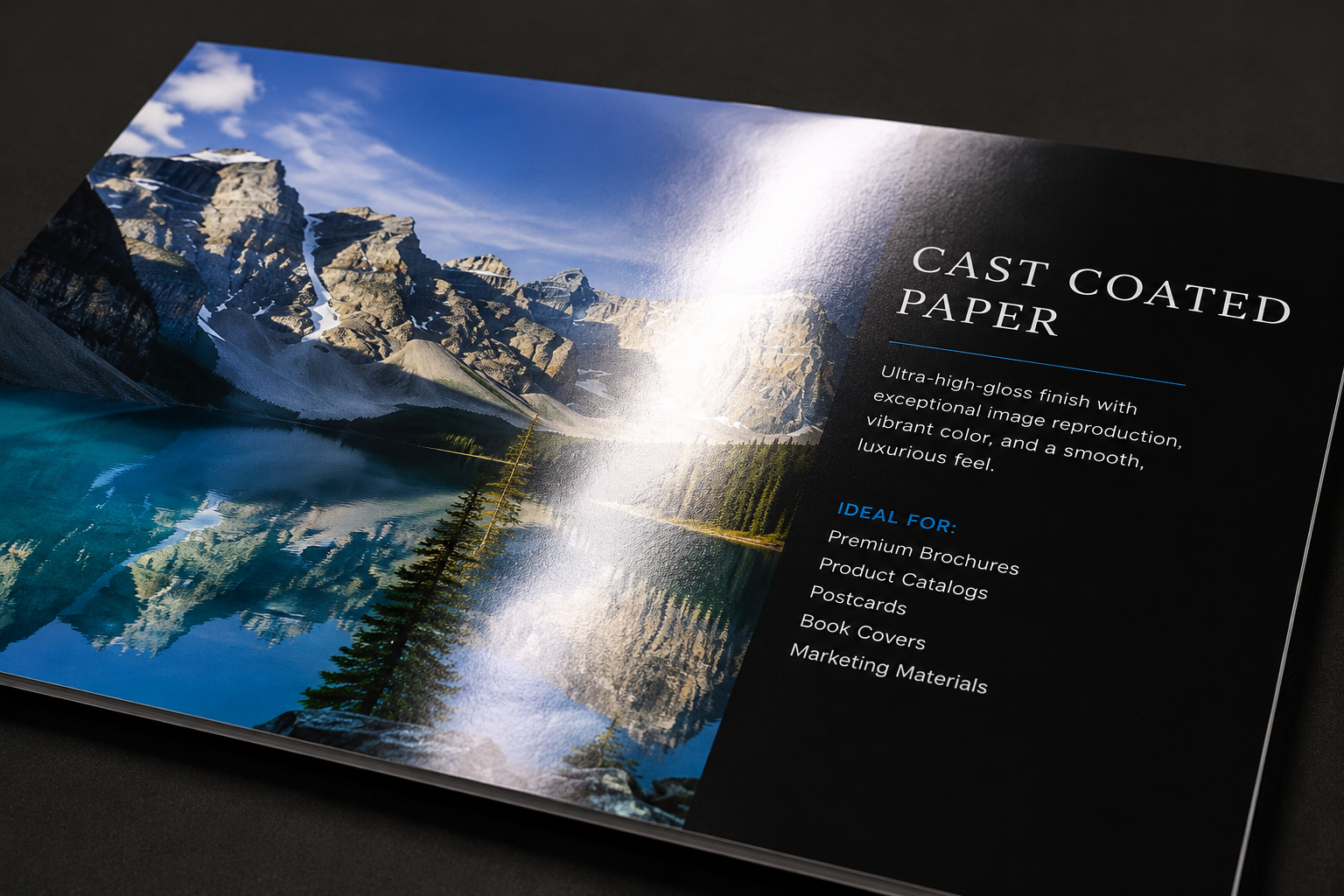
Cast Coated Paper: A premium paper stock with an exceptionally smooth, mirror-like gloss finish created by drying the coated paper surface against a polished chrome drum. Cast coated paper delivers superior image quality, vibrant color reproduction, and a luxury appearance.
"Cast coated paper is an ultra-high-gloss paper stock that produces brilliant colors, sharp images, and a mirror-like finish. It is commonly used for premium marketing pieces and photography-focused projects where maximum visual impact is desired."
Collate
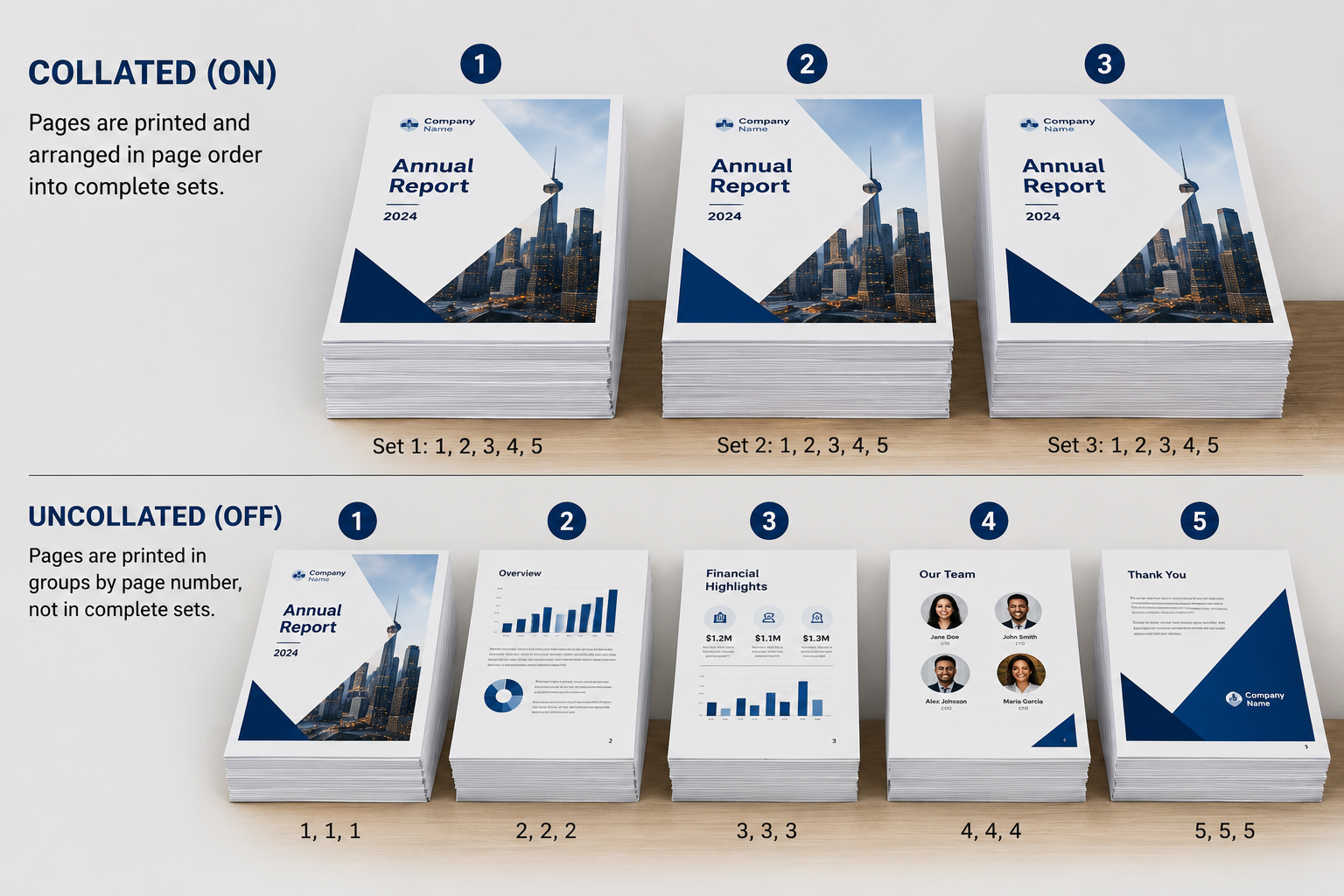
Collate is the process of arranging printed pages in sequential order into complete document sets, ensuring each copy contains all pages in the correct sequence. Collating saves time by delivering documents as complete, ready-to-use sets instead of requiring someone to manually sort pages into order.
Collated set: 1,2,3,4,5 /1,2,3,4,5/1,2,3,4,5 Uncollated: 1,1,1,1,1/2,2,2,2/3,3,3,3/4,4,4,4,4/5,5,5,5
CMYK
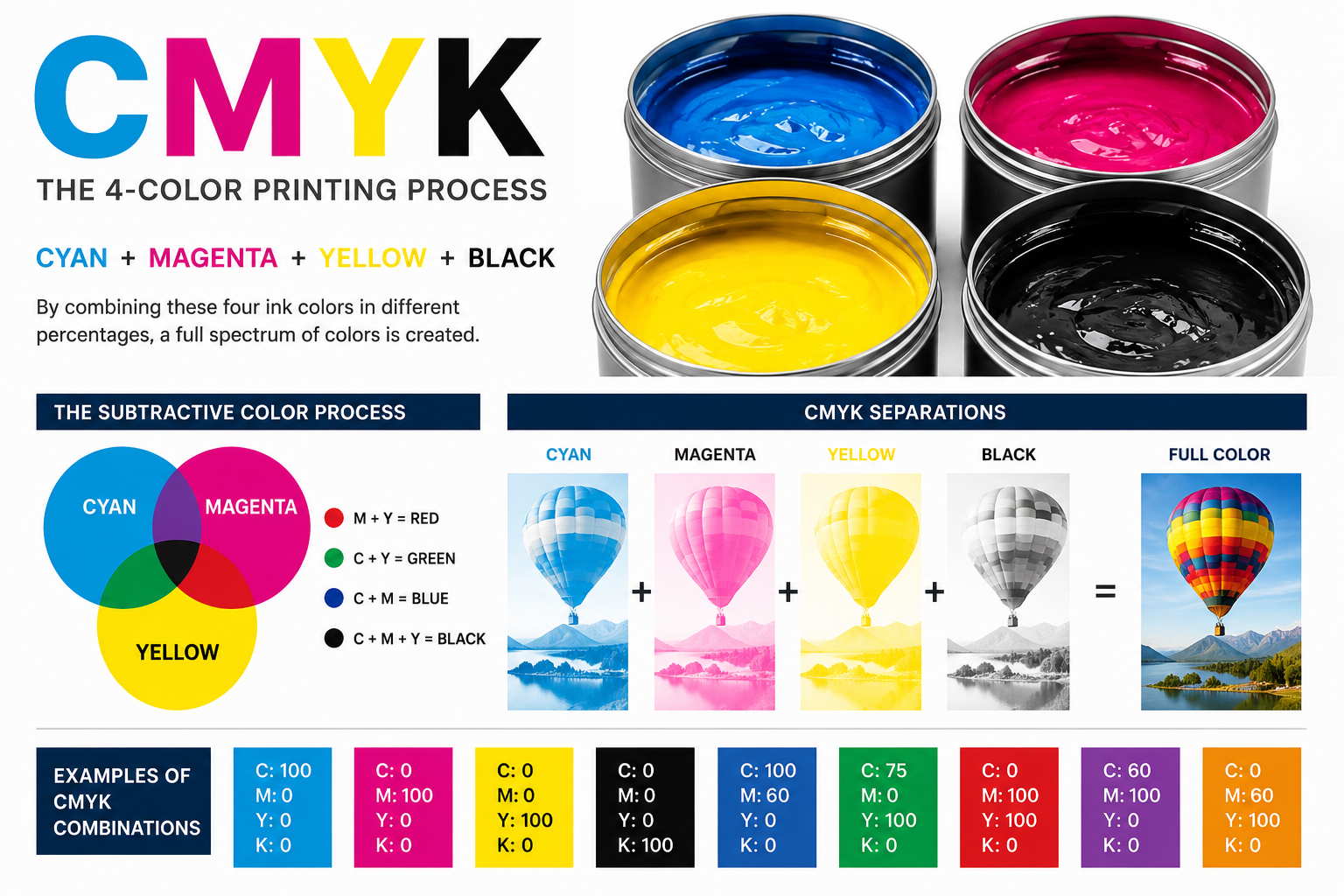
CMYK: A four-color process printing system that uses Cyan, Magenta, Yellow, and Black inks to reproduce full-color images and graphics on printed materials. CMYK is the standard color model used in commercial printing. By combining different percentages of these four ink colors, printers can reproduce millions of colors on paper. The "K" stands for Key Color, which is black.
Black is called the key color because it provides:
- Detail
- Contrast
- Sharpness
- Registration alignment
"Your computer sees color with light (RGB). Your printer creates color with ink (CMYK)."
Coated
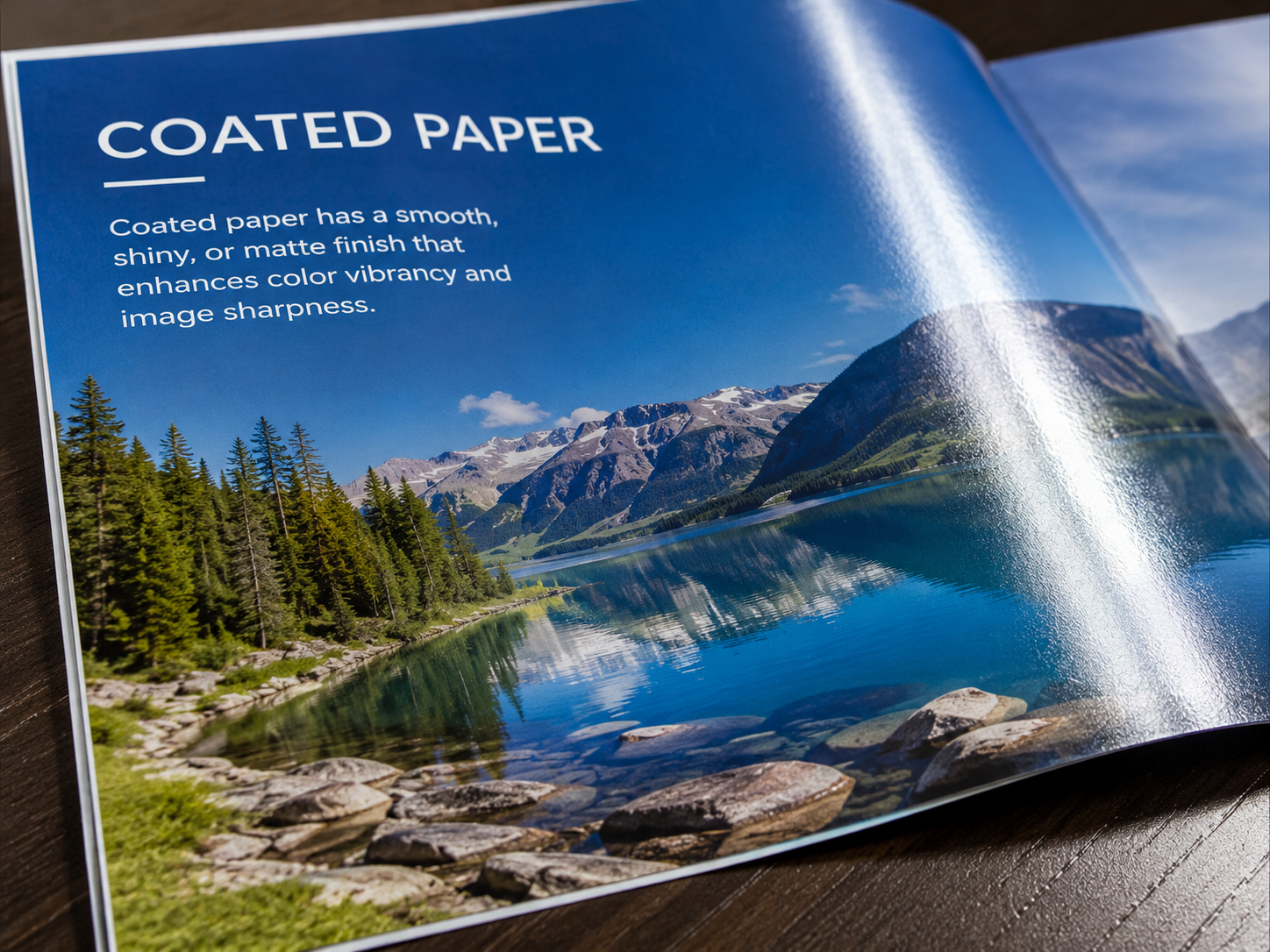
Coated paper has a smooth surface that has been treated with a clay or polymer coating. This coating prevents ink from soaking deeply into the paper, allowing images and colors to appear sharper and more vibrant. If you want colors to pop, choose coated.
Comb Binding
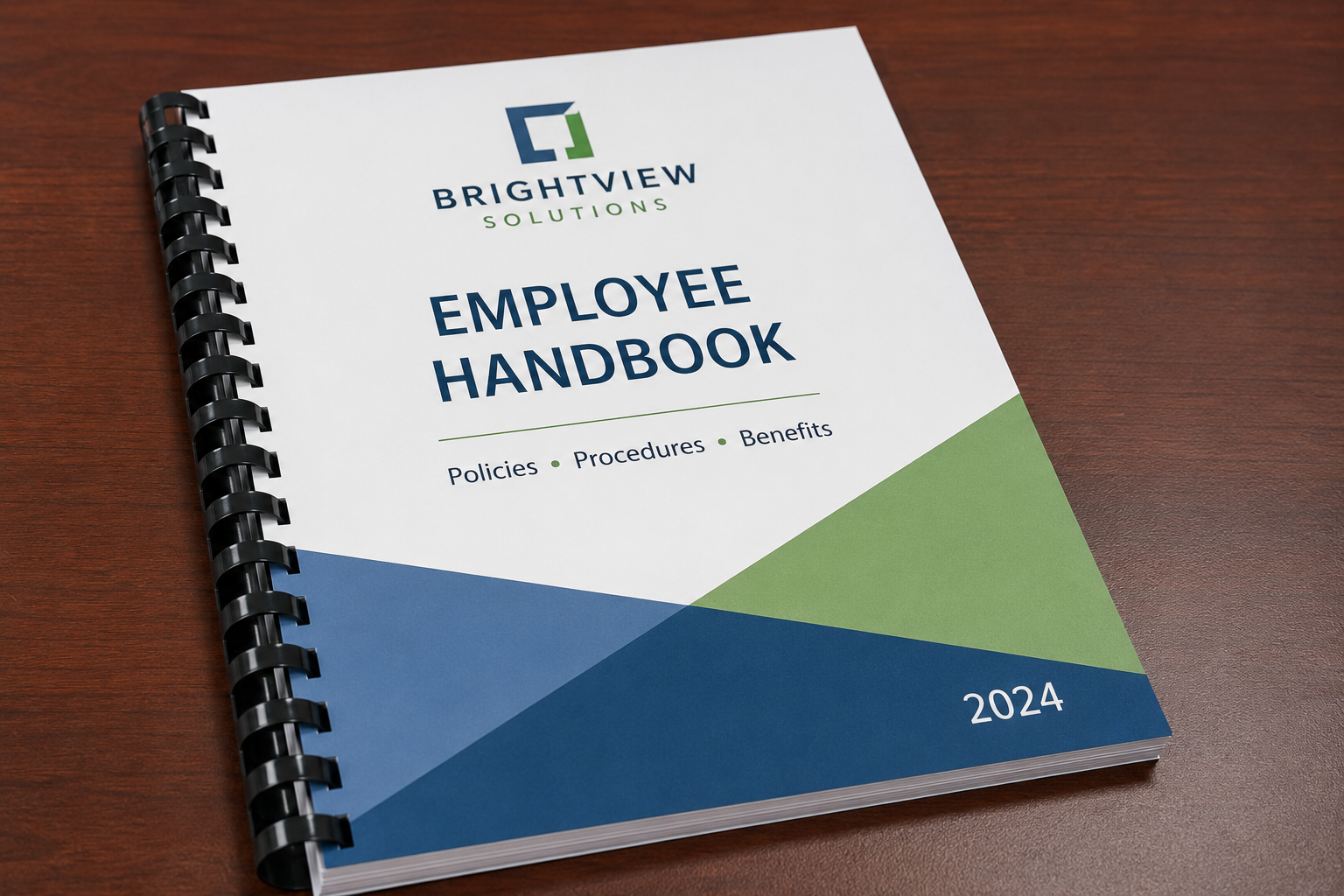
Comb Binding: A binding method that uses a plastic comb inserted through rectangular punched holes along the edge of a document. Comb binding provides an economical, functional solution for manuals, reports, handbooks, and training materials while allowing pages to be added or removed when needed.
"Comb binding uses a plastic spine with flexible rings to hold pages together. It's an affordable binding option that allows pages to be added or removed, making it perfect for manuals, training materials, and frequently updated documents."
Crop Marks
Crop Marks (Trim Marks): Small lines printed outside the artwork area that indicate where a printed piece should be trimmed to its final size. Crop marks are used during finishing to ensure accurate cutting and consistent finished dimensions.
Together, crop marks and bleed are two of the most important elements of a professional print-ready file because they help ensure clean edges and accurate trimming on the finished piece.
Deboss
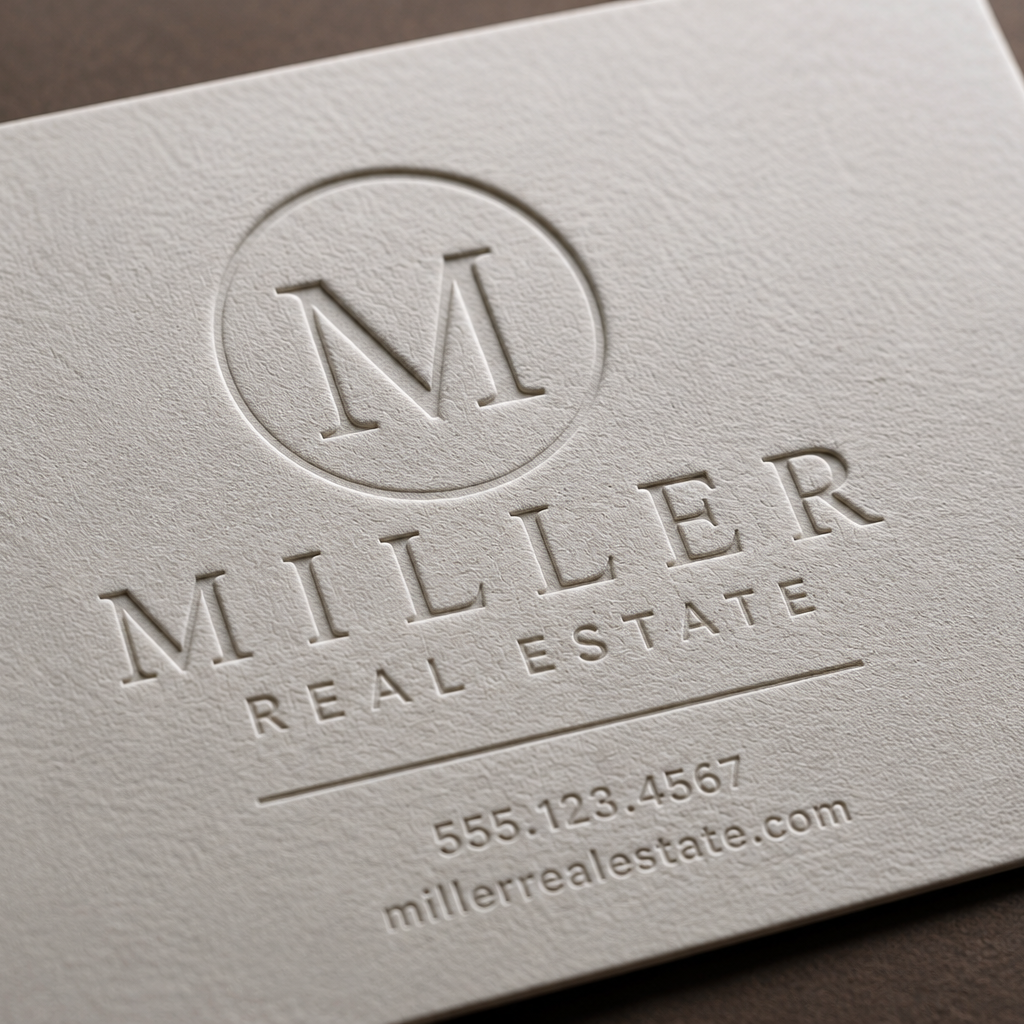
Debossing: A finishing process that creates a recessed image, design, or text by pressing it into the surface of a printed piece. Debossing adds depth, texture, and a refined appearance to business cards, packaging, invitations, book covers, and other premium printed materials.
"Debossing is a finishing process that presses a logo, text, or design into the paper, creating a recessed impression you can see and feel. It adds texture, sophistication, and a premium appearance to printed materials."
Destination Map
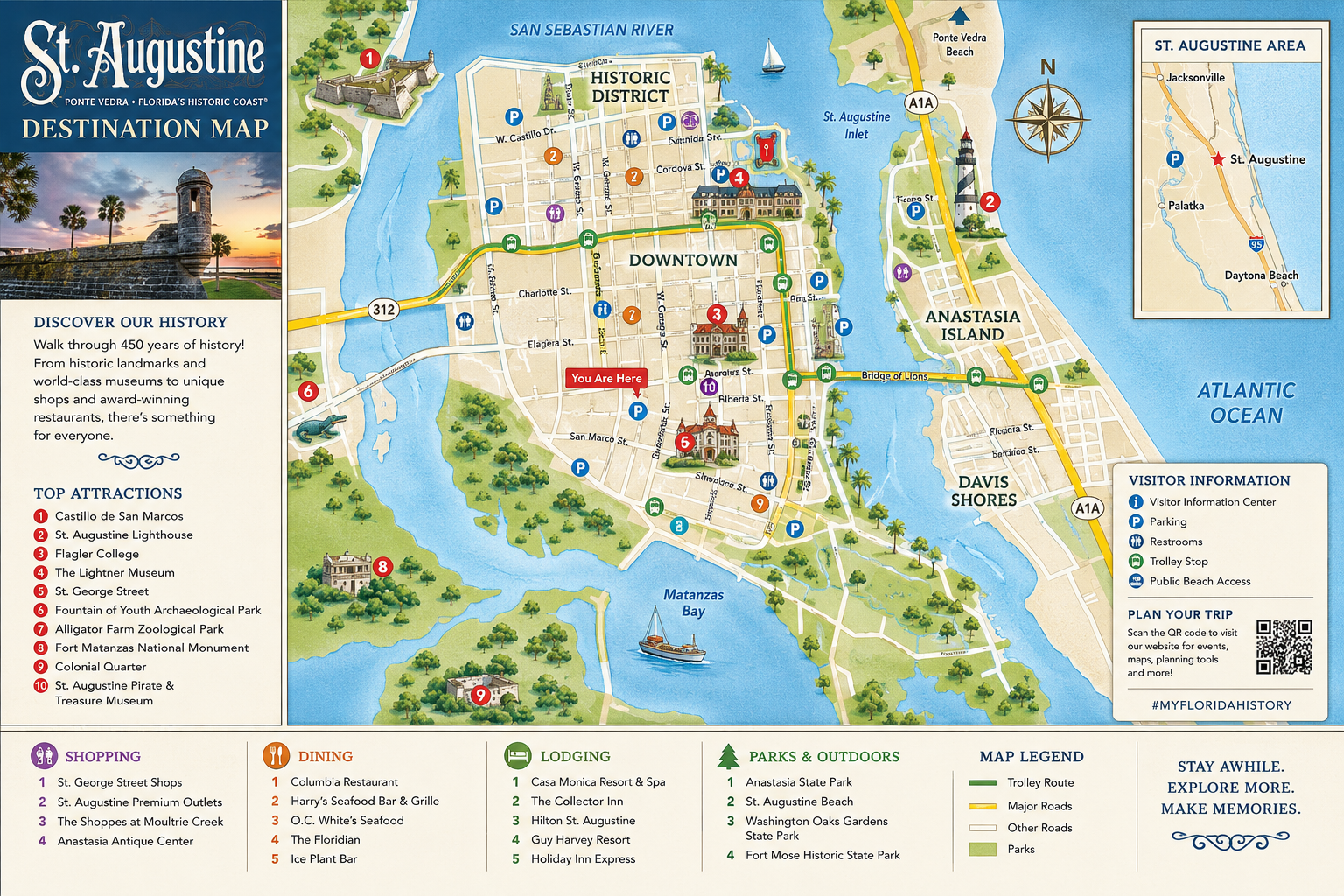
Destination Map - A map created to help visitors explore and experience a specific location by highlighting attractions, points of interest, accommodations, dining, recreation, and other visitor-focused information. Destination maps are commonly used by tourism organizations, parks, convention and visitor bureaus, and chambers of commerce to promote travel and guide visitors through a destination.
Die Cut
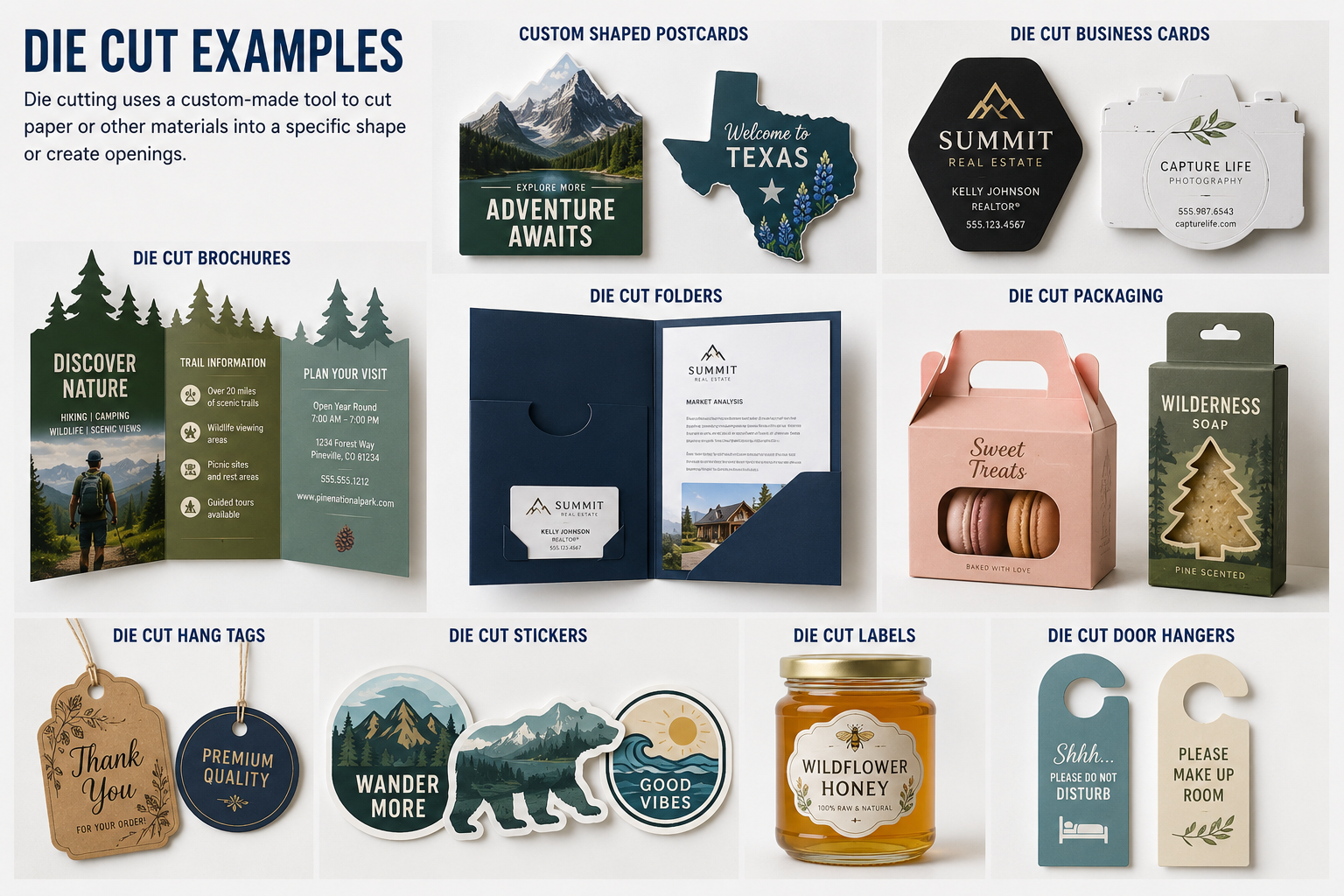
Die Cut: A finishing process that uses a custom steel-rule die or digital cutting system to cut printed materials into custom shapes, create openings, add rounded corners, or produce special features that cannot be achieved with standard straight trimming.
Think of it like a giant cookie cutter for paper, cardstock, labels, packaging, or promotional pieces.
Door Hanger
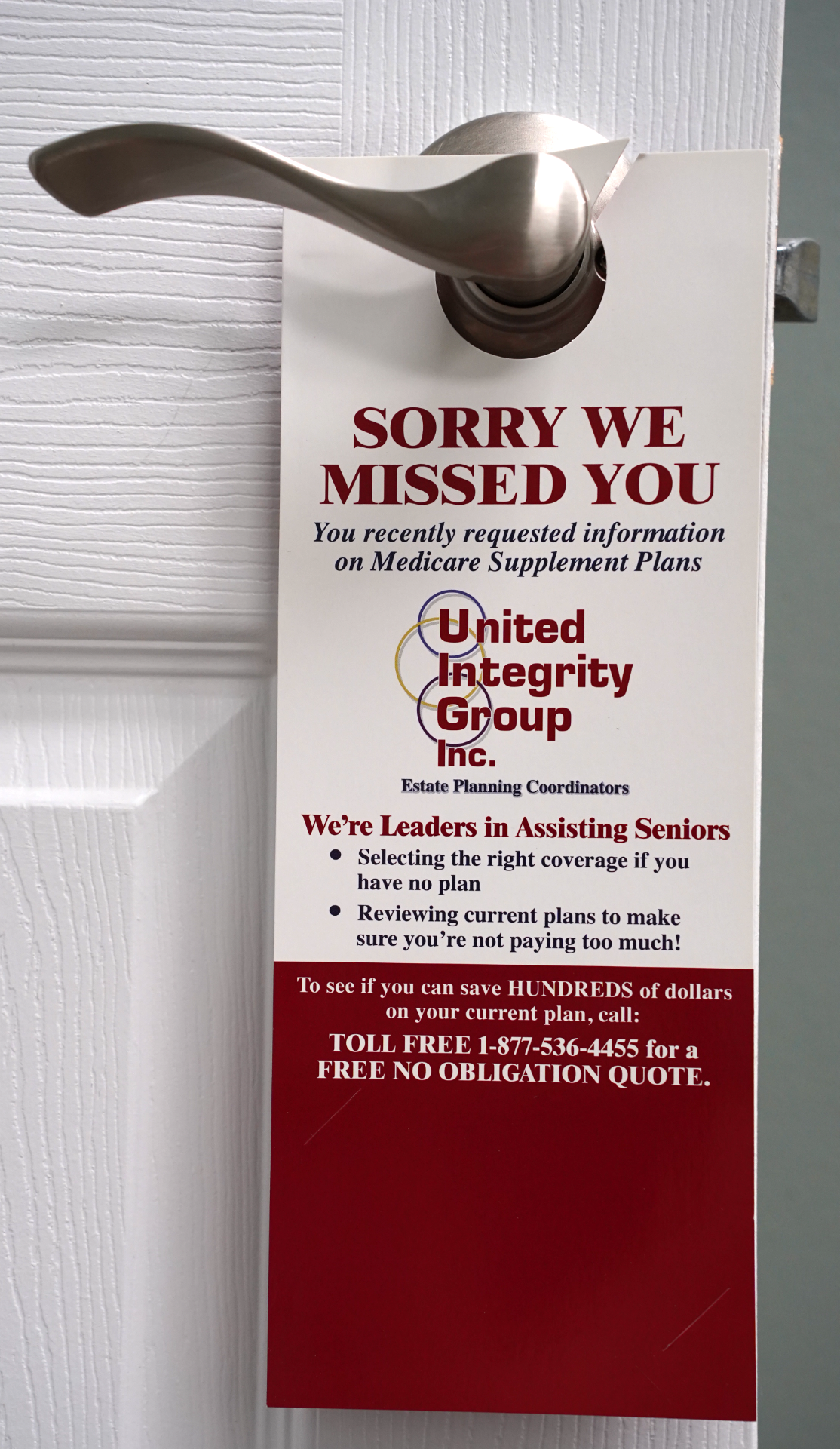
Door Hanger: A die-cut marketing piece designed to hang from a door handle or knob. Door hangers are commonly used for local advertising, promotions, service announcements, and neighborhood marketing campaigns because they provide direct, highly visible exposure to homeowners and businesses.
"A door hanger is a printed marketing piece that hangs directly on a door handle, making it one of the most visible and effective ways to promote a business within a targeted neighborhood."
DPI (Dots Per Inch)
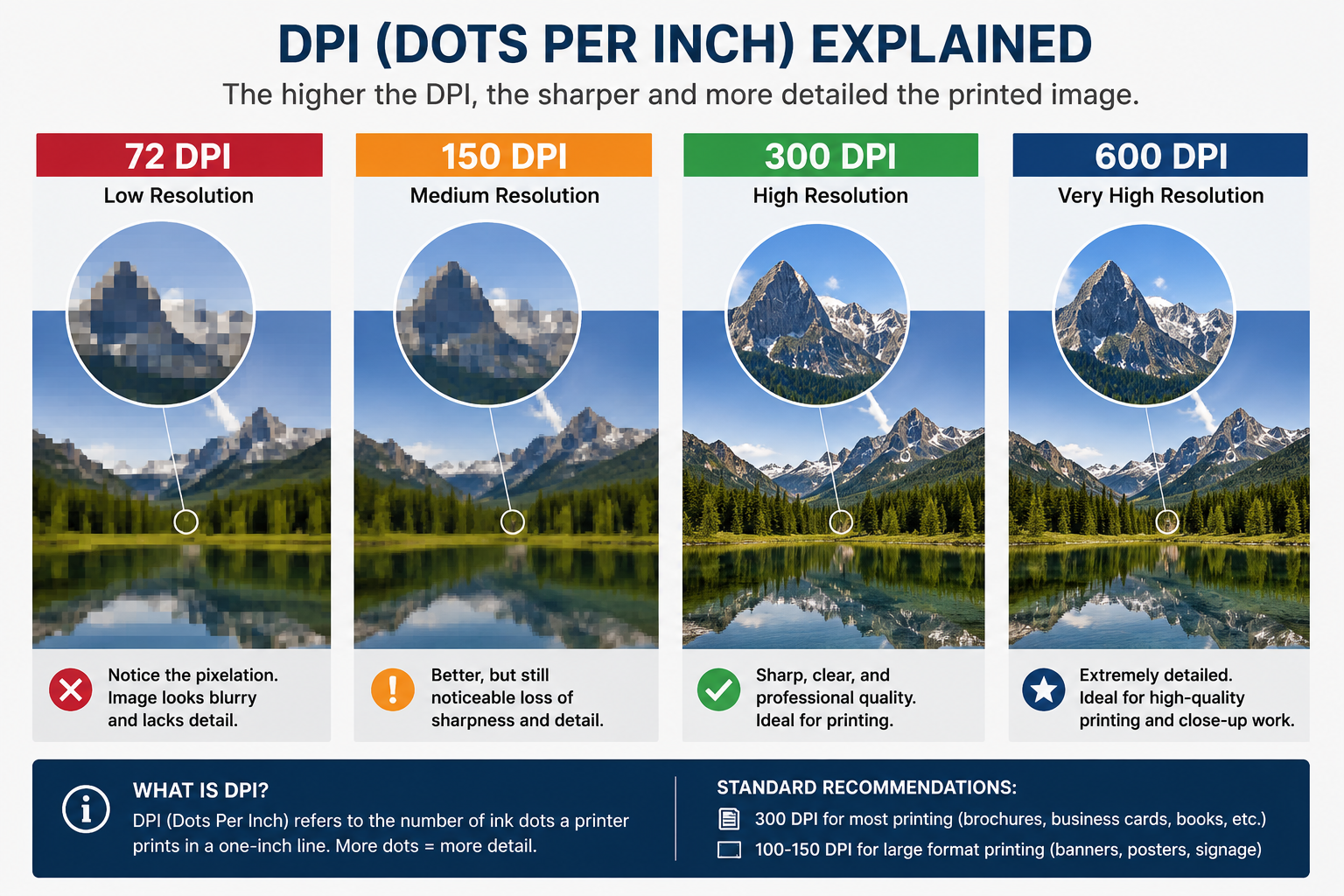
DPI (Dots Per Inch): A measurement of print resolution that indicates how many ink dots are printed within one inch. Higher DPI values produce sharper, more detailed printed images and are essential for professional-quality printing. Screens don't reveal print resolution problems. A photo that looks great on a phone may print poorly on an 11" × 17" brochure.
Dust Jacket
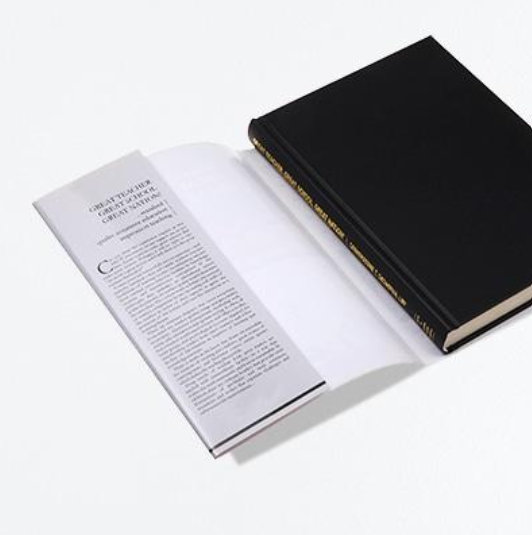
A dust jacket is a removable paper cover wrapped around the outside of a hardcover book. It serves both a protective and promotional purpose by shielding the book cover from wear while providing space for artwork, titles, descriptions, author information, and marketing content.
The dust jacket typically includes folded flaps that tuck inside the front and back covers of the book.
EDDM
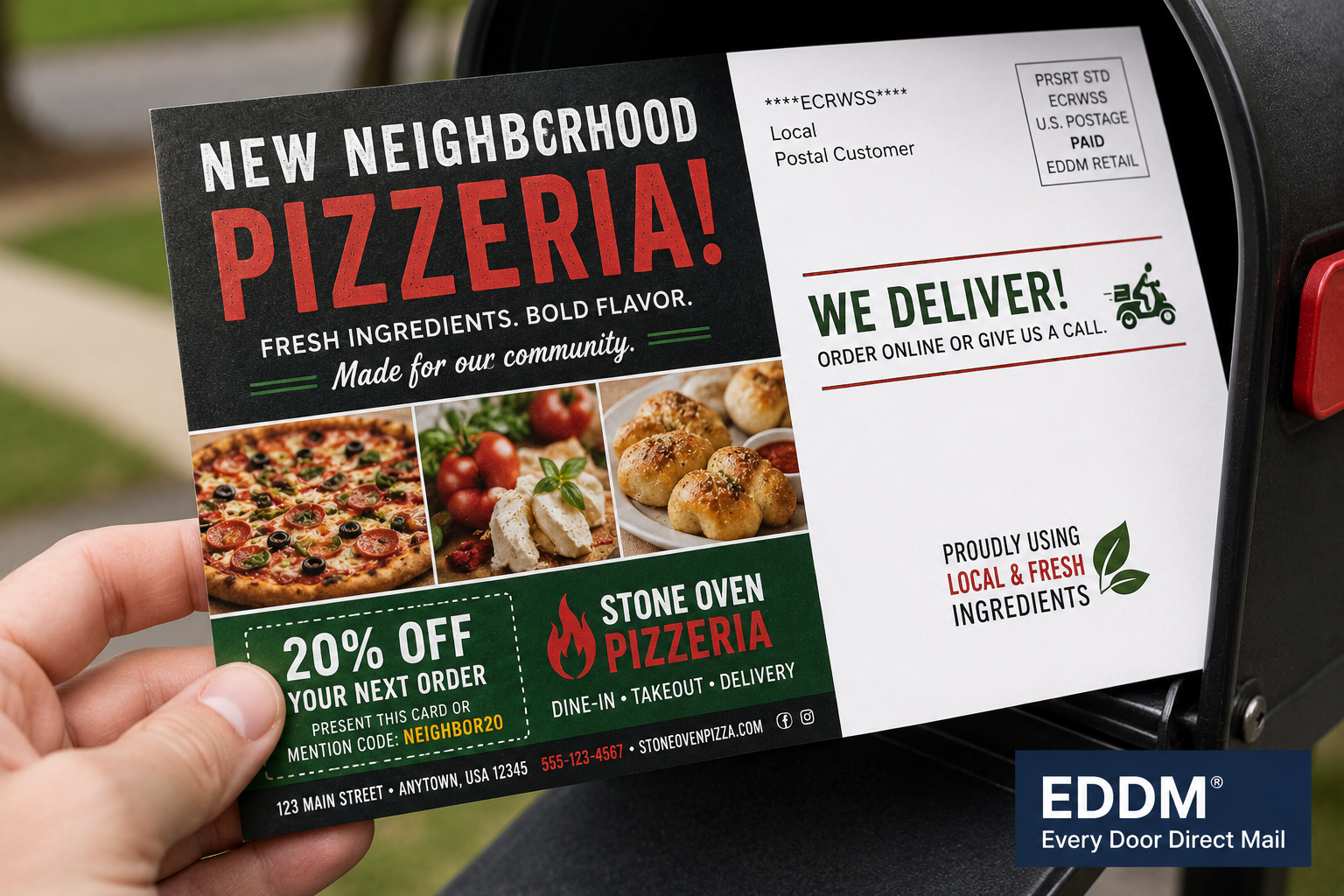
EDDM (Every Door Direct Mail): A USPS direct mail program that allows businesses to distribute marketing materials to every address within selected postal carrier routes without using individual mailing addresses. EDDM is commonly used for local advertising, grand openings, coupons, menus, and neighborhood marketing campaigns.
"EDDM allows you to mail your marketing message to every home or business in selected neighborhoods without purchasing a mailing list. It's an affordable way to reach local customers and build awareness in your target area."
Emboss
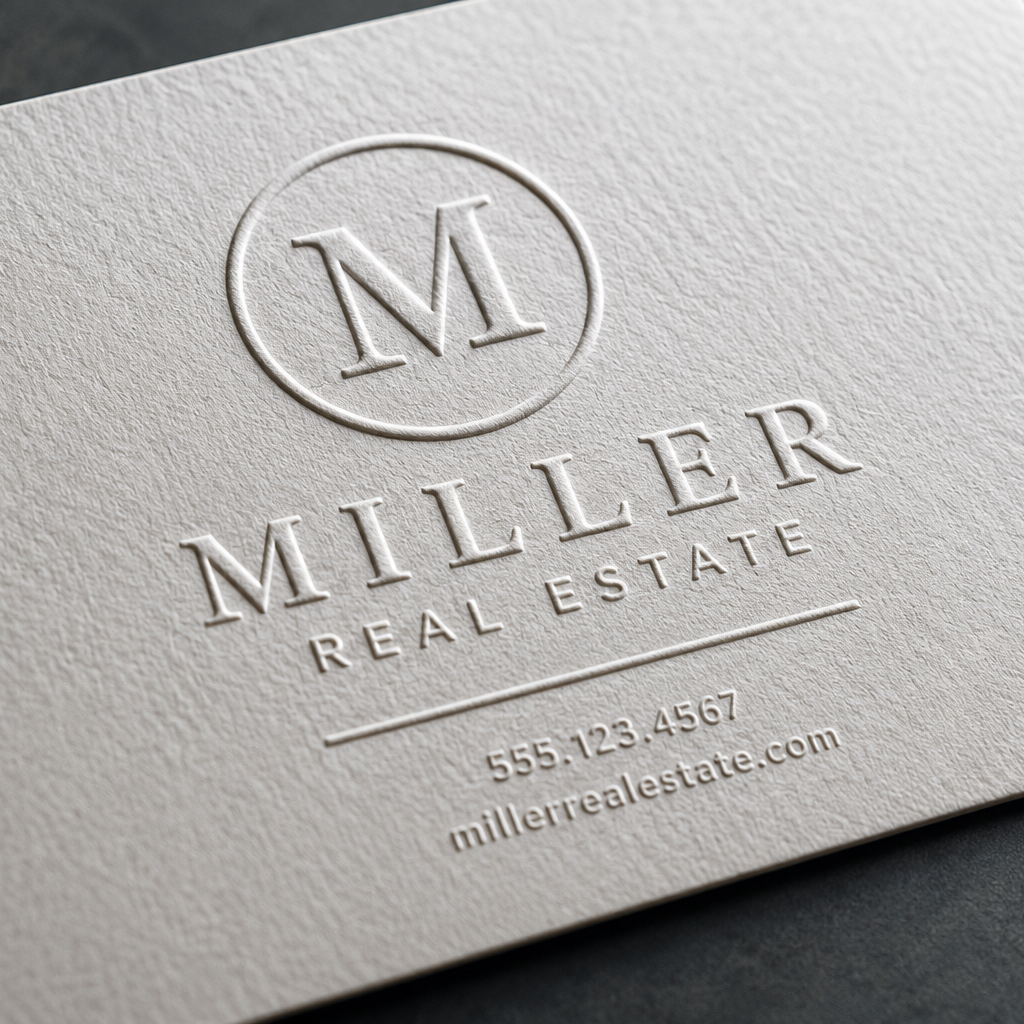
Embossing: A finishing process that creates a raised image, design, or text on a printed piece by pressing the material between matched dies. Embossing adds texture, dimension, and a premium appearance to printed materials.
"Embossing is a finishing process that raises a logo, text, or design above the surface of the paper. It creates a three-dimensional effect that adds texture, elegance, and a premium look to printed materials."
End Papers
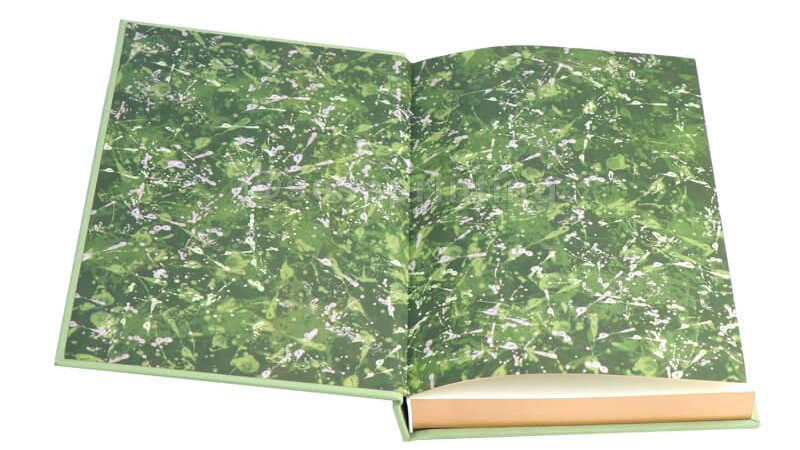
Endpapers (also called end sheets) are the sheets of paper found at the front and back of a hardcover book that connect the book's interior pages to the cover. They consist of a folded sheet, with one side attached to the inside cover and the other serving as the first or last page of the book.
Endpapers play both a structural and decorative role in hardcover book construction.
Flood Coat
A flood coat is a coating that is applied uniformly across the entire surface of a printed piece. Unlike a spot coating, which is applied only to selected areas, a flood coat covers the whole sheet to provide a consistent finish, appearance, and level of protection.
Flood coatings can be gloss, matte, satin, soft-touch, UV, or aqueous coatings.
Foil Stamping
Foil stamping is a specialty finishing process that uses heat, pressure, and a metal die to apply metallic, pigmented, or holographic foil to a printed surface. The result is a shiny, eye-catching design element that cannot be achieved with traditional ink alone.
Foil stamping is often used to add elegance, emphasis, and a premium appearance to printed materials.
Four Color Process
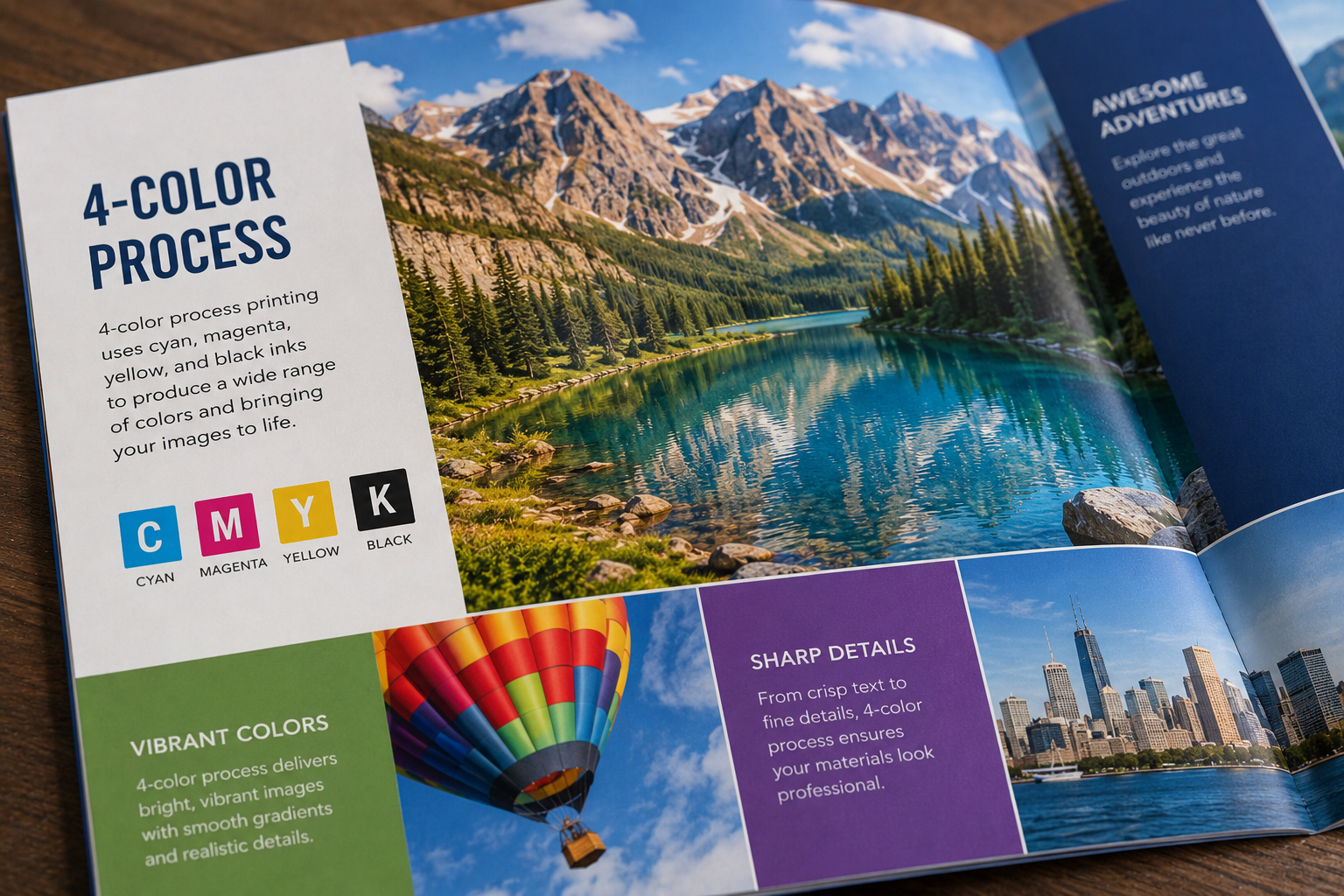
4-Color Process: A printing method that uses Cyan, Magenta, Yellow, and Black (CMYK) inks to reproduce full-color images and graphics through a pattern of overlapping ink dots. It is the most common process used in commercial printing.
Gang Run
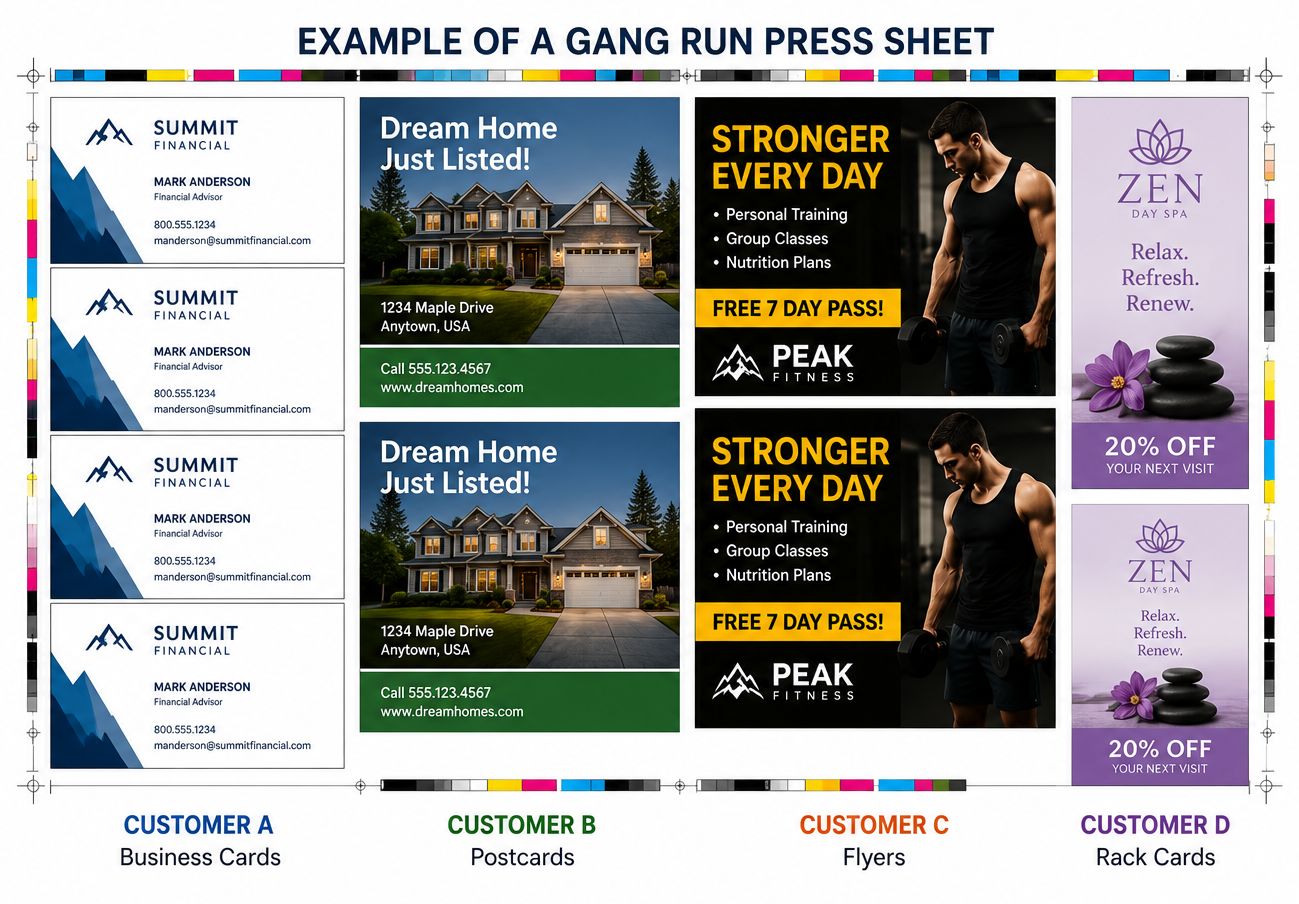
Gang Run: A printing method in which multiple print jobs are combined onto a common press sheet and produced during the same production run, allowing setup, paper, and press costs to be shared among multiple projects, reducing overall printing costs.
Gatefold
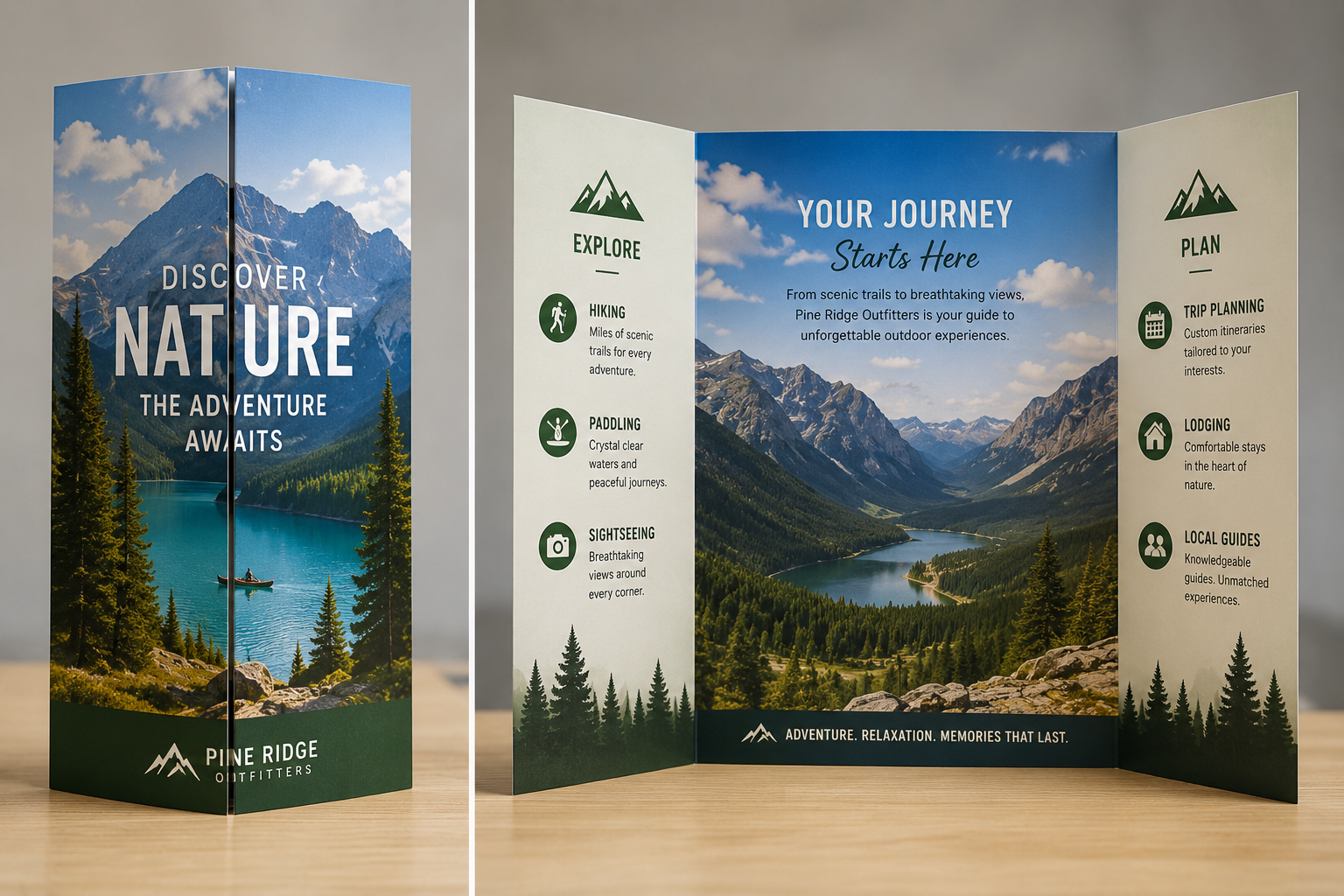
Gate Fold: A brochure fold in which the two outer panels fold inward and meet at the center, creating a pair of "gates" that open to reveal a larger interior panel or spread. Gate folds are commonly used for premium marketing materials, invitations, tourism guides, and product presentations.
Gilded Edges
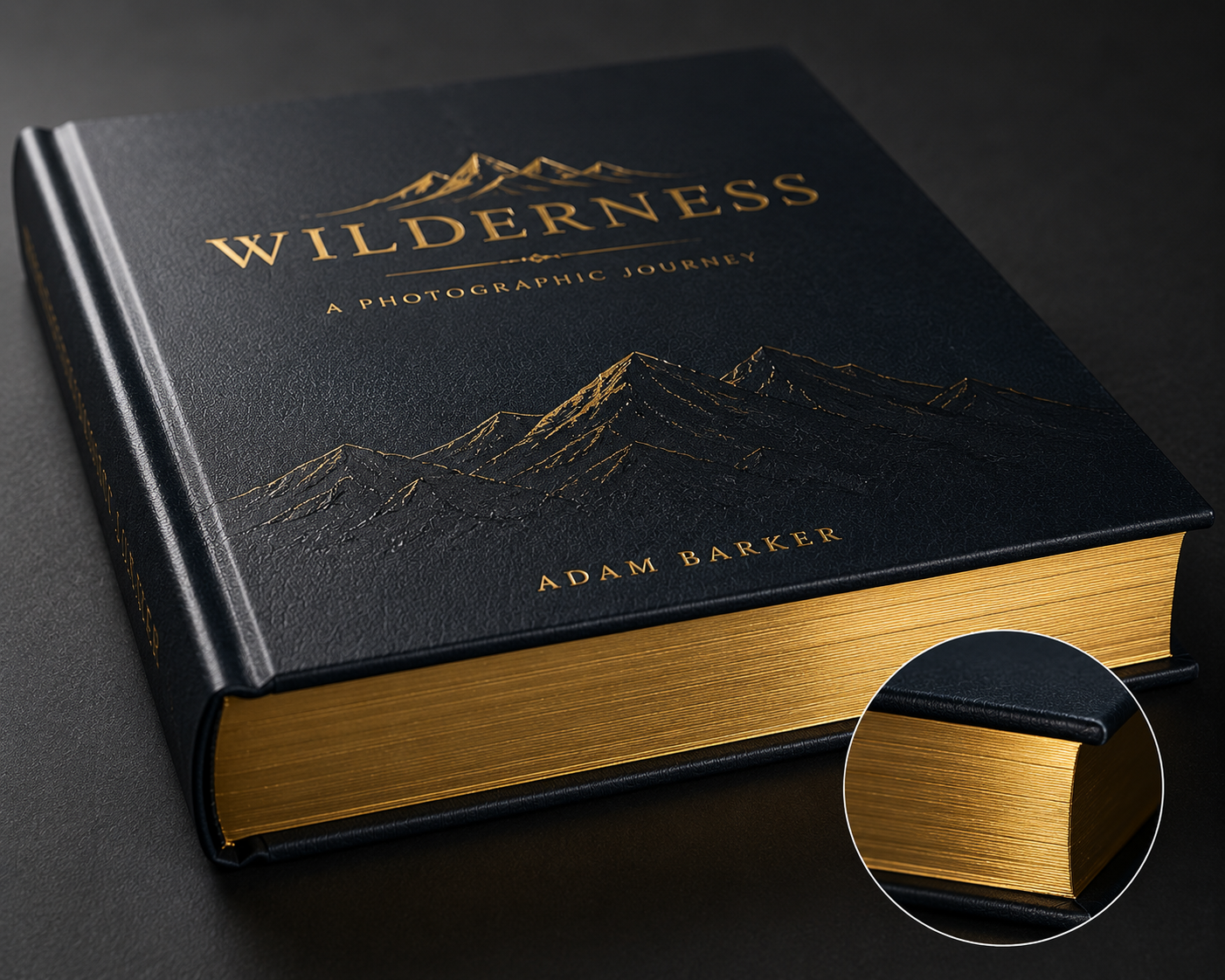
Gilded Edges: A premium book-finishing technique in which metallic foil or pigment is applied to the exposed edges of a book's pages, creating a decorative and luxurious appearance. Gilded edges are commonly used on heirloom-quality, collector's edition, and high-end hardcover books.
Glossy
Glossy is a paper or coating finish that features a smooth, shiny, reflective surface. It enhances color saturation, contrast, and image sharpness, making photographs and graphics appear more vibrant and eye-catching.
Glossy finishes are commonly used when visual impact is a priority.
Greyscale
Grayscale is a printing and imaging method that uses only shades of black, white, and gray to reproduce an image. Instead of using color inks, grayscale images are created using varying percentages of black ink to produce different tones and levels of contrast.
Grayscale is commonly used when color is not necessary or when a project needs a classic, professional, or cost-effective appearance.

Gutter
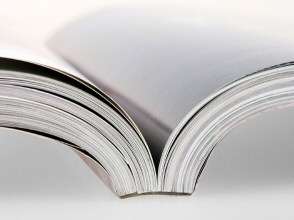
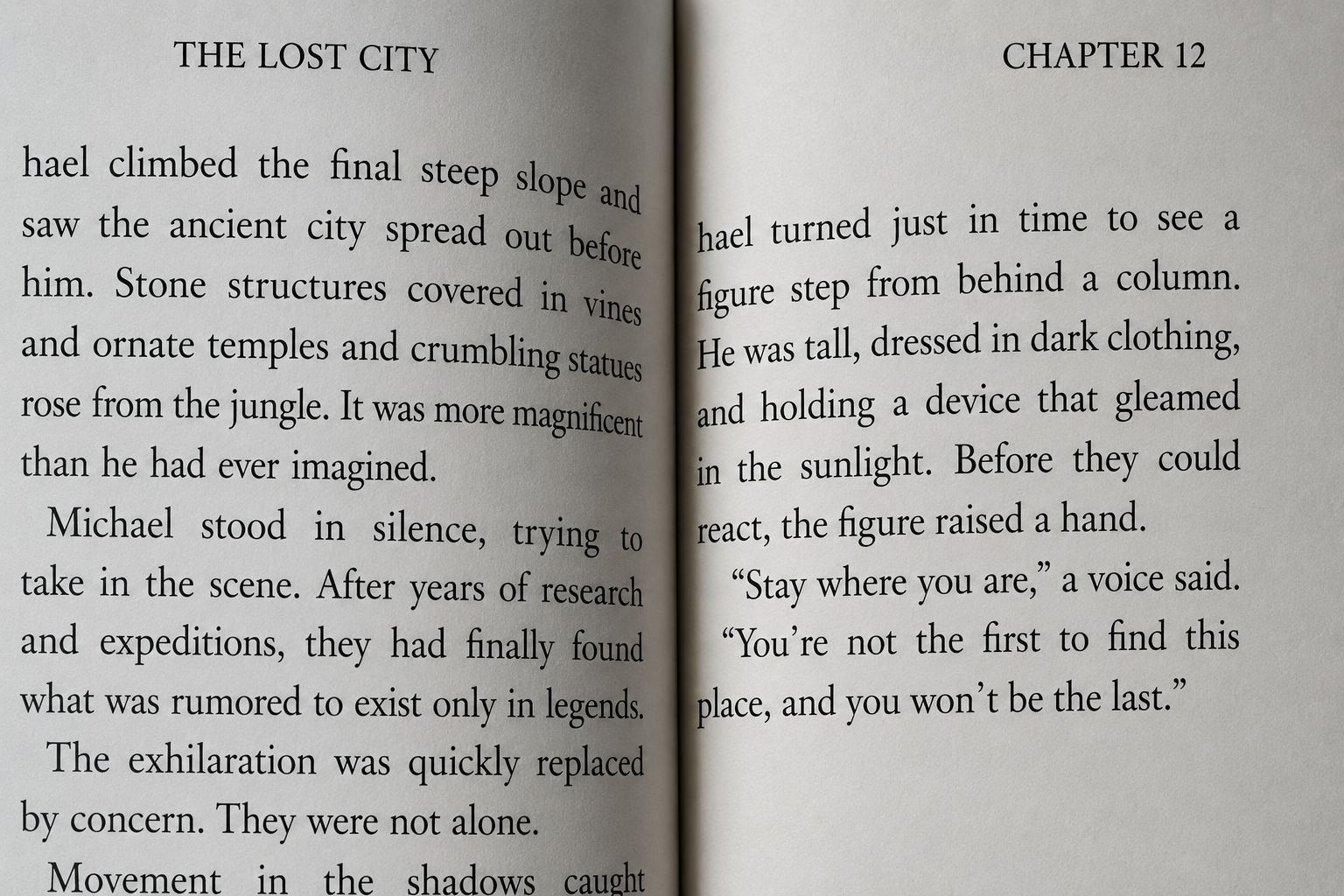
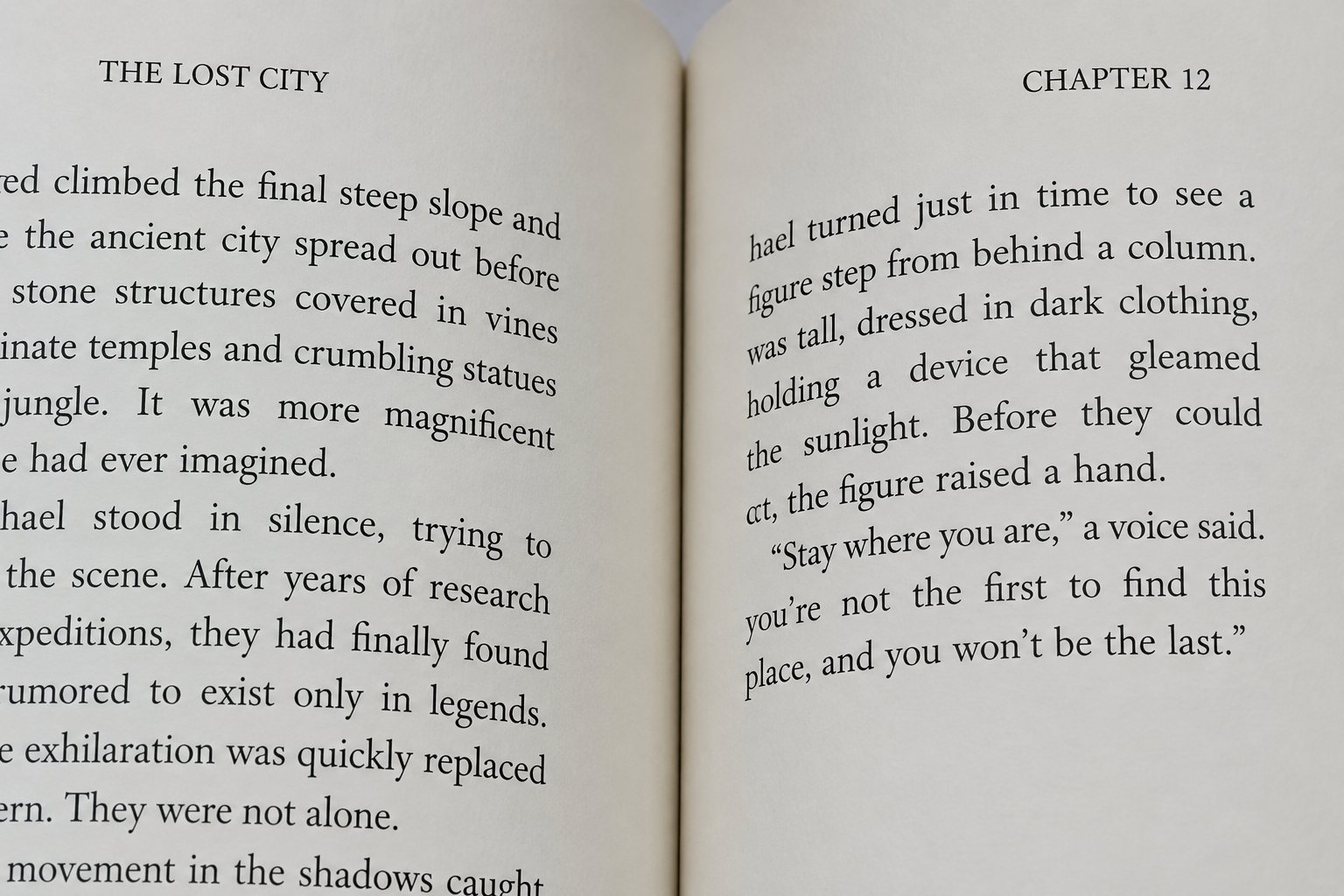
Gutter is where the inside margin meets at the binding. It is an area that can become particialy hidden or difficult to see depending on the turned edge binders. Extra space must be left in the gutter to ensure that no text, images or page numbers are lost or difficult to read near the spine. If a space is not left in the design process, if may cause the reader to force the book open in order to see the content.
Gutters are important in the following printing projects: Hard Cover Books, Childrens Books, Catalogs, Magazines
Imposition
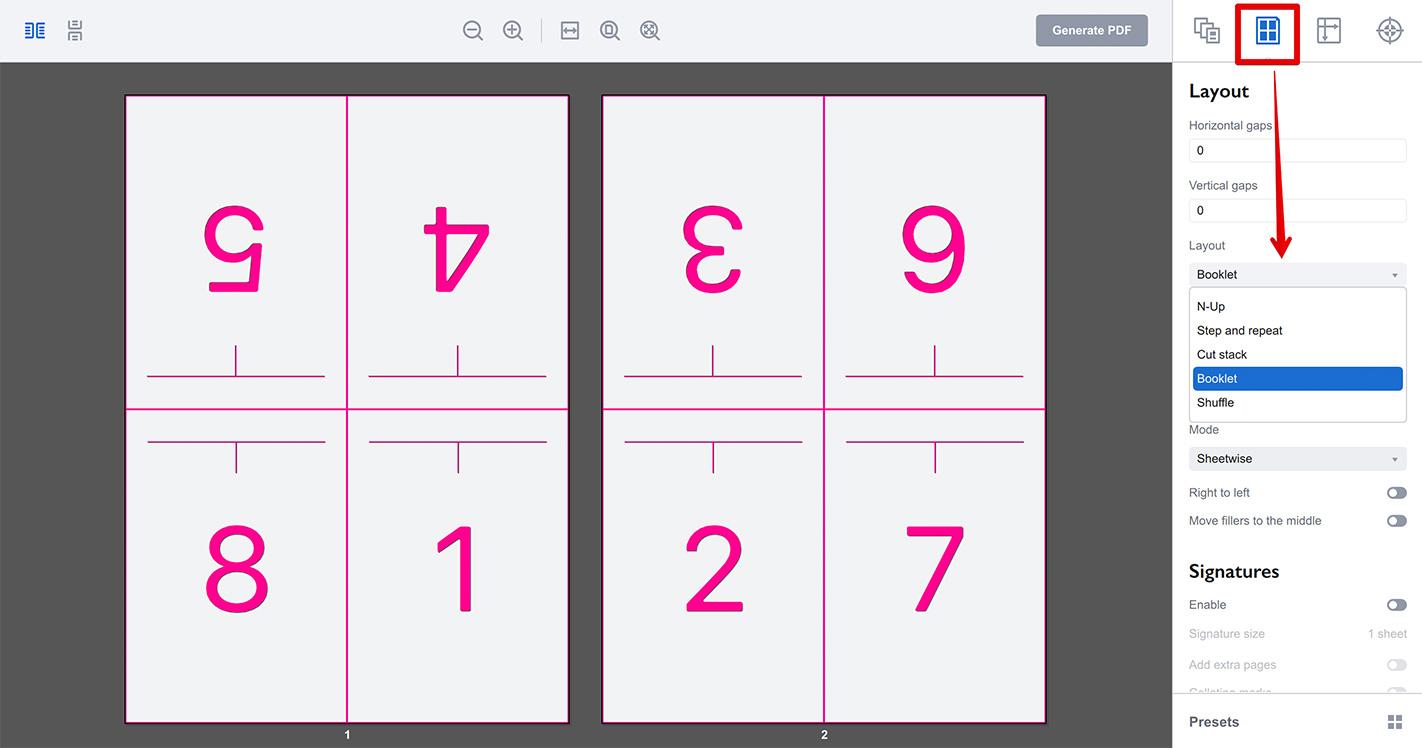
Imposition is the process of arranging pages on a large press sheet in a specific order so that when the sheet is printed, folded, cut, and bound, the pages appear in the correct sequence in the finished product.
The page layout on the press sheet often looks out of order to the eye, but it is carefully planned to ensure proper assembly after production.
Laminate
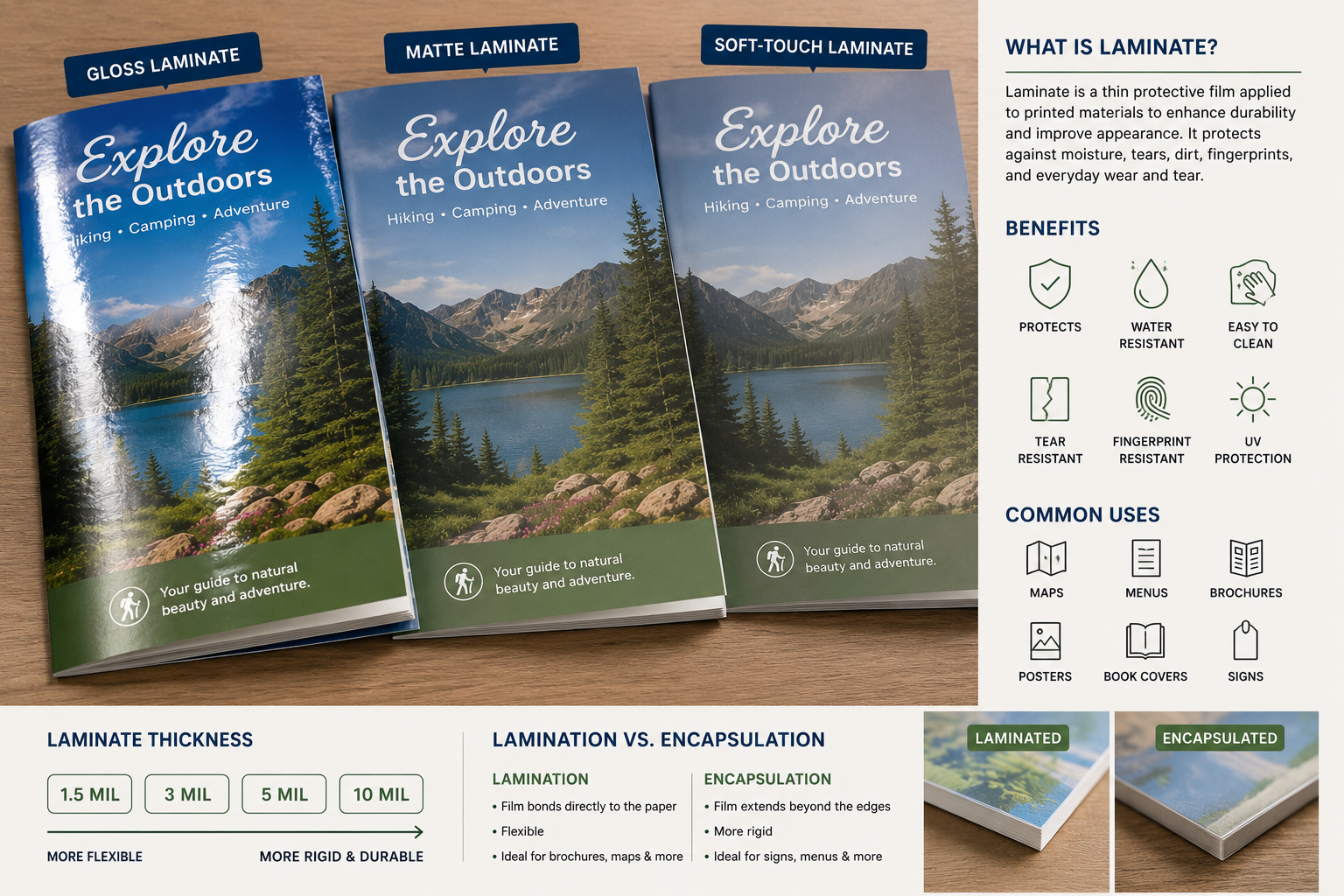
Laminate - A clear protective film applied to a printed piece to improve durability, appearance, and resistance to moisture, tearing, fingerprints, and wear. Available in gloss, matte, and specialty finishes, lamination is commonly used on maps, brochures, menus, book covers, and other frequently handled printed materials.
Matte
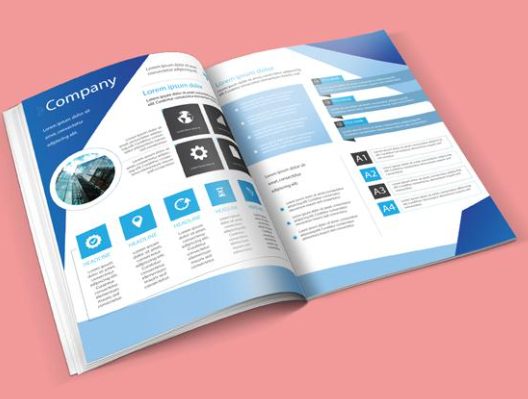
Matte is a paper or coating finish that has a smooth, non-reflective surface with little to no shine. It provides a clean, sophisticated appearance while maintaining excellent readability and a premium feel.
Unlike glossy finishes, matte surfaces reduce glare and reflections, making them ideal for text-heavy and professional-looking printed materials.
Mini Folding
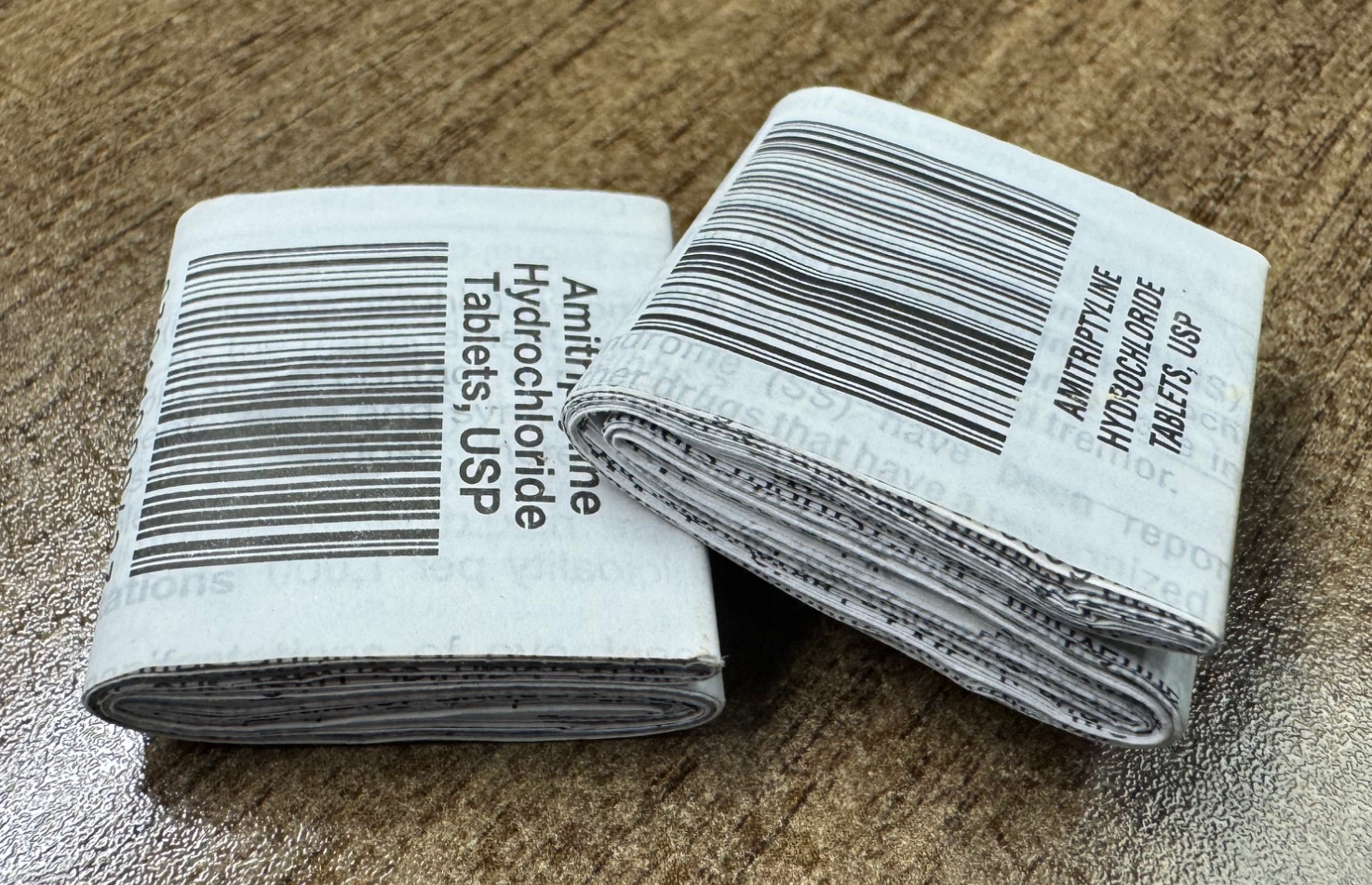
Mini Fold: A small-format folded brochure or marketing piece that folds into a compact finished size, commonly used for tourism guides, direct mail, event information, menus, and promotional handouts. It provides multiple panels of content while remaining portable and cost-effective to distribute.
Offset Printing
Offset printing is a commercial printing process in which an image is transferred from a metal plate to a rubber blanket and then onto the printing surface. Because the image is not transferred directly from the plate to the paper, the process is called "offset" printing.
Offset printing is known for producing exceptionally sharp images, consistent color, and cost-effective results for medium to large print runs.
Paper Stock
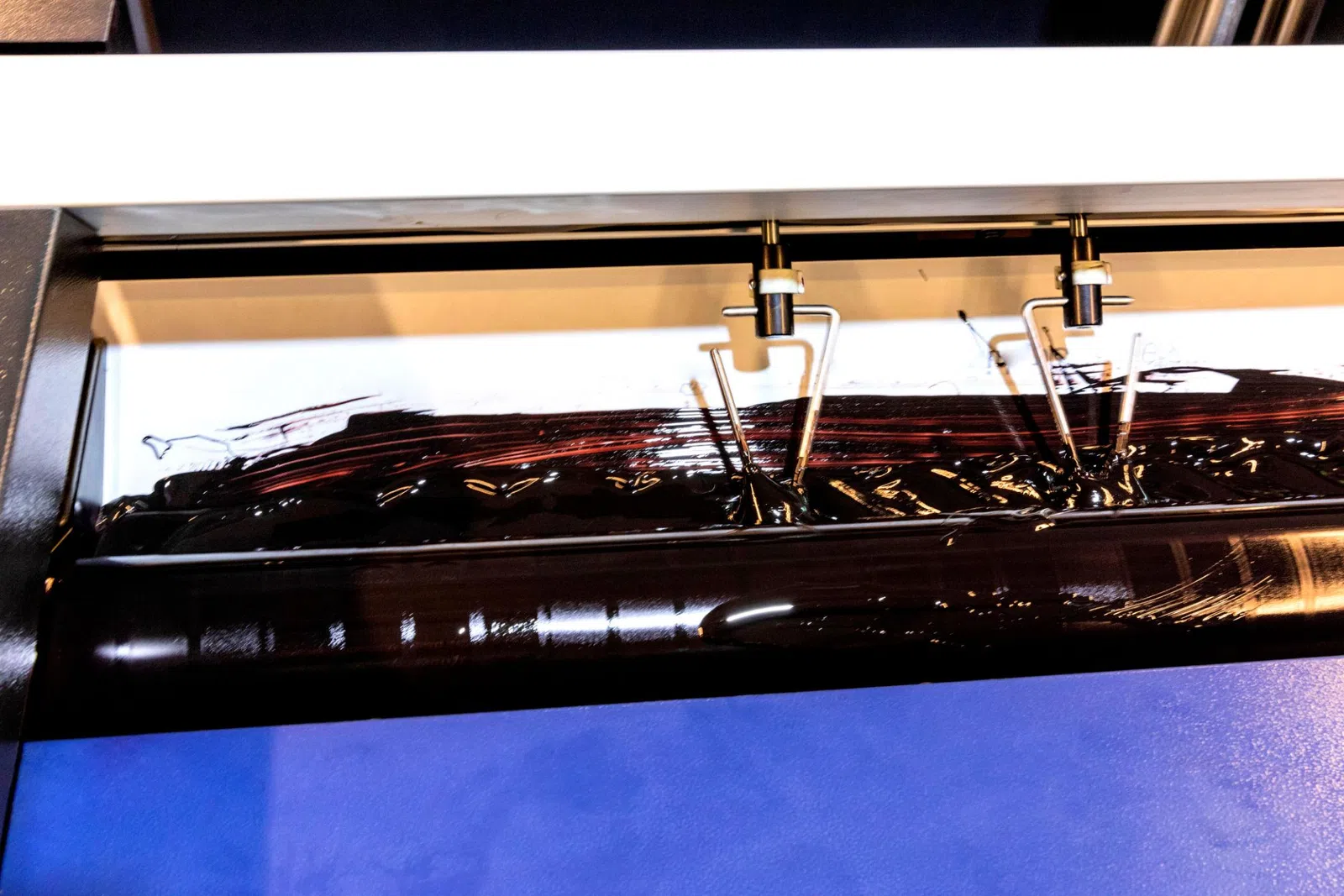
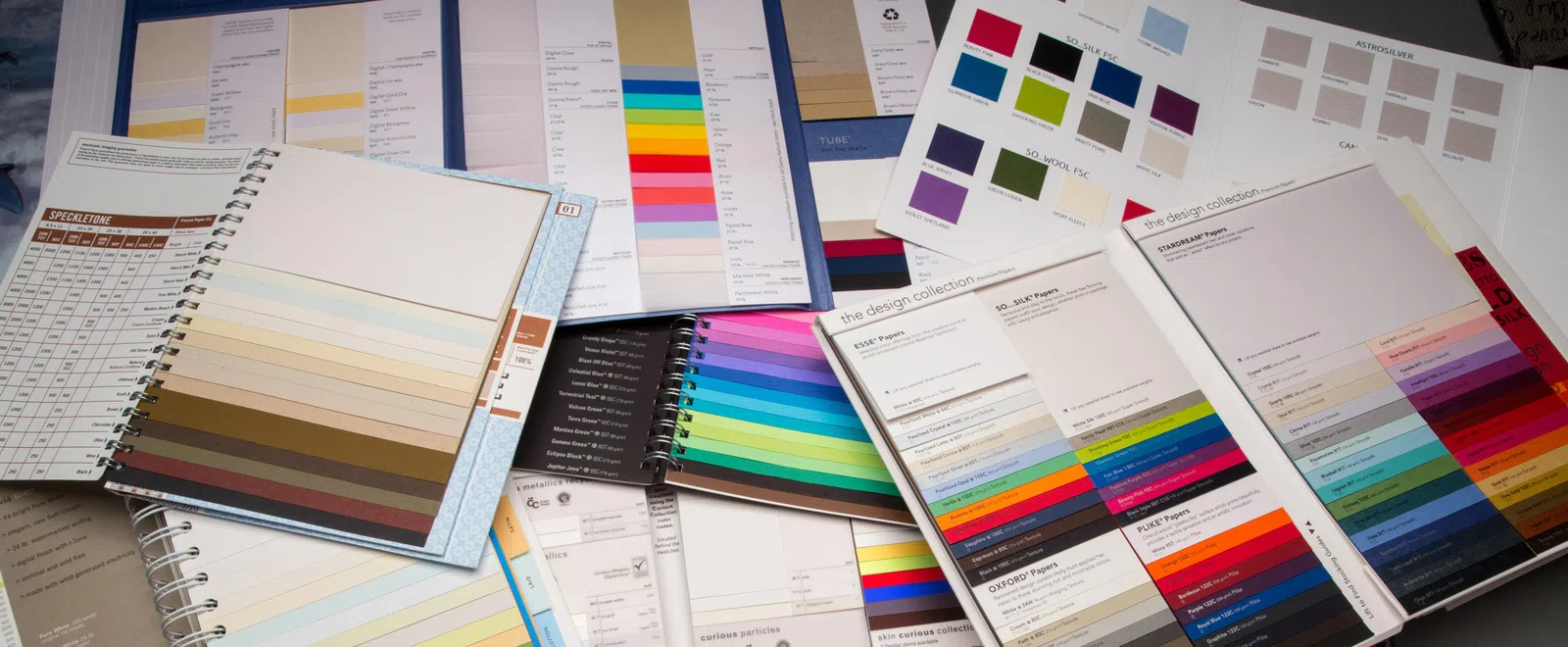
Paper stock refers to the type, weight, thickness, texture, and finish of paper used for a printed project. Different paper stocks can dramatically affect the look, feel, durability, and perceived quality of the finished piece.
Choosing the right paper stock is an important part of creating a successful print project.
PMS
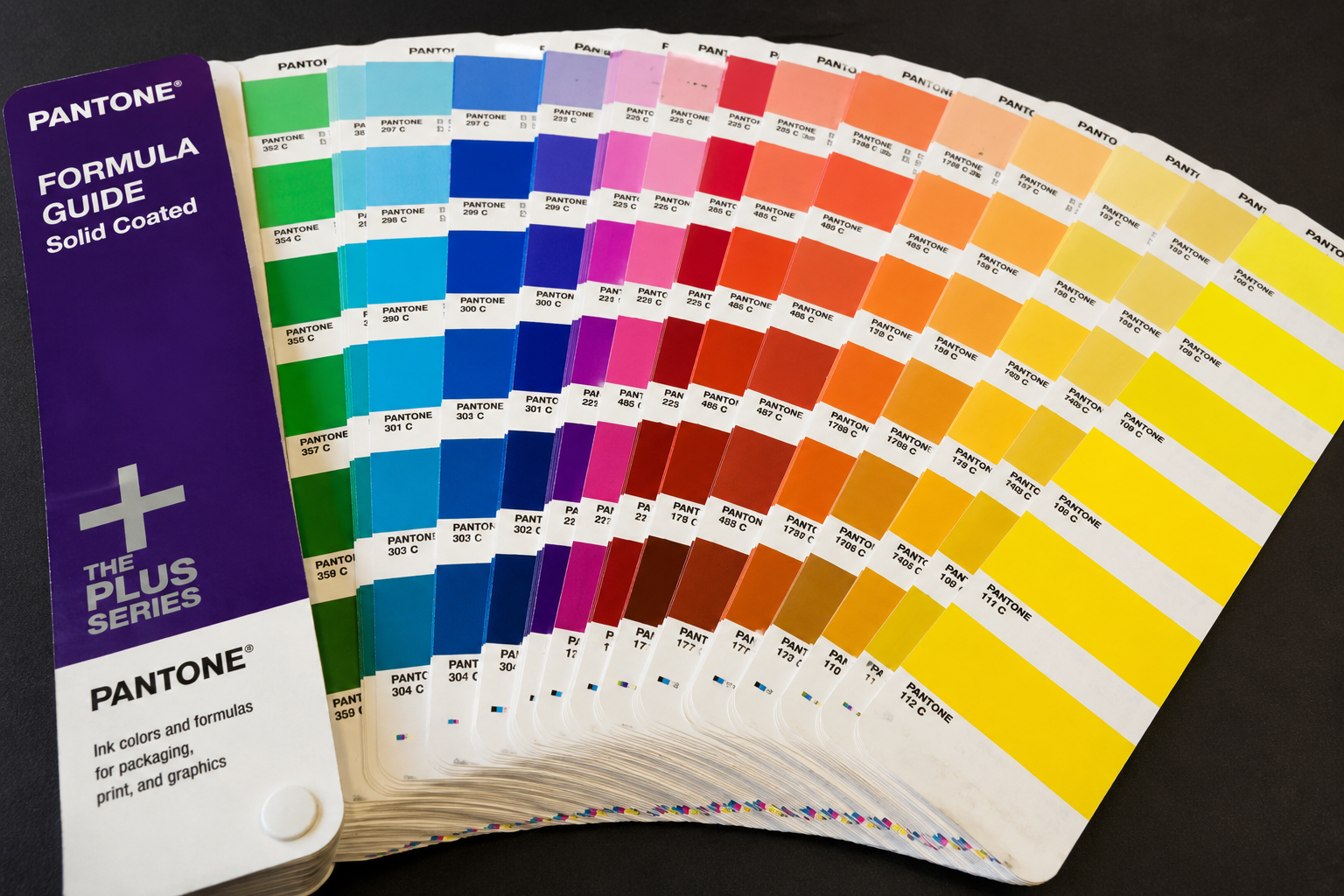
PMS stands for Pantone Matching System, a standardized color matching system used in the printing industry to ensure colors print consistently from one job to another, regardless of the printer, location, or production method. Instead of creating a color by combining CMYK inks, PMS colors are pre-mixed inks manufactured to a specific formula.
"CMYK builds color. PMS guarantees color."
Prepress
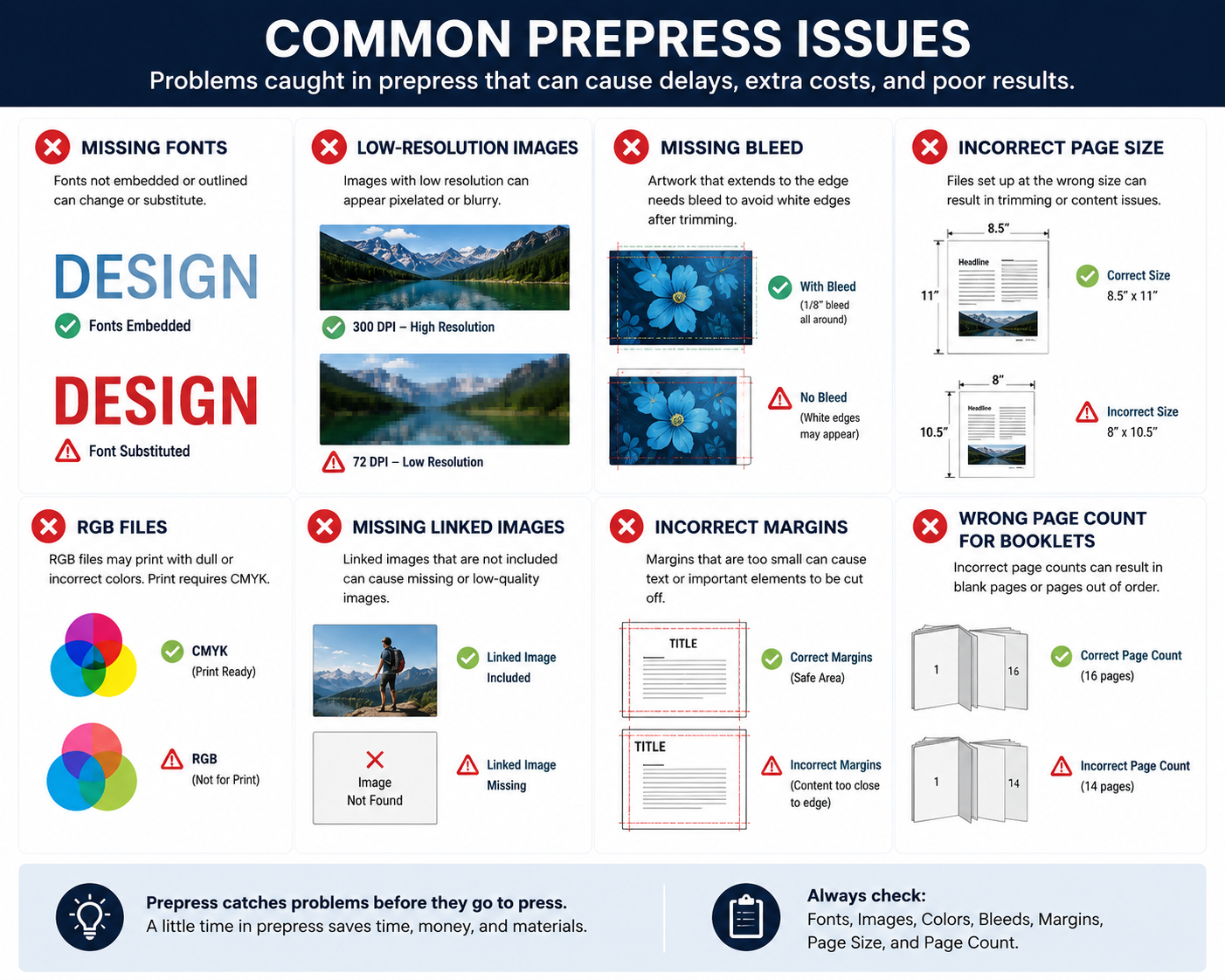
Prepress: The collection of procedures performed between design and printing that prepare files for production, including file review, resolution checks, bleed verification, color correction, imposition, proofing, and press-ready file preparation.
"Prepress is the printer's final inspection before production. It's where we catch problems before they become expensive mistakes."
Product Fact Sheets
Product Fact Sheet: A single-page informational document that presents a product's specifications, features, benefits, and ordering information in a clear, easy-to-reference format. Product fact sheets are commonly used in sales presentations, trade shows, product launches, and marketing campaigns.
Proof
A proof is a preliminary version of a printed project that is reviewed and approved before final production begins. Proofs allow you to check for errors in text, images, layout, colors, and overall design to ensure everything appears exactly as intended.
Approving a proof is typically the final step before a job goes to press.


Rack Cards
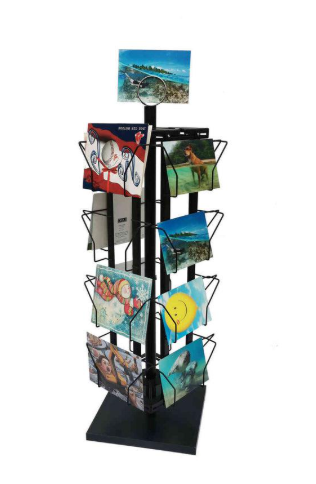
Rack Card: A narrow promotional card, typically measuring 4" × 9", designed for display in brochure racks and literature holders. Rack cards are commonly used to advertise attractions, events, restaurants, destinations, and local businesses in high-traffic public locations.
Raster Image
Raster Image: A digital image composed of individual pixels arranged in a grid. Raster images are commonly used for photographs and detailed graphics and are resolution-dependent, meaning image quality can decrease when enlarged.
"Photos are raster images. Logos should usually be vector images."

Resolution
Resolution: The level of image detail contained in a digital file, typically measured in dots per inch (DPI) or pixels per inch (PPI). Higher resolution produces sharper, clearer printed images, while low-resolution files may appear blurry or pixelated when printed.
"If you pulled it from a website, it's probably too low resolution for printing. If it came from a designer, photographer, or original logo file, it's probably print-ready."


Registration
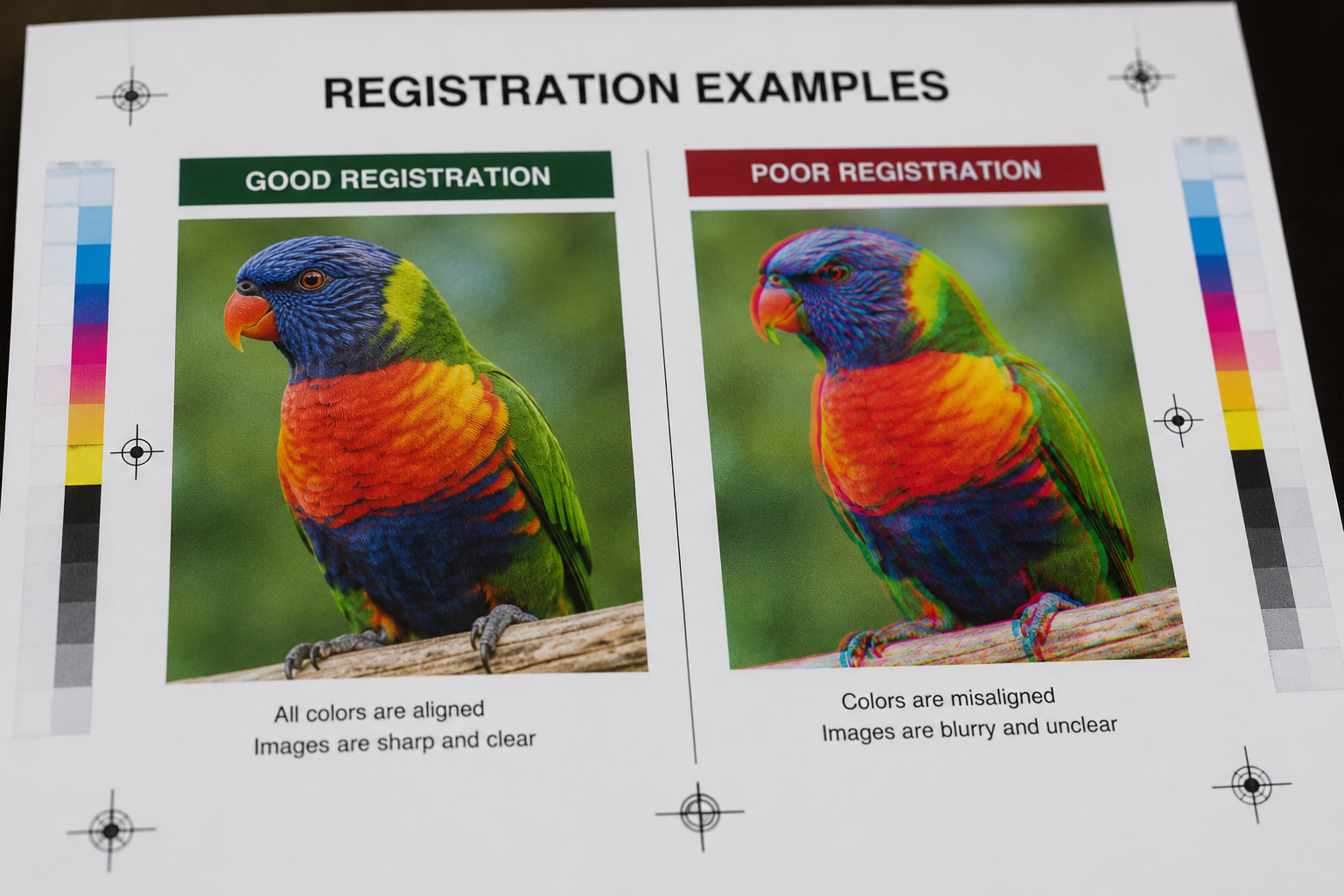
Registration refers to the precise alignment of multiple ink colors, plates, or printing elements during the printing process.
In simple terms: Registration means making sure all colors print exactly where they're supposed to.
When registration is correct, images and text appear sharp and clean. When registration is off, colors shift and the printed piece can appear blurry or have colored shadows.
Reverse
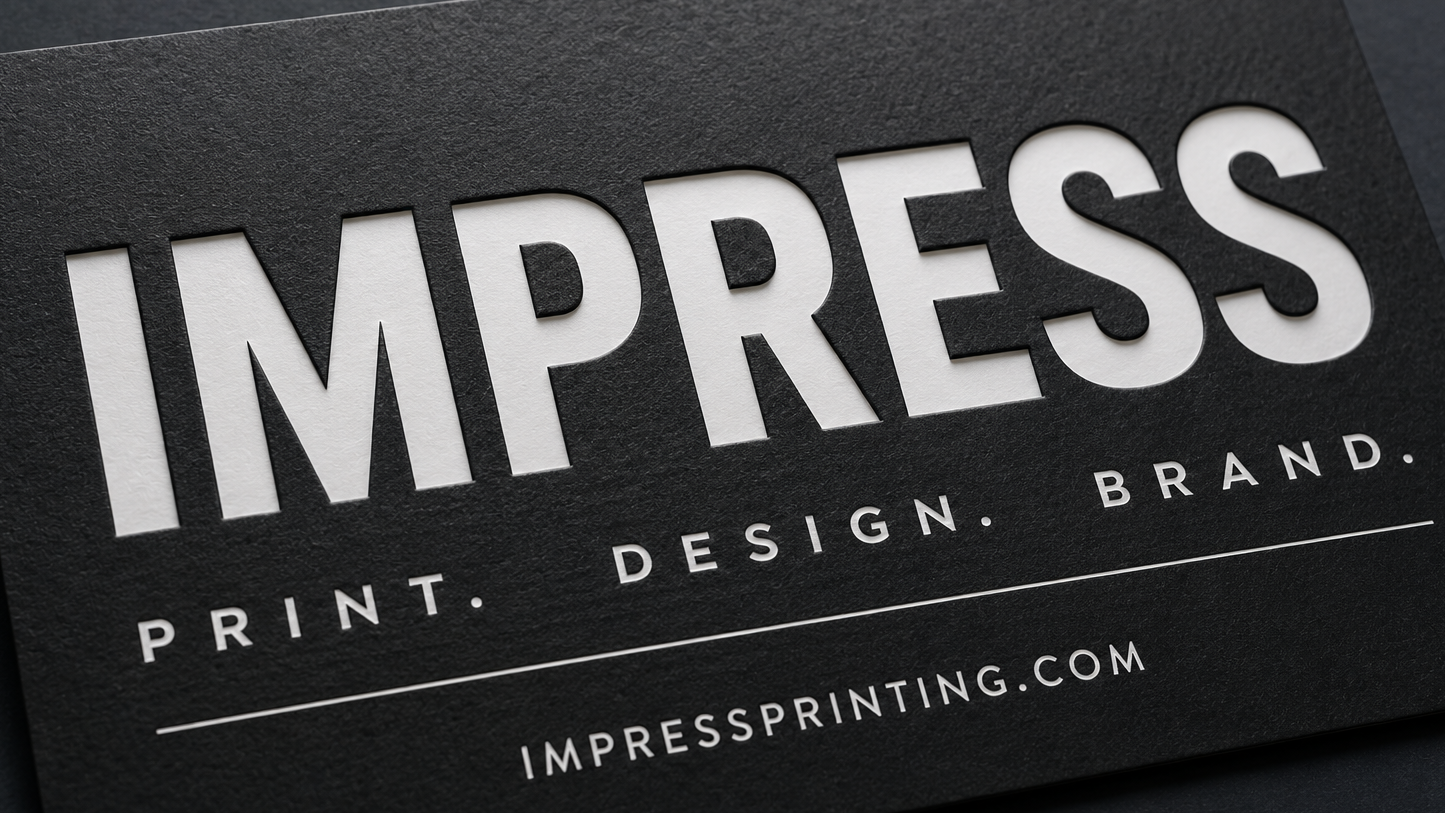
Reverse Printing (Reverse-Out Printing)*: A printing technique in which text, graphics, or images are knocked out of a printed background, allowing the color of the paper or substrate to show through. Reverse printing is commonly used to create white text on dark backgrounds and enhance visual impact. *Also know as Knock out Printing.
"Reverse printing is when the background is printed and the text or image is left unprinted, creating the appearance of white text on a dark or colored background. It's commonly used to create strong visual contrast and a premium design."
RGB
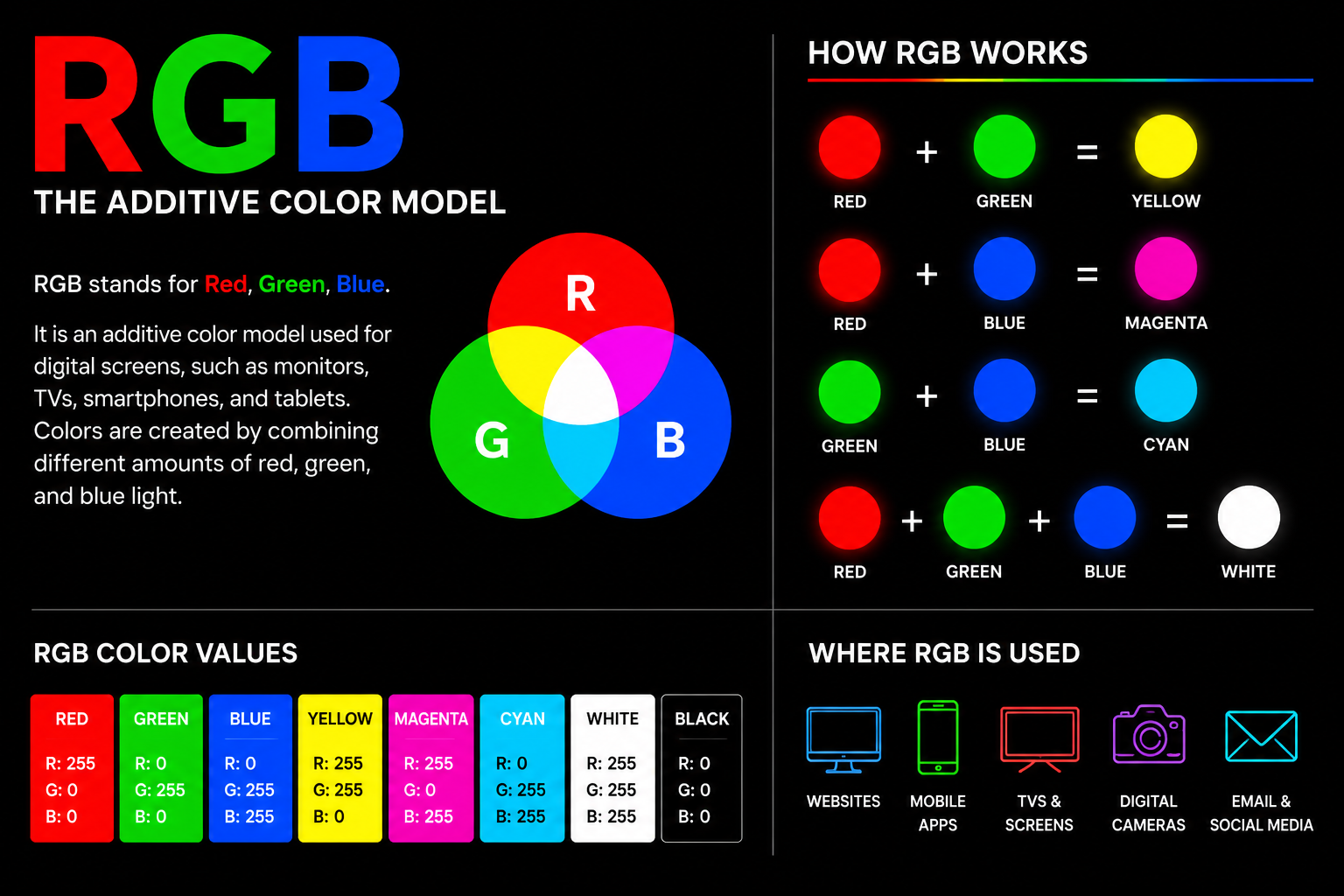
RGB: An additive color model that uses Red, Green, and Blue light to create colors on digital displays such as computer monitors, smartphones, televisions, and websites. RGB is intended for screen viewing and is not the standard color model for commercial printing.
"RGB is what your eyes see on a screen. CMYK is what your printer creates on paper."
Sell Sheets
Sell Sheet: A professionally designed single-page marketing document used to present product, service, or company information in a concise, persuasive format. Sell sheets are commonly distributed during sales meetings, trade shows, presentations, and customer visits to support the sales process.
Saddle Stitch
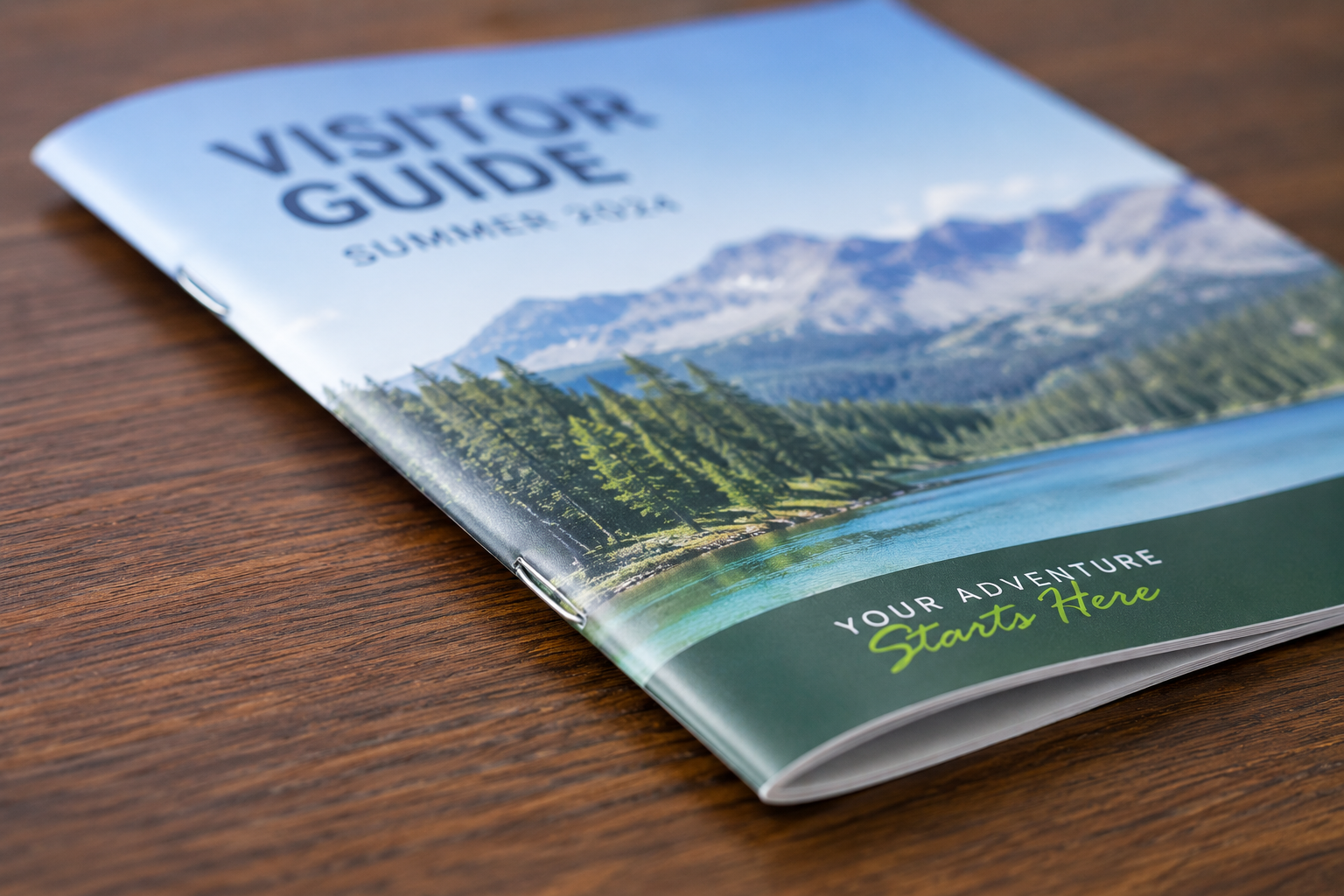
Saddle Stitch: A binding method in which folded sheets are nested together and secured through the fold line with wire staples. Saddle stitching is commonly used for brochures, magazines, catalogs, newsletters, and booklets because it is cost-effective, durable, and easy to produce.
"If you've ever picked up a magazine with staples in the center fold, you've seen saddle stitching."
Spine
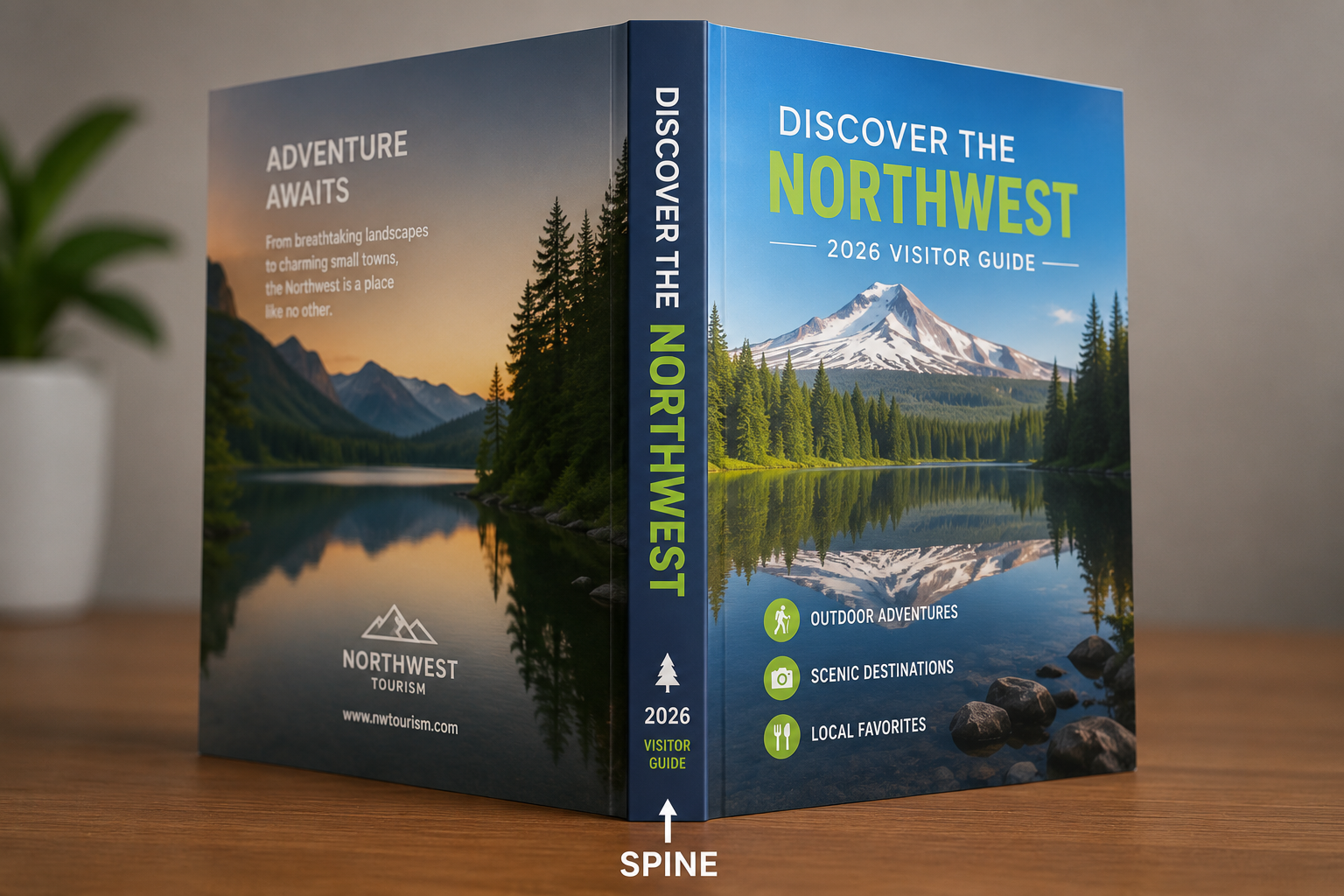
Spine: The bound edge of a book, catalog, magazine, or other multi-page publication where the pages and cover are joined together. The spine often contains identifying information such as the title, author, company name, or logo and varies in width based on page count, paper thickness, and binding method. Adding a title, logo, or company name to the spine can significantly increase visibility and make the publication easier to identify.
"The spine is the billboard of your book when it's sitting on a shelf."
Score
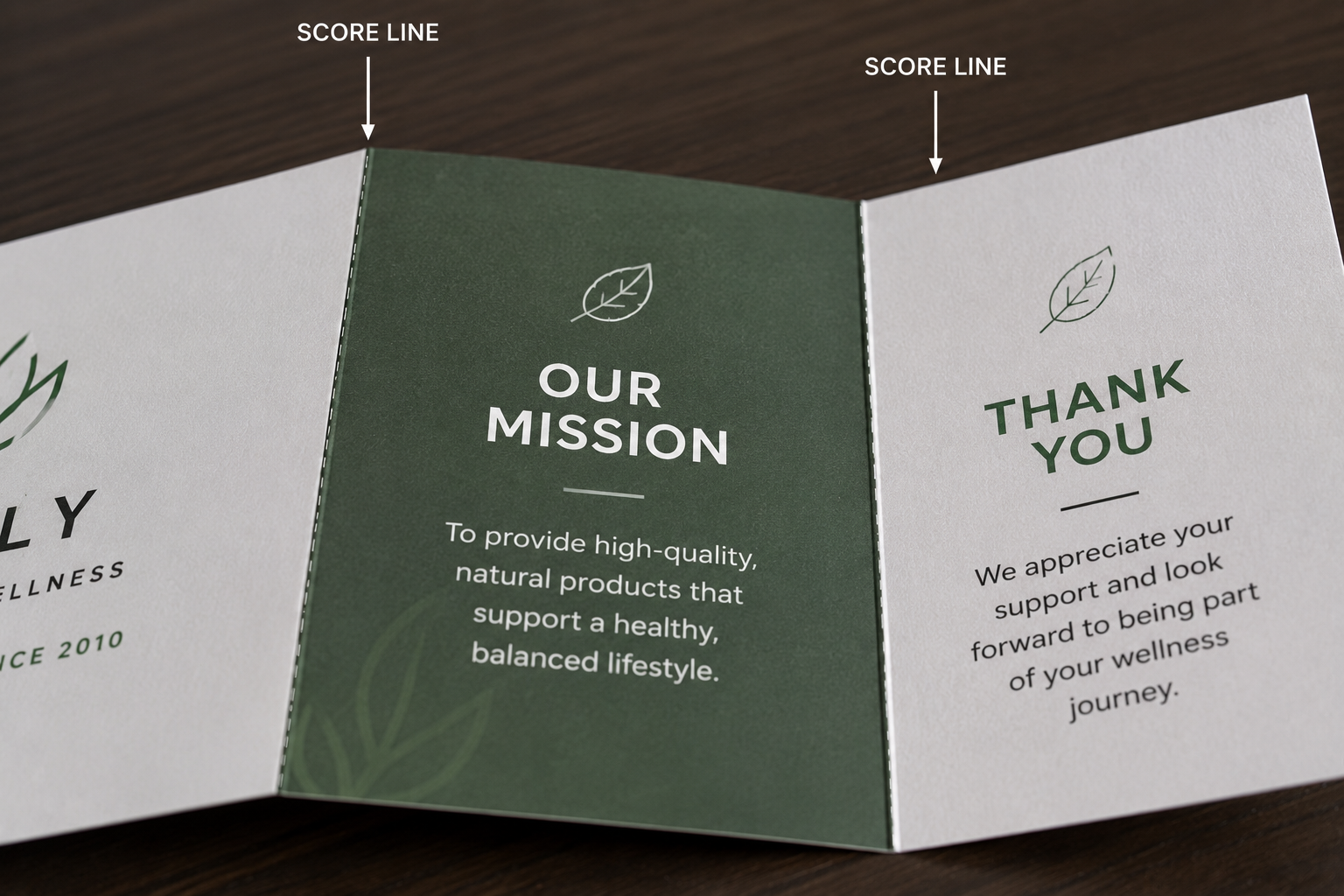
Score: A compressed line created in paper or cardstock to guide folding and prevent cracking or damage during the folding process. Scoring is commonly used on brochures, greeting cards, presentation folders, packaging, and other folded printed pieces.
Shrink Wrap
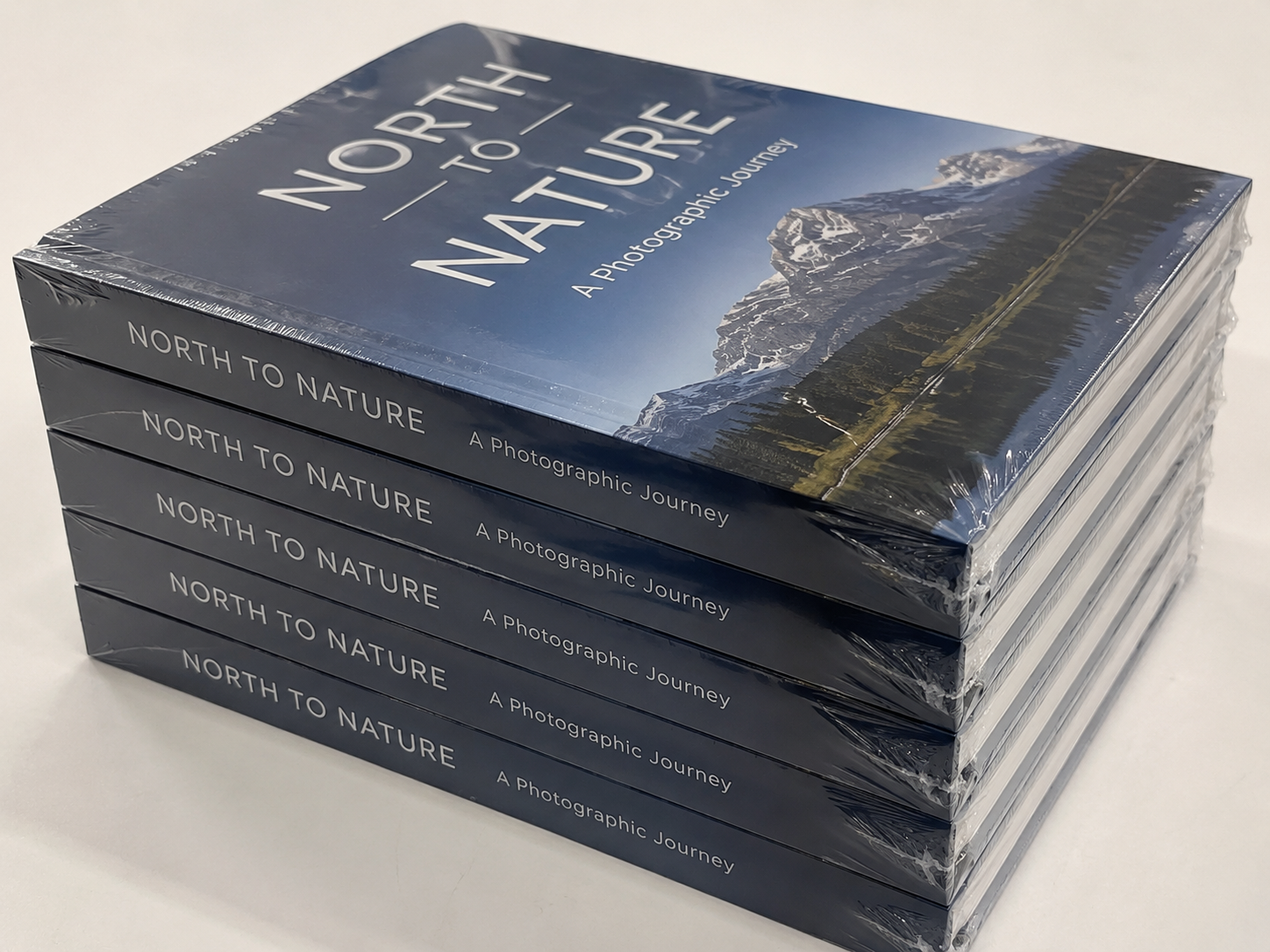
Shrink Wrap: A packaging and finishing process in which a clear plastic film is applied around printed materials and heated to create a tight, protective seal. Shrink wrapping is commonly used to protect, bundle, and prepare printed products for shipping, storage, or retail distribution.
Smyth Binding
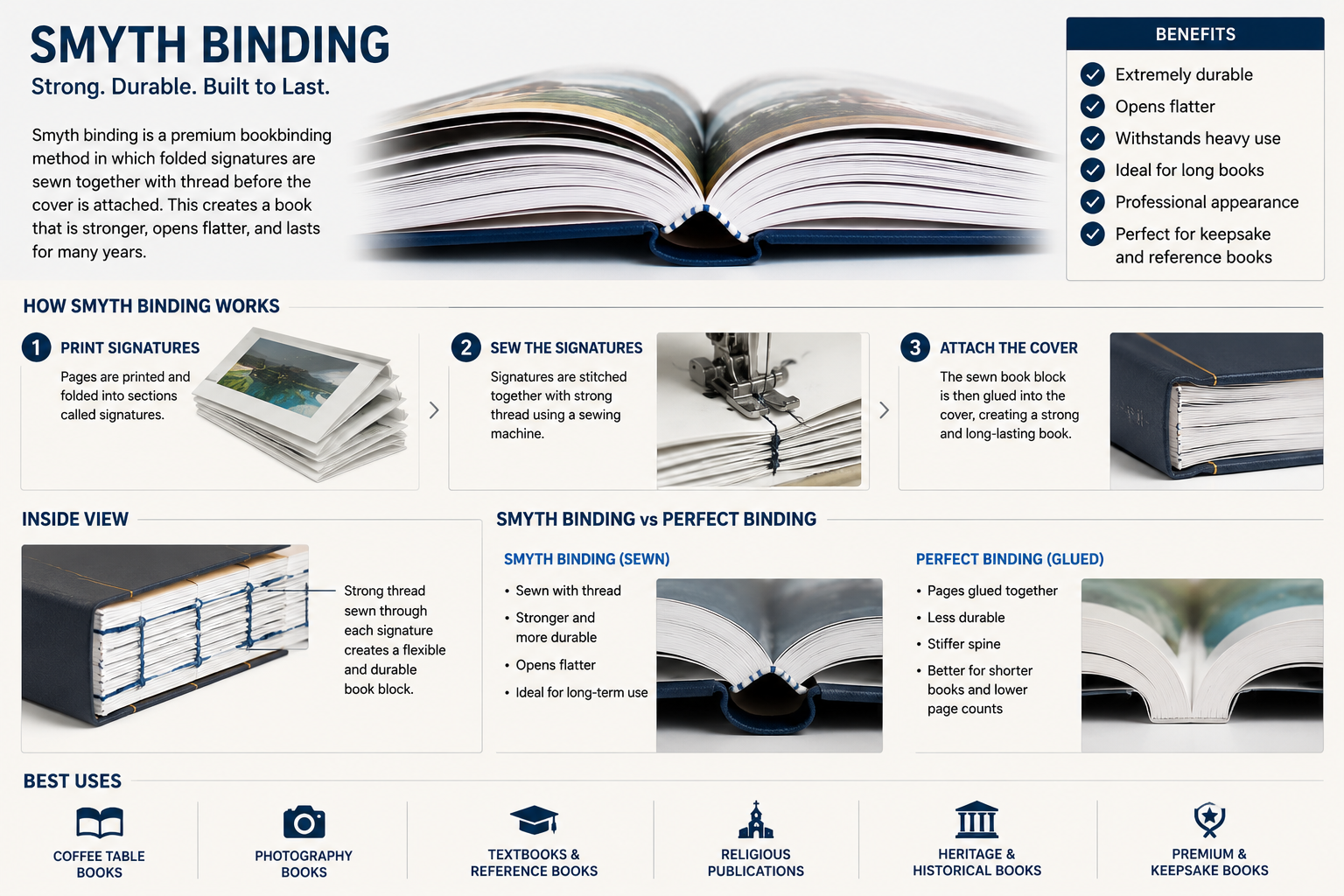
Smyth Binding: A bookbinding method in which folded signatures are sewn together with thread and then attached to a cover. Smyth sewn books offer superior durability, flexibility, and longevity compared to glue-only binding methods. Smyth binding is often considered the gold standard of bookbinding.
"Perfect binding glues the pages together. Smyth binding sews them together."
Soft Touch
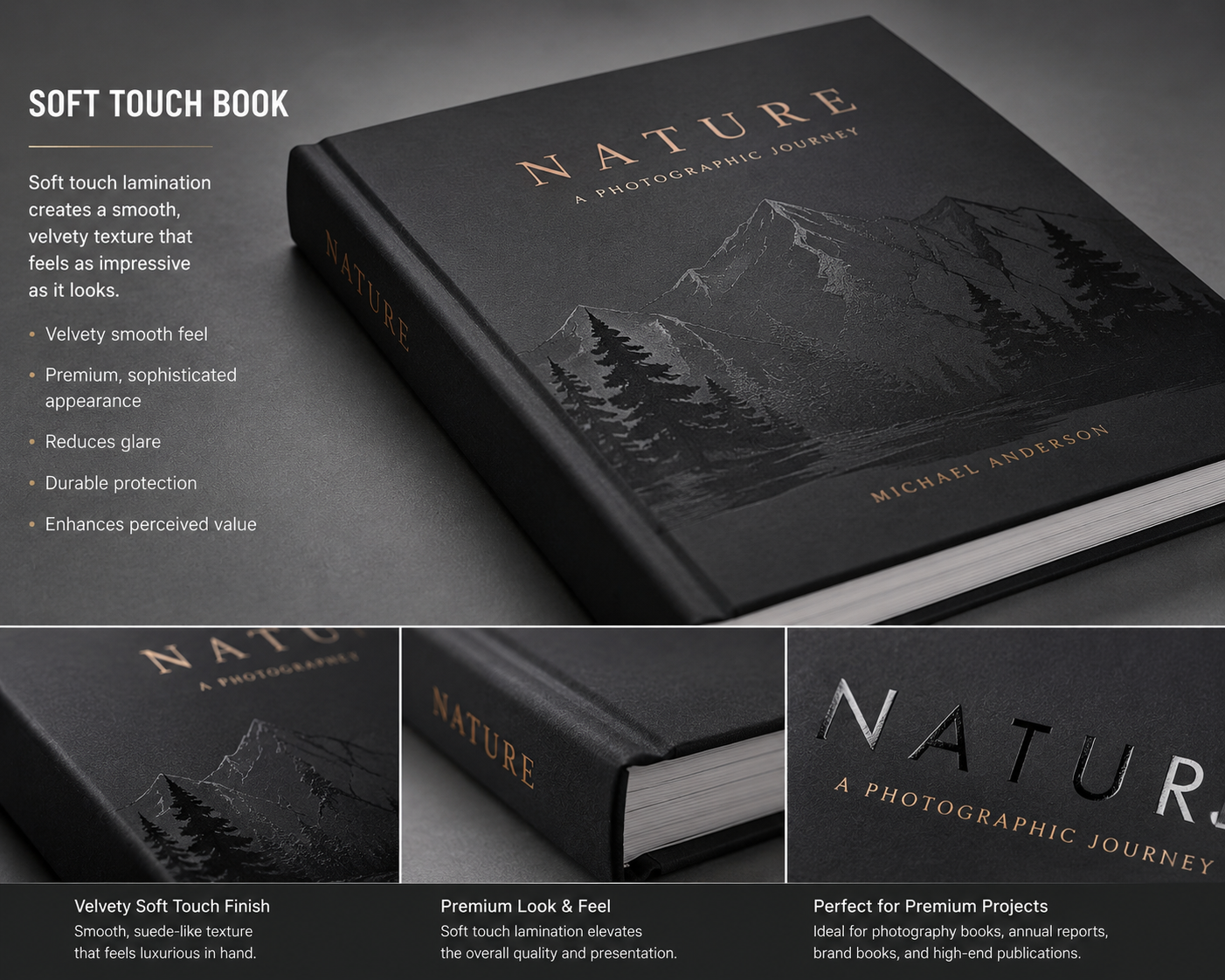
Soft Touch: A specialty coating or laminate that creates a smooth, velvety texture on printed materials. Soft-touch finishes enhance the tactile experience, reduce glare, and provide a premium, high-end appearance often used on business cards, packaging, brochures, and book covers.
Spot Color
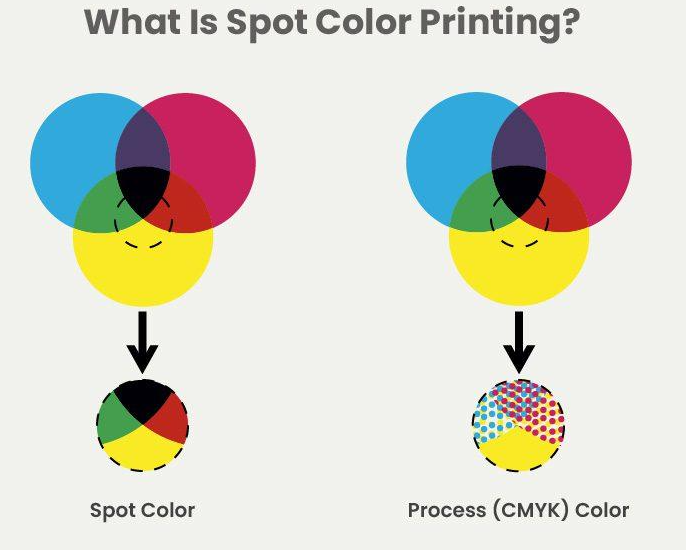
A spot color is a pre-mixed ink printed separately from the standard four-color CMYK process. Instead of combining cyan, magenta, yellow, and black inks to create a color, a spot color uses a specific ink formula to reproduce an exact color consistently.
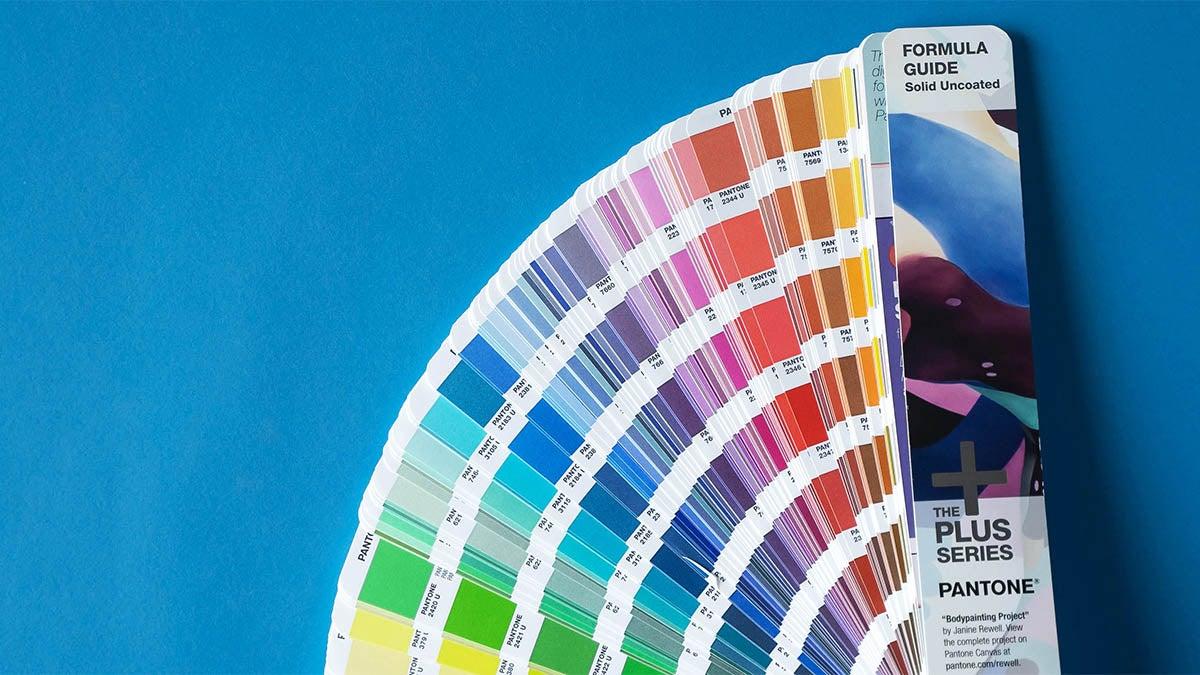
Spot colors are often matched using the Pantone Matching System (PMS) to ensure brand colors remain accurate across different print runs and materials.
Spiral or Coil Binding
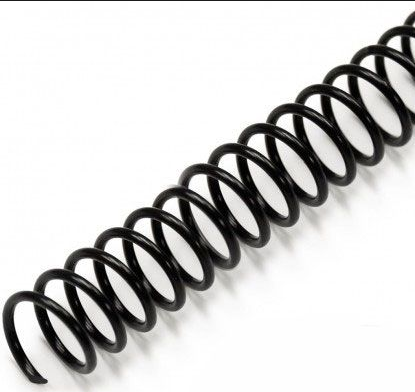
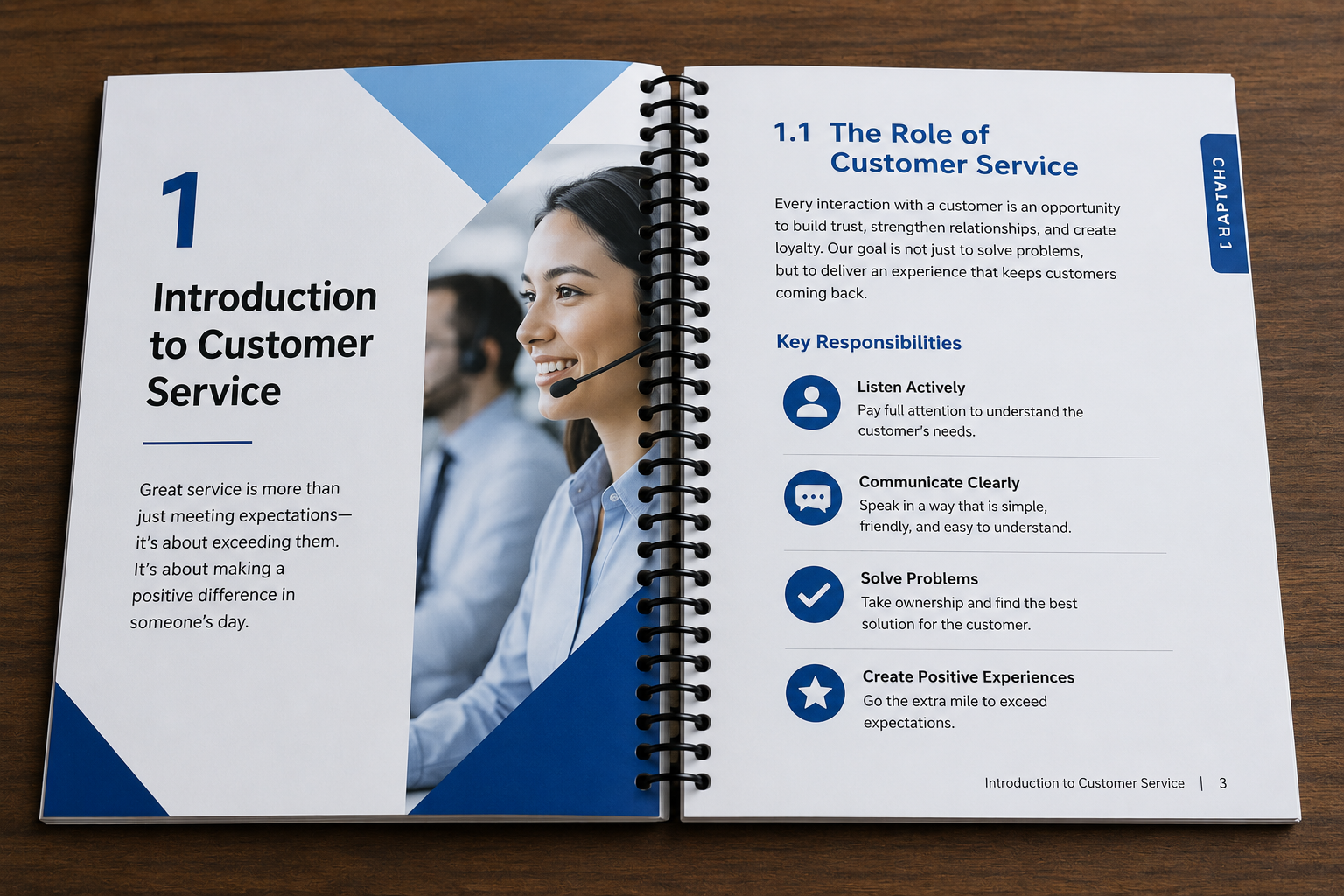
Spiral bound (also called coil binding) is a binding method where a continuous plastic or metal coil is threaded through a series of holes punched along the edge of a document. This binding style allows pages to open completely flat and fold back on themselves, making it ideal for documents that need to be easy to read, write on, or reference.
Great for: Training manuals, Employee handbooks, Workbooks, Catalogs, Cookbooks, Menus
Spot Varnish
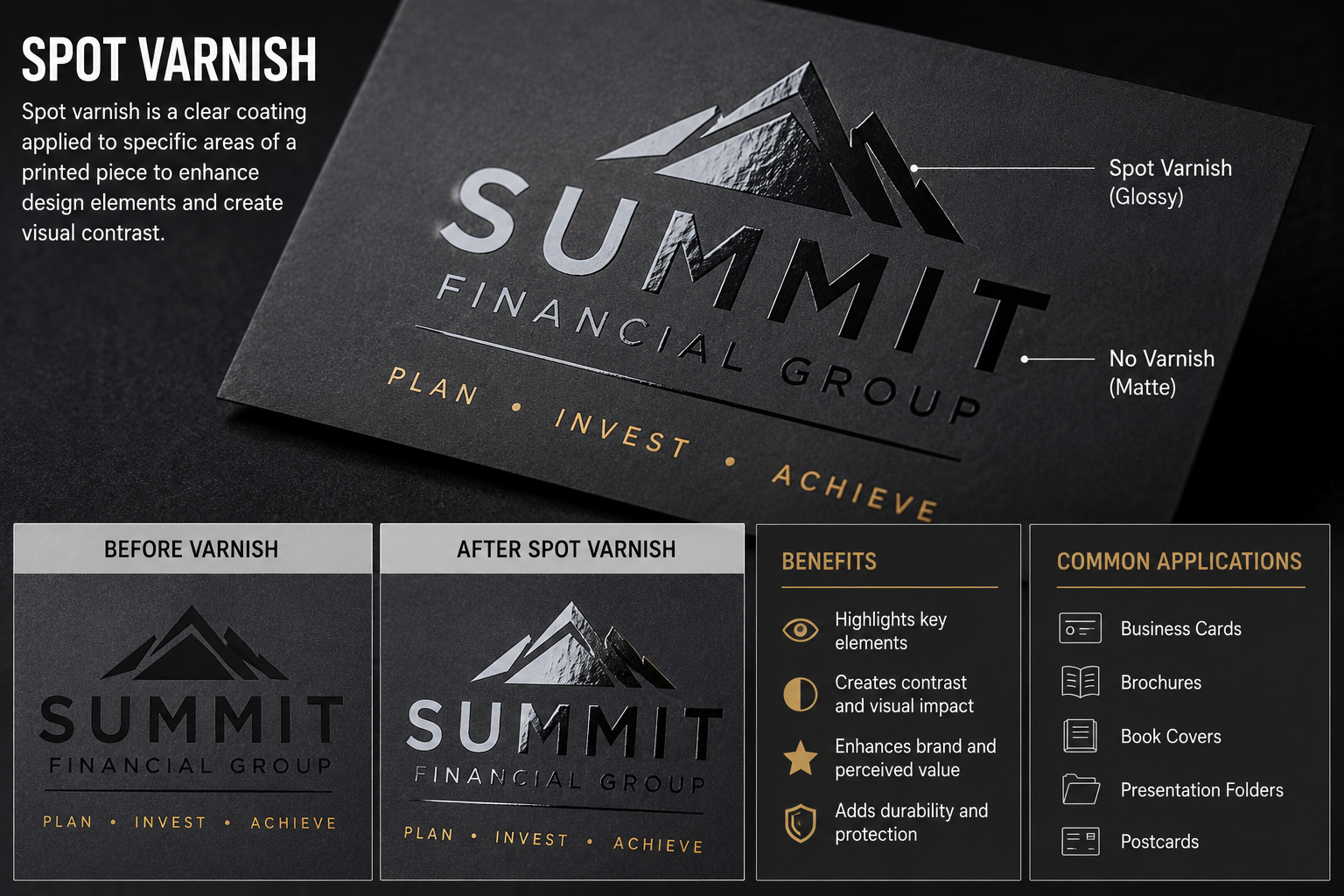
Spot Varnish: A clear coating applied to specific areas of a printed piece rather than the entire sheet. Spot varnish is used to enhance visual appeal, create contrast, and draw attention to selected design elements through added shine and protection.
"Spot varnish is like putting a spotlight on part of your printed piece."
Substrate
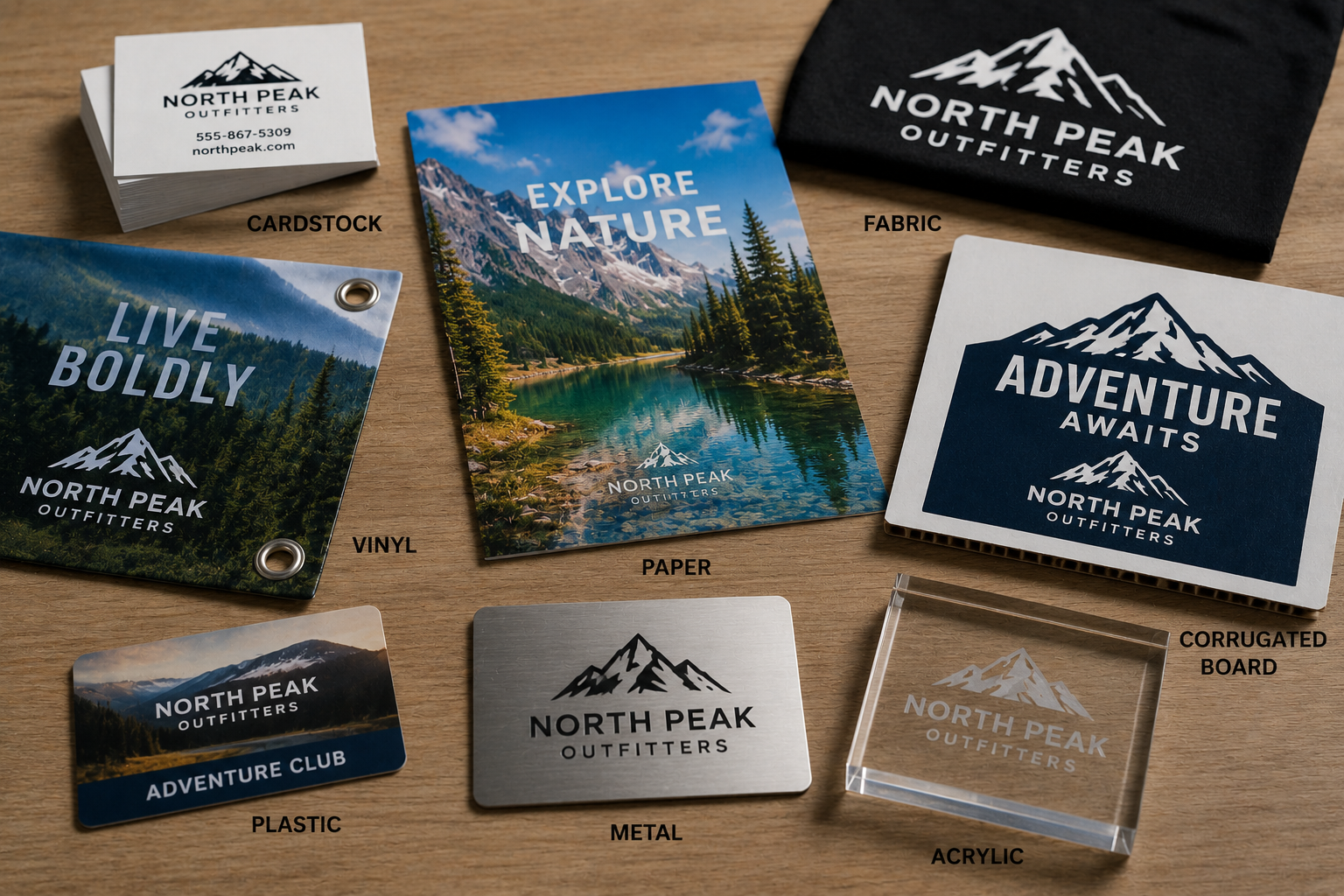
Substrate: The surface or material onto which ink, toner, or other printing elements are applied. Common printing substrates include paper, cardstock, vinyl, fabric, plastic, metal, corrugated board, and specialty materials.
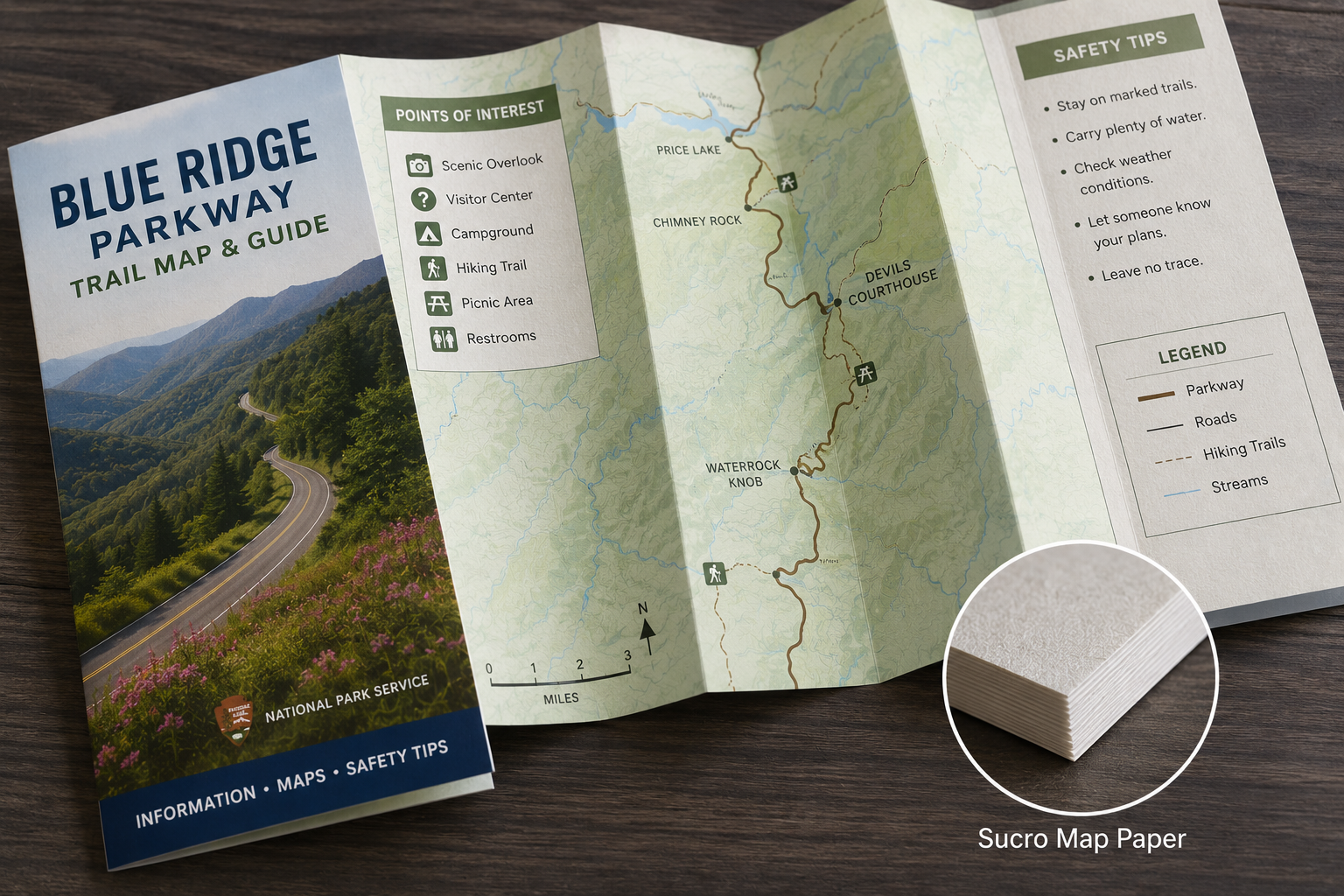
Sucro Map Paper
Sucro Map Paper - A specialty paper stock engineered for folded maps and guide publications. Known for its superior fold endurance, durability, and resistance to cracking, Sucro Map Paper is ideal for destination maps, trail maps, visitor guides, and other publications that require repeated folding and handling.
"Sucro Map Paper is a durable, fold-resistant paper designed specifically for maps. It stands up to repeated folding and unfolding while maintaining excellent print quality and readability."
Synthetic paper
Synthetic Paper - A plastic-based printing substrate designed to provide exceptional durability, water resistance, and tear resistance while maintaining the appearance and print quality of traditional paper. Commonly used for maps, outdoor guides, menus, manuals, and other printed materials that require long-lasting performance in demanding environments.
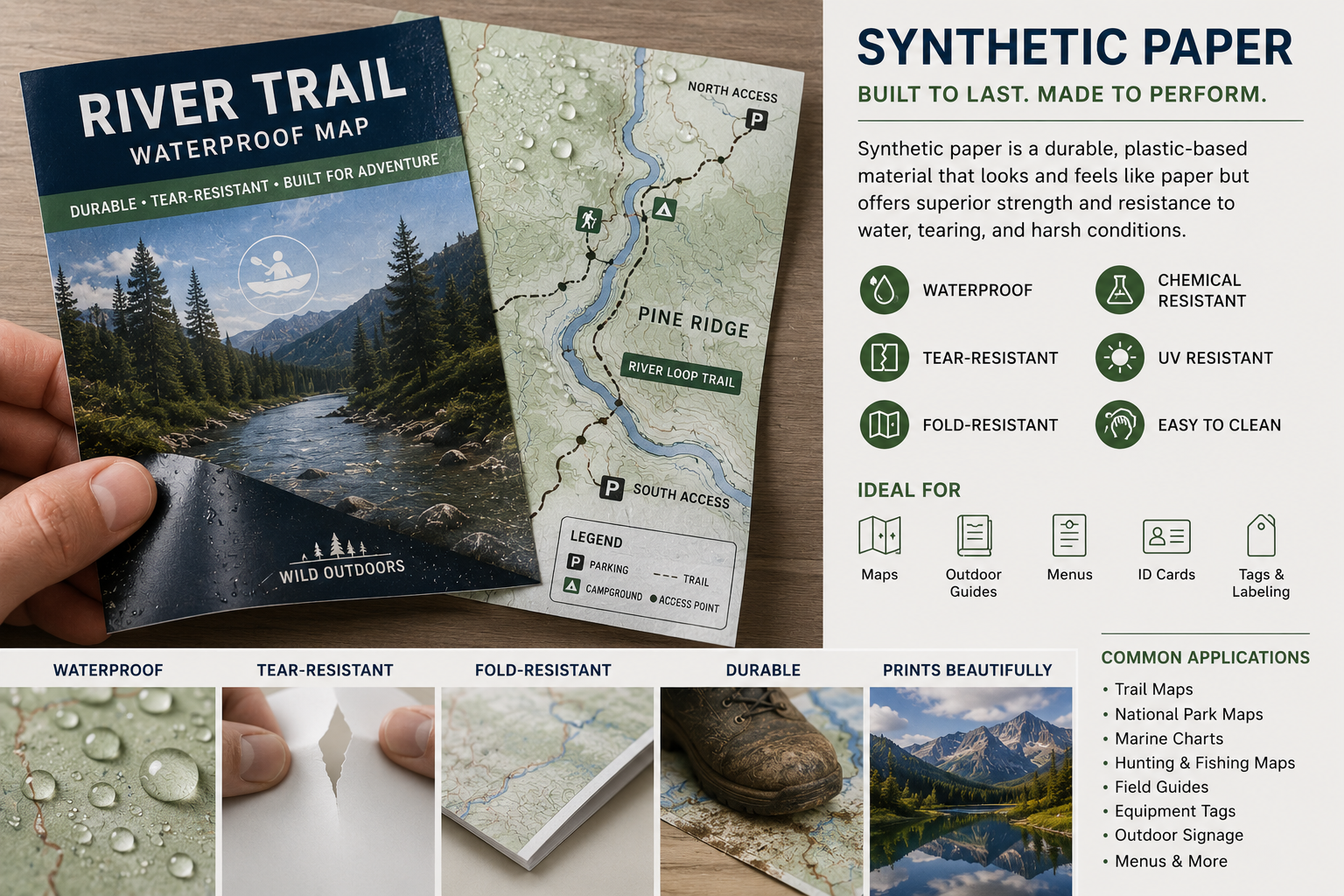
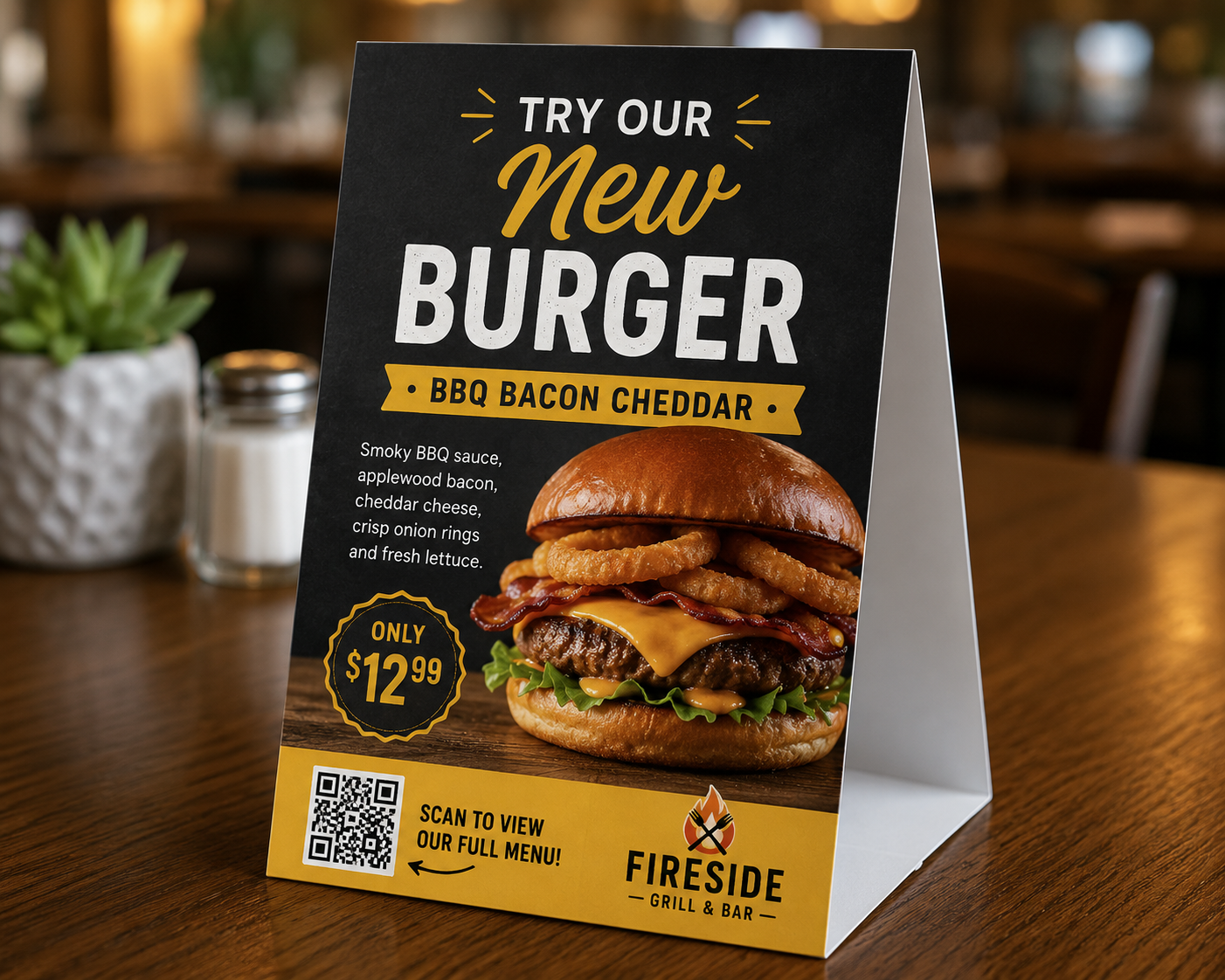
Table Tent
Table Tent: A folded cardstock display piece designed to stand upright on a flat surface, commonly used in restaurants, hotels, retail environments, and event venues to communicate promotions, menus, announcements, or advertising messages.
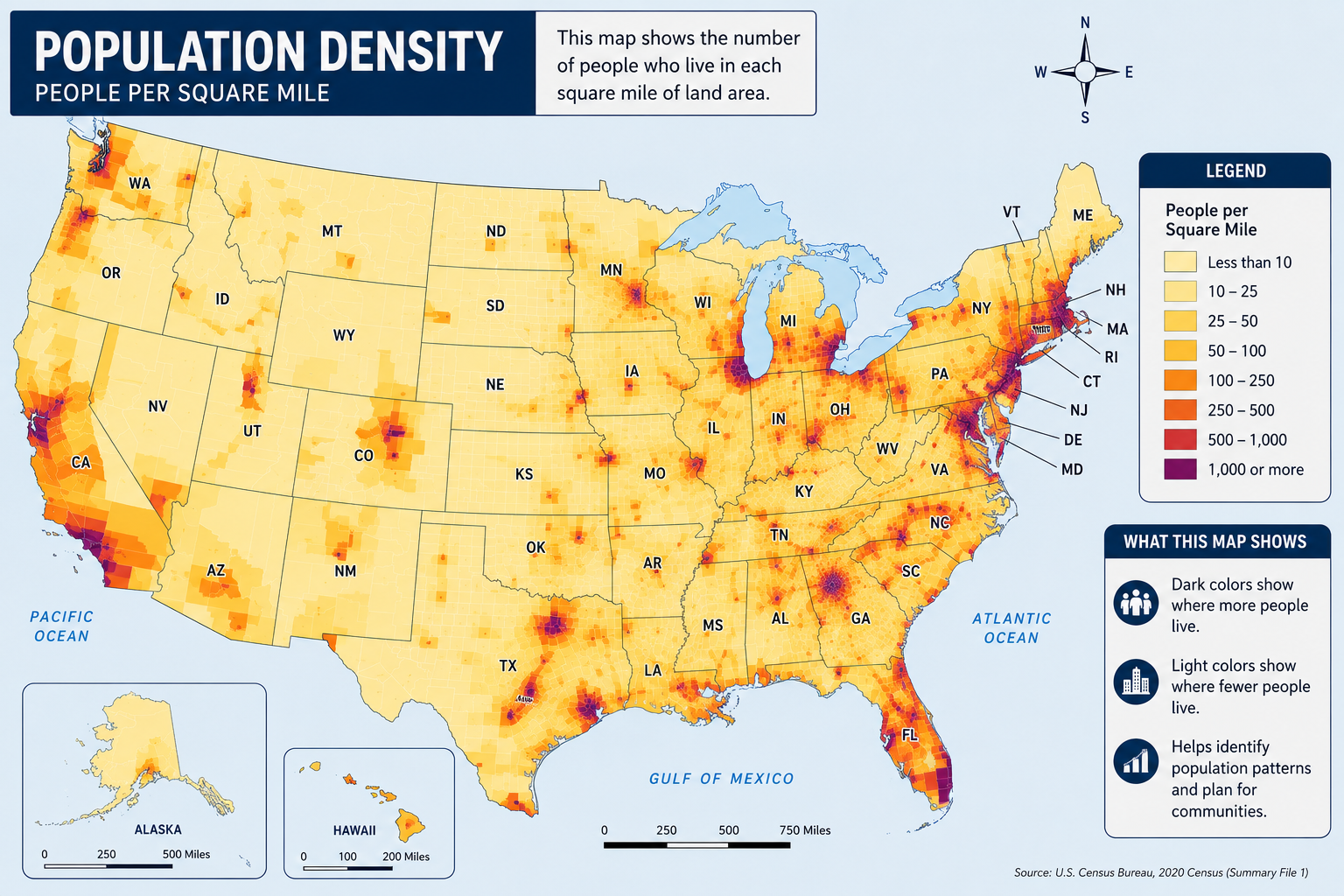
Thematic Map
Thematic Map: A map designed to emphasize a particular subject, pattern, or dataset rather than general geographic information. Thematic maps use colors, symbols, shading, and other visual elements to communicate information about a specific theme or topic.
Trail Map
Trail Map: A specialized map that provides navigational and recreational information for hiking, biking, walking, and other outdoor trail systems. Trail maps typically include trail routes, distances, difficulty ratings, amenities, topographic features, and points of interest.

Tri Fold
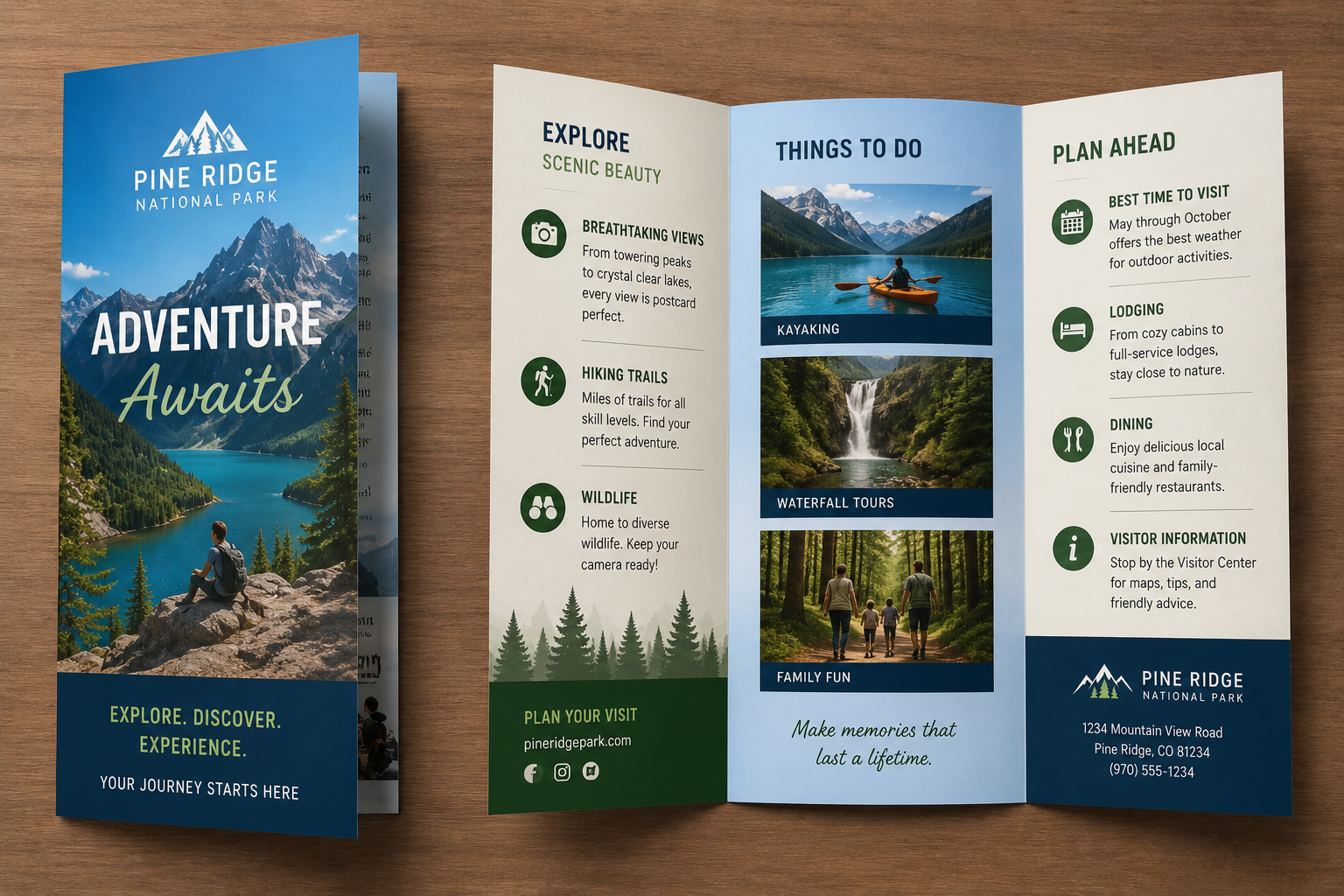
Tri-Fold Brochure: A printed marketing piece created by folding a sheet into three panels, producing six printable sections. Tri-fold brochures are widely used for advertising, tourism, healthcare, education, and business marketing because they provide ample space for information while remaining compact and easy to distribute.
"A tri-fold brochure is a single sheet folded into three panels, creating six sections for organizing information. It's one of the most affordable and effective ways to showcase products, services, events, or company information."
Trim Size
Trim Size: The final finished dimensions of a printed piece after all cutting and trimming operations have been completed. Trim size determines the actual size of the finished product and serves as a key specification during design and production. When discussing a project with a customer, always clarify whether you're talking about the trim size (finished size) or the file size (including bleed), as they are often different.
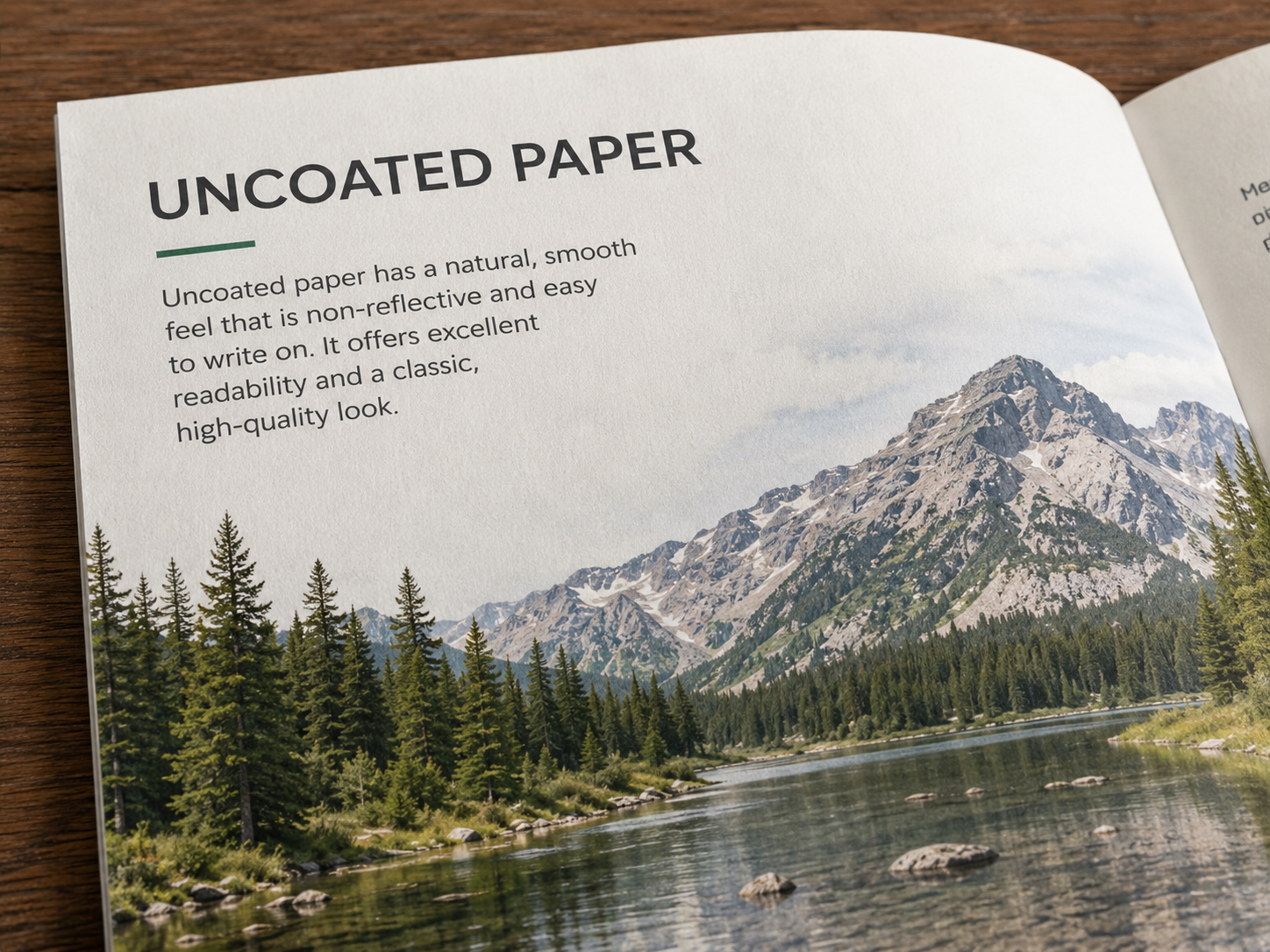
Uncoated
Uncoated paper has no surface coating. The paper fibers remain open, allowing ink to absorb into the sheet. This creates a softer, more natural appearance. If you want people to write on it, choose uncoated.
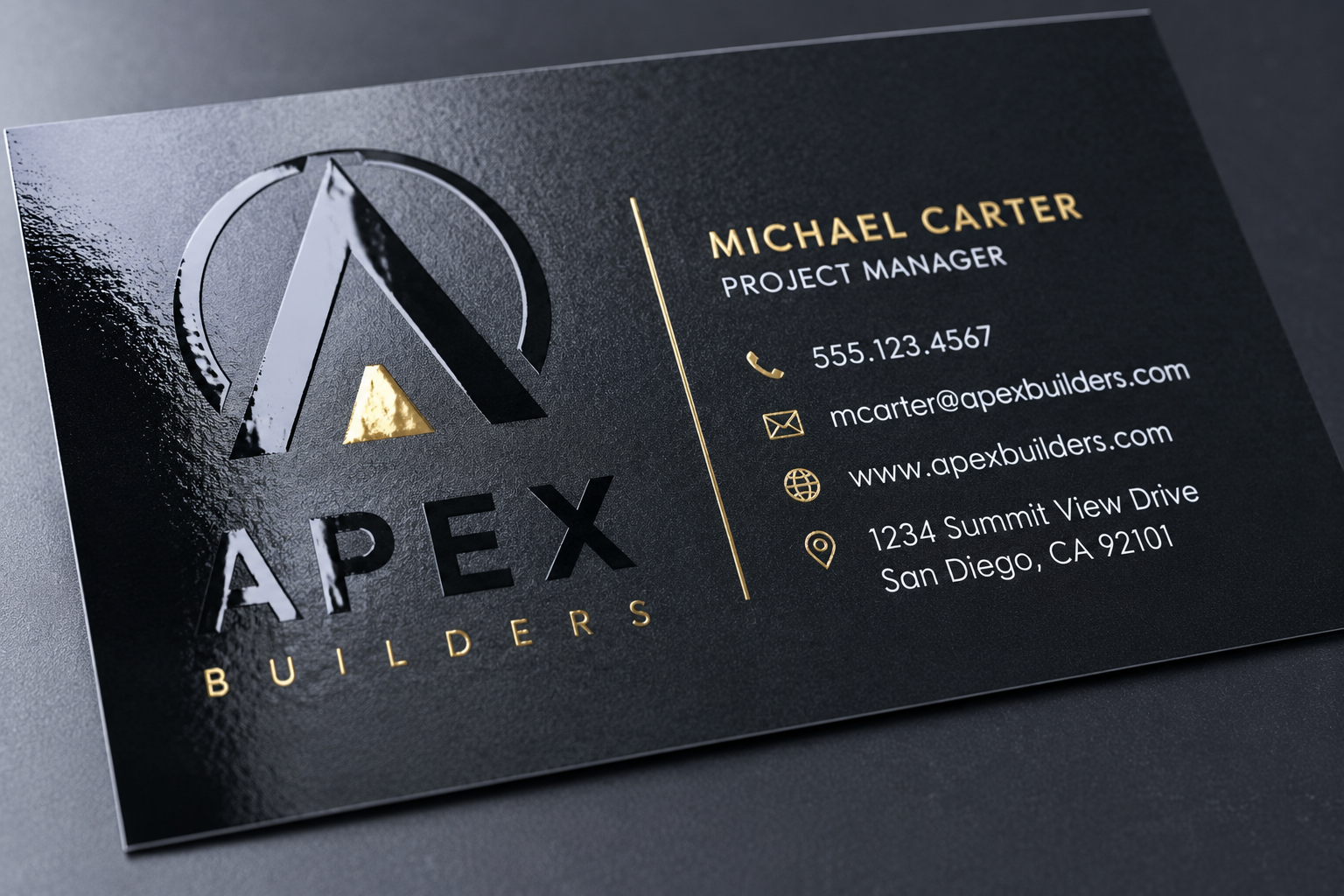
UV Coating
UV Coating: A liquid coating applied to printed materials and cured instantly using ultraviolet light, creating a hard, durable, high-gloss finish that enhances color, protects the surface, and provides a premium appearance.
"UV coating is a high-gloss protective finish that is cured with ultraviolet light. It makes colors appear richer, adds durability, and gives printed materials a premium, professional appearance." "If aqueous coating gives your piece a nice shine, UV coating makes it look like it belongs in a showroom."
Variable Data Printing
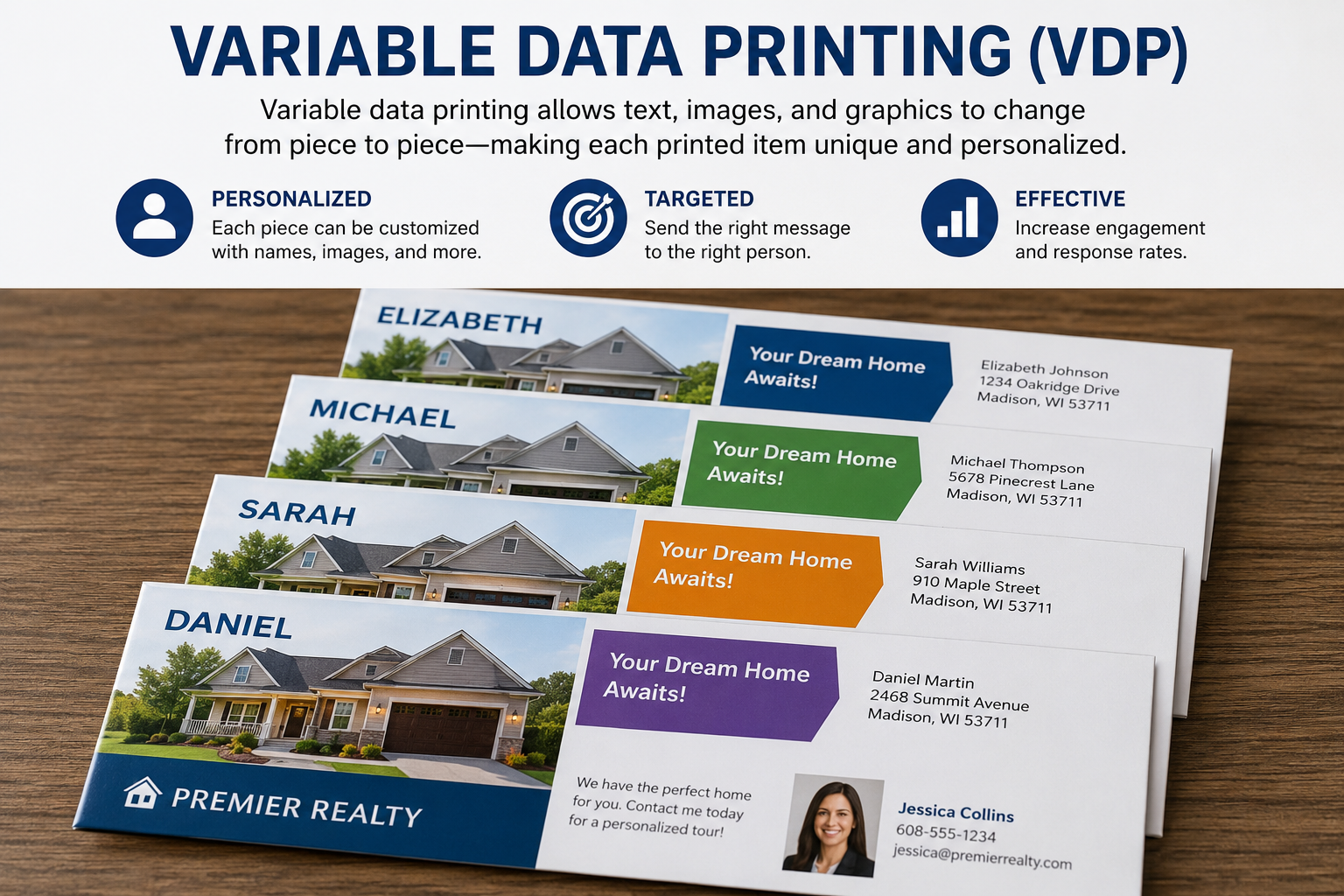
Variable Data Printing (VDP) is a digital printing technology that allows specific elements of a printed piece, such as names, addresses, images, offers, QR codes, or other content, to change from one printed piece to the next without stopping the printing process.
This personalization is driven by data from a database or spreadsheet, enabling highly targeted and customized marketing communications.
Varnish
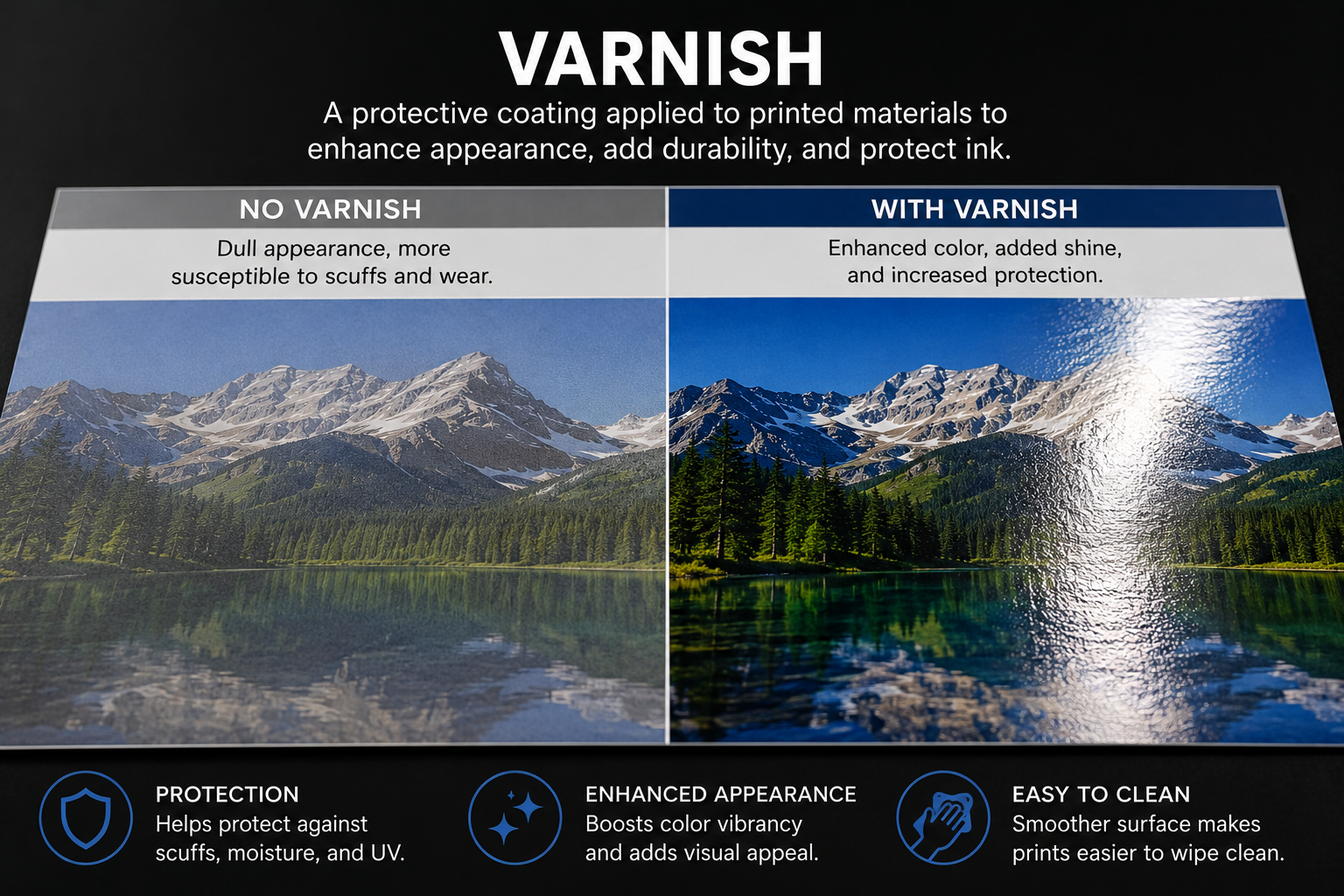
Varnish is a clear liquid coating applied to a printed piece to enhance its appearance and provide a layer of protection. It can be applied over the entire sheet or only to selected areas of a design, helping to improve durability while creating visual effects such as gloss, satin, or matte finishes.
Unlike lamination, varnish is a coating applied directly to the printed surface and is generally thinner.
Vector Image
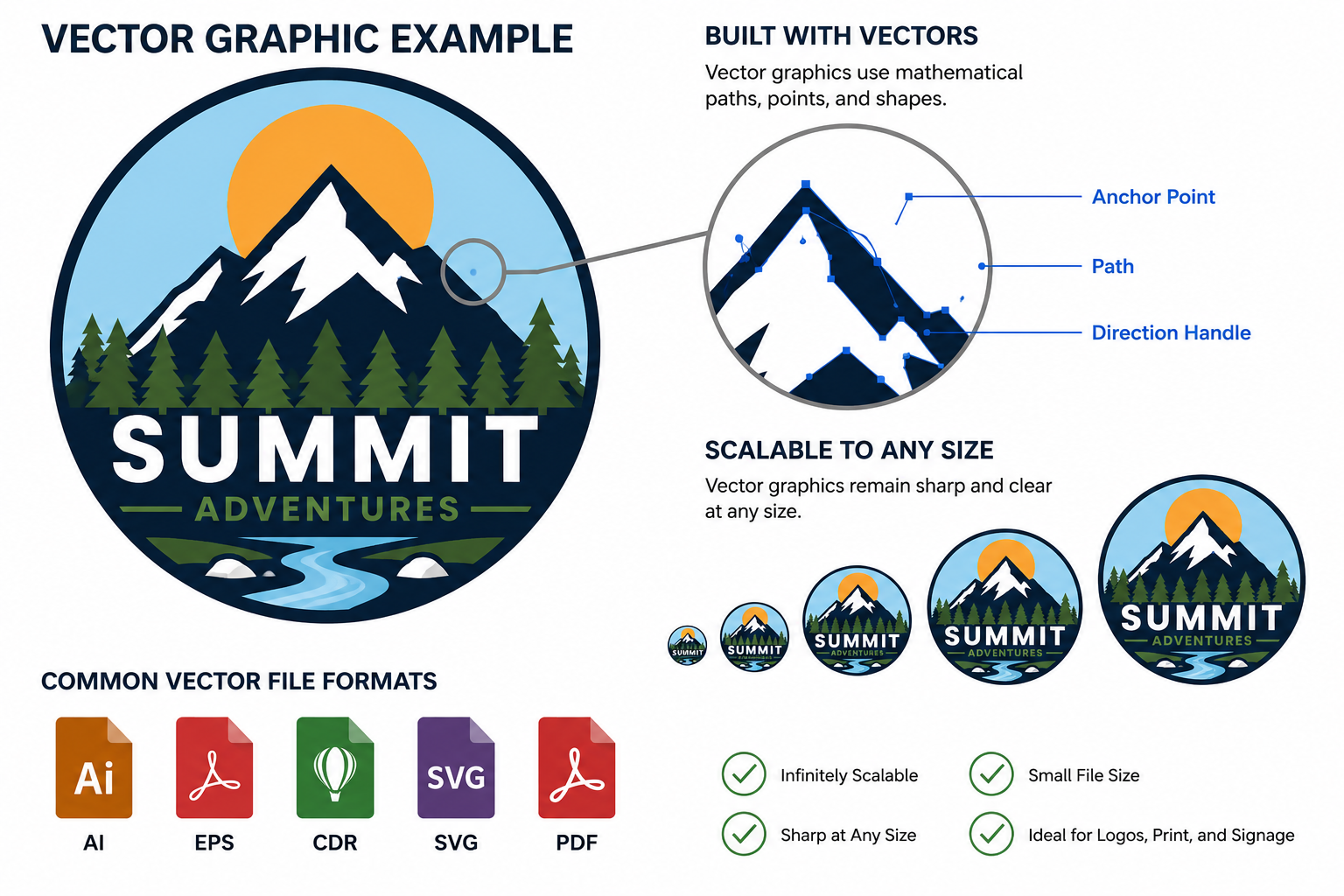
A Vector Image is a digital graphic created using mathematical paths, points, lines, and curves instead of pixels. Unlike raster images, vector graphics can be enlarged to any size without losing quality.
Think of it this way: Raster images are made of pixels. Vector images are made of math.
Wire O Binding
Wire-O Binding: A binding method that uses double-loop metal wire threaded through punched holes along the edge of a document, allowing pages to lay flat and turn smoothly while providing a durable and professional appearance.
"Wire-O binding uses a double-loop metal wire to hold pages together, creating a professional book that lays flat, turns smoothly, and stands up to frequent use."

Web Press
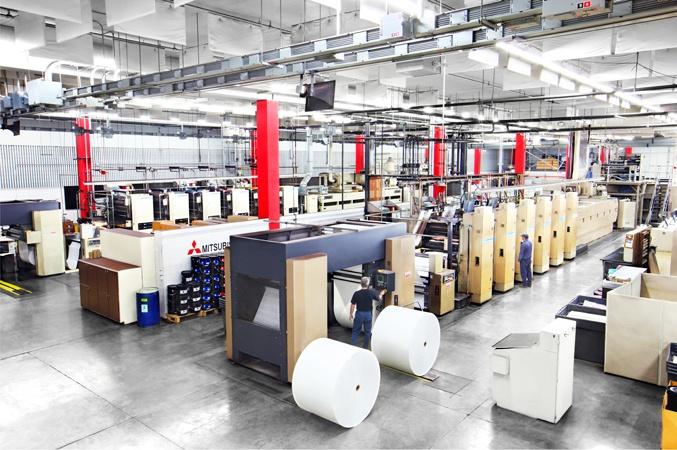
A web press is a high-speed printing press that uses a continuous roll of paper, known as a "web," rather than individual sheets. As the paper moves through the press, it is printed, dried, cut, folded, and sometimes bound in a continuous production process.
Web presses are designed for large-volume printing and are one of the most efficient methods for producing high quantities of printed materials.
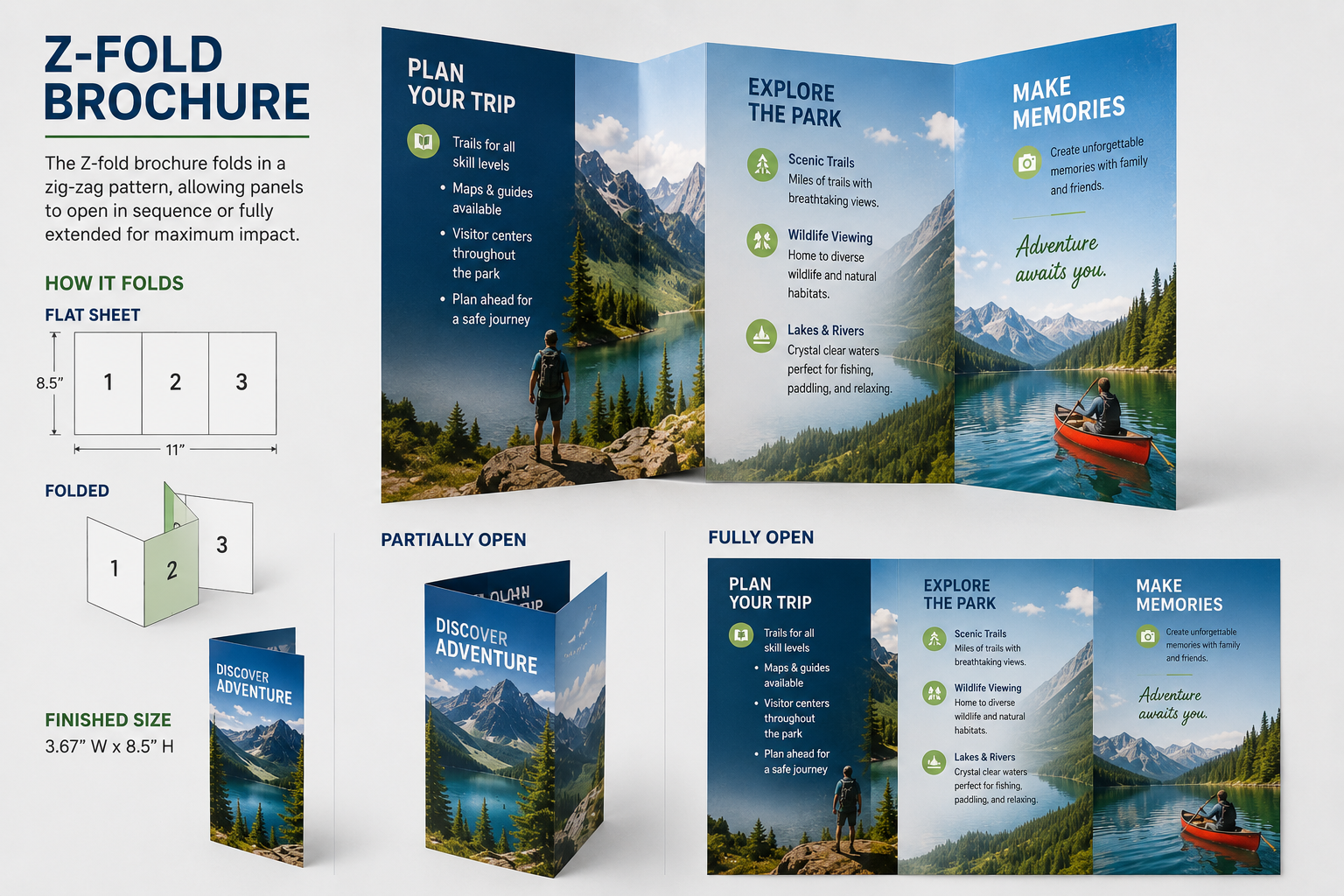
Z Fold
Z-Fold: A brochure fold in which the panels fold back and forth in alternating directions, creating an accordion-style pattern that resembles the letter "Z" when viewed from the side. Z-folds are commonly used for maps, guides, schedules, and instructional materials because they provide a continuous flow of information across multiple panels.
"A Z-fold brochure folds like an accordion, creating panels that open in a zig-zag pattern. It's ideal for maps, guides, and step-by-step information because the panels unfold smoothly and can be viewed individually or all at once."
Perfect Binding
A bookbinding method that uses strong adhesive to attach interior pages to a flexible cover, creating a clean, square spine. Commonly used for paperback books, catalogs, manuals, and directories.